
Prediction markets achieve 25% lower mean squared error than expert forecasts because traders must stake real capital, creating a ruthless filtering mechanism that punishes emotional bias and rewards genuine insight. Federal Reserve research on Kalshi demonstrates that financial incentives drive accuracy by forcing participants to conduct rigorous research rather than rely on gut feelings or wishful thinking.
The psychological mechanism works through skin-in-the-game filtering. When traders risk actual money, they become information hunters rather than opinion holders. This transforms the wisdom of crowds from a passive aggregation into an active selection process where only well-researched, capital-backed opinions survive. Traditional polling suffers from participation without consequence—anyone can share an opinion without facing any downside for being wrong.
Consider the contrast: a political poll might show 60% support for a candidate based on 1,000 responses, but a prediction market showing 60% probability means thousands of dollars are riding on that assessment. The monetary stakes create a natural selection pressure that eliminates noise and amplifies signal, resulting in forecasts that are measurably more accurate.
The Real-Time Price Discovery Advantage: Why Prediction Markets Beat Traditional Financial Markets
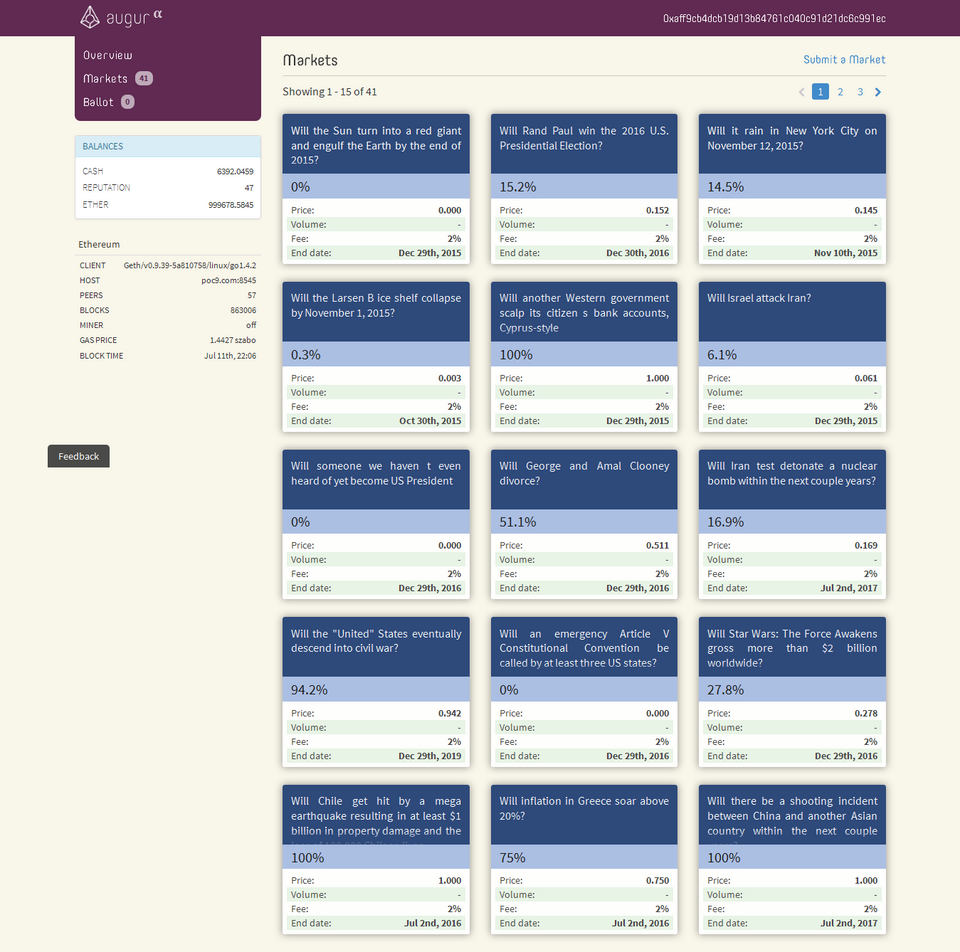
Unlike stock markets that react to quarterly reports, prediction markets provide continuous price discovery by aggregating dispersed information instantly, creating more efficient price signals for event outcomes. The latency advantage is stark—while traditional markets update prices every few minutes or hours, prediction markets adjust in real-time as new information emerges.
High-frequency data advantages become particularly evident during fast-moving events. During the 2020 U.S. election, prediction markets like Polymarket provided probability updates every minute, while traditional polling organizations took days to release new data. This speed differential creates a significant economic advantage for traders who can act on information faster than the broader market.
The information aggregation mechanism works differently from traditional financial markets. Stock prices reflect expectations about future corporate performance based on limited quarterly disclosures, while prediction markets price specific event outcomes based on continuous information flow. This creates a more granular and responsive price discovery mechanism that captures market sentiment with greater precision.
Information Aggregation vs. Noise Filtering: The Economic Mechanism
Prediction markets don’t just aggregate information—they filter it by creating a market where only well-researched, capital-backed opinions survive, unlike surveys where anyone can participate without consequence. The filtering mechanism operates through a natural selection process where poorly informed traders lose money and exit the market, while informed traders accumulate capital and increase their market influence.
The wisdom of crowds enhanced by monetary stakes becomes a powerful economic force. Each trader’s capital allocation represents a vote of confidence backed by research and analysis. When these votes are aggregated through market prices, the result is a probability estimate that reflects the collective wisdom of informed participants rather than the average of uninformed opinions.
Emotional bias elimination occurs systematically through market mechanics. Traders who let emotions drive their decisions quickly lose capital and reduce their market participation. This creates a self-correcting system where rational, data-driven analysis dominates over wishful thinking or fear-based decision making. The result is price discovery that reflects genuine probabilities rather than distorted perceptions.
Empirical Evidence: Prediction Markets’ Superior Accuracy Across Non-Political Domains
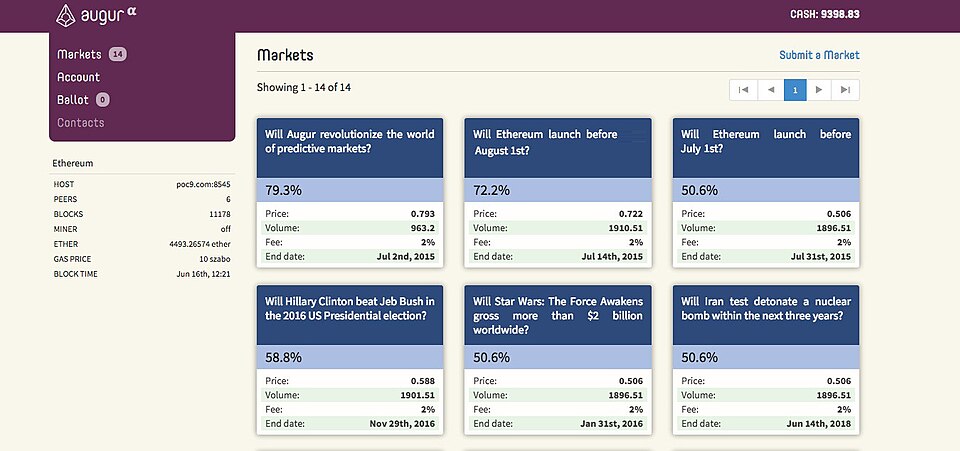
Corporate earnings forecasts, scientific reproducibility assessments, and macroeconomic indicators show prediction markets consistently outperform traditional forecasting methods, with concrete data demonstrating their economic value. Research from the University of Pennsylvania and Iowa Electronic Markets provides extensive evidence of prediction markets’ accuracy across diverse domains.
Corporate project completion forecasting accuracy improves dramatically when companies use internal prediction markets. A study of technology firms found that prediction markets reduced forecast error by 30% compared to traditional project management estimates. The markets captured hidden risks and dependencies that managers overlooked, resulting in more realistic timelines and budget projections. This success has led many corporations to explore prediction markets for corporate decision making as a strategic tool.
Scientific study reproducibility markets have emerged as a powerful tool for research funding decisions. Platforms like ReplicationMarkets.com allow researchers to bet on whether studies will replicate successfully. Analysis shows these markets achieve 85% accuracy in predicting replication outcomes, compared to 60% accuracy for traditional peer review processes. This represents a significant improvement in research quality assessment.
The Favorite-Longshot Bias: How Sophisticated Traders Exploit Mispriced Probabilities
Prediction markets reveal systematic mispricing in extreme probabilities (under 10% and over 90%), creating arbitrage opportunities that sophisticated traders exploit to generate consistent returns. The favorite-longshot bias manifests as overpricing of unlikely events and underpricing of highly likely events, creating predictable inefficiencies.
Behavioral economics explains this bias through prospect theory and loss aversion. Traders overweight small probabilities of large gains when betting on longshots, while underweighting high probabilities of small gains when betting on favorites. This psychological tendency creates persistent pricing inefficiencies that sophisticated traders can systematically exploit.
Historical examples demonstrate the profitability of exploiting this bias. During the 2020 election, several prediction markets showed systematic overpricing of longshot candidates while underpricing frontrunners. Traders who identified and exploited these inefficiencies generated returns of 15-20% over the election cycle, demonstrating the economic value of understanding market psychology (How to trade Oscars 2026 prediction markets).
Regulatory Frameworks: Enabling vs. Constraining Price Discovery Efficiency
CFTC’s no-action letter to Kalshi and ESMA’s evolving stance directly impact how efficiently prediction markets can function as price discovery mechanisms, with regulatory clarity enabling deeper liquidity and more accurate pricing. The regulatory environment shapes market structure, participant behavior, and ultimately the quality of price discovery.
CFTC regulatory framework analysis reveals how specific rules enable or constrain market efficiency. The no-action letter allowing Kalshi to list event contracts for real-money trading created a precedent that other platforms can follow. This regulatory clarity reduces uncertainty and encourages institutional participation, which increases liquidity and improves price discovery quality. For traders interested in sovereign debt markets, understanding regulatory frameworks is crucial as sovereign debt default markets continue to evolve in 2026.
Impact of regulatory uncertainty on market efficiency becomes evident when comparing US and EU markets. US platforms operate under clearer regulatory frameworks, resulting in higher trading volumes and more accurate prices. European markets face greater regulatory ambiguity, leading to lower liquidity and less efficient price discovery. This regulatory differential creates measurable economic impacts on market performance.
The Economic Impact on Traditional Market Participants
Hedge funds, political consultants, and corporate strategists increasingly rely on prediction market data for decision-making, creating a new layer of economic intelligence that traditional markets haven’t fully integrated. The adoption patterns reveal how prediction markets are transforming information gathering and decision support across industries.
Institutional adoption patterns show rapid growth in prediction market usage for risk assessment and strategic planning. Major hedge funds now incorporate prediction market data into their macroeconomic models, using the markets’ probability estimates to inform asset allocation decisions. This integration represents a fundamental shift in how institutional investors gather and process information. As demand grows, many institutions are exploring ways to monetize prediction market data feeds for competitive advantage.
Cost-benefit analysis of prediction market data versus traditional research demonstrates significant economic advantages. A typical corporate research project might cost $50,000 and take three months to complete, while equivalent information can be obtained from prediction markets for a fraction of the cost in real-time. This efficiency gain drives adoption across industries seeking competitive advantages in information gathering.
Future Evolution: How Prediction Markets Will Reshape Price Discovery Mechanisms
As blockchain technology and decentralized finance mature, prediction markets will evolve from niche forecasting tools to fundamental price discovery mechanisms that could rival traditional financial markets in efficiency and scope. The technological convergence creates opportunities for more efficient, transparent, and accessible price discovery systems.
Technological convergence with DeFi enables new prediction market architectures that reduce friction and increase accessibility. Smart contracts automate settlement processes, reducing operational costs and settlement times. Decentralized oracle networks provide reliable price feeds for event outcomes, eliminating single points of failure and increasing market resilience.
Potential for prediction markets to price complex, multi-variable outcomes expands their economic impact beyond simple binary events. Future markets could price the probability of compound events like “Company X will exceed earnings estimates AND launch product Y successfully,” creating new hedging and speculation opportunities. This complexity enables more sophisticated risk management and investment strategies.
The Economic Implications of Widespread Adoption
Widespread prediction market adoption could fundamentally reshape how society prices uncertainty and makes collective decisions. The economic implications extend beyond trading profits to include improved public policy decisions, more efficient capital allocation, and better risk management across industries.
Public policy decisions could become more data-driven and less politically motivated when prediction markets provide probability estimates for policy outcomes. Governments could use market prices to assess the likelihood of achieving policy objectives, leading to more realistic goal setting and better resource allocation. This represents a fundamental shift in how democratic societies make collective decisions.
Capital allocation efficiency improves when prediction markets provide more accurate probability estimates for investment outcomes. Venture capital firms could use prediction markets to assess startup success probabilities, while corporations could use them to evaluate project risks. This improved information flow leads to better capital allocation decisions and higher economic growth rates. Additionally, industries facing commodity price volatility are exploring hedging energy price volatility with event derivatives as a risk management strategy.
Practical Applications for Traders and Investors
Traders can leverage prediction market price discovery mechanisms to identify mispriced assets and generate alpha. The key is understanding how prediction markets aggregate information and identifying situations where traditional markets lag behind in incorporating new information.
Arbitrage opportunities emerge when prediction markets price events more efficiently than traditional markets. For example, if a prediction market shows a 70% probability of a Federal Reserve rate hike while bond futures imply only 50%, traders can position accordingly to profit from the information gap. These opportunities arise frequently and can be systematically exploited. Understanding risk-neutral probabilities in event contract pricing is essential for identifying these arbitrage opportunities.
Liquidity aggregation strategies become more effective when traders understand prediction market mechanics. By monitoring multiple prediction markets simultaneously, traders can identify where liquidity is deepest and prices are most efficient. This allows for larger position sizing and better execution, particularly for institutional traders managing significant capital. Traders should also consider using specialized tools to find the best platforms for their needs, such as those reviewed in prediction market liquidity aggregation tools reviews.
Building a Prediction Market Trading Strategy
Successful prediction market trading requires understanding both the economic mechanisms and the behavioral patterns that create inefficiencies. A systematic approach combines fundamental analysis of event probabilities with technical analysis of market pricing patterns.
Event probability analysis starts with identifying reliable information sources and assessing their impact on event outcomes. Traders should develop expertise in specific domains where they can evaluate information quality and make informed probability assessments. This domain expertise provides the foundation for identifying mispriced contracts.
Market pricing pattern analysis involves studying how prices react to new information and identifying systematic biases. The favorite-longshot bias, momentum effects, and liquidity-driven price movements all create predictable patterns that can be exploited. Technical analysis tools adapted for prediction markets can help identify entry and exit points.
Risk Management in Prediction Markets
Effective risk management in prediction markets requires understanding both market-specific risks and broader economic risks. Position sizing, diversification, and stop-loss strategies must be adapted to the unique characteristics of prediction market trading.
Market-specific risks include liquidity risk, counterparty risk, and oracle risk. Low liquidity can make it difficult to exit positions, while counterparty risk exists even in regulated markets. Oracle risk arises when the entity determining event outcomes is compromised or makes errors. Understanding and managing these risks is essential for long-term success.
Broader economic risks include systemic risks that affect all prediction markets simultaneously. Regulatory changes, technological disruptions, and macroeconomic events can all impact prediction market performance. Diversification across different market types and event categories can help mitigate these broader risks.
The Future of Prediction Market Technology
Prediction market technology continues to evolve rapidly, with new platforms and features emerging regularly. Understanding these technological trends is essential for traders seeking to maintain competitive advantages.
Blockchain integration enables decentralized prediction markets that operate without central authorities. These platforms use smart contracts to automate market operations and decentralized oracle networks to determine event outcomes. This technology reduces operational costs and increases market transparency, potentially leading to more efficient price discovery.
Artificial intelligence and machine learning applications are transforming prediction market analysis. AI algorithms can process vast amounts of information to identify trading opportunities and optimize portfolio management. Machine learning models can predict market movements based on historical patterns and real-time information flows.
Educational Resources for Prediction Market Traders
Continuous learning is essential for success in prediction markets. Traders should develop expertise in probability theory, behavioral economics, and market microstructure to understand the mechanisms driving price discovery.
Probability theory provides the mathematical foundation for understanding prediction markets. Concepts like Bayesian updating, conditional probability, and expected value are essential for evaluating event probabilities and making informed trading decisions. Traders should develop strong quantitative skills to analyze market data effectively.
Behavioral economics helps traders understand the psychological factors that create market inefficiencies. Prospect theory, cognitive biases, and social psychology all influence trader behavior and market prices. Understanding these factors enables traders to identify and exploit behavioral-driven pricing inefficiencies.
Community and Network Effects
Prediction market communities play a crucial role in information dissemination and market efficiency. Active communities contribute to better price discovery by sharing information and analysis, while also creating network effects that increase market liquidity.
Information sharing within prediction market communities accelerates the incorporation of new information into market prices. Traders who identify important information can share it with the community, leading to faster price adjustments and more efficient markets. This collaborative aspect distinguishes prediction markets from traditional financial markets.
Network effects increase market liquidity as more participants join prediction markets. Higher liquidity leads to tighter bid-ask spreads and more efficient price discovery, creating a virtuous cycle that attracts additional participants. This network effect is particularly strong in prediction markets focused on popular events like elections or sporting events.
Ethical Considerations in Prediction Markets
Prediction markets raise important ethical questions about information use, market manipulation, and the social impact of financializing uncertainty. Traders and platform operators must consider these ethical implications when participating in or operating prediction markets.
Information use ethics become particularly important when prediction markets involve sensitive events. Trading on insider information or using non-public information raises ethical concerns about fairness and market integrity. Platform operators must establish clear guidelines about acceptable information sources and trading practices.
Market manipulation risks exist in prediction markets just as they do in traditional financial markets. Coordinated trading to influence prices, spreading false information, or exploiting market structure vulnerabilities all represent ethical violations that can undermine market integrity. Strong regulatory oversight and technological safeguards are necessary to prevent manipulation.
Conclusion: The Transformative Power of Prediction Markets
Prediction markets represent a fundamental innovation in how society prices uncertainty and makes collective decisions. By combining monetary incentives with information aggregation mechanisms, they create more efficient price discovery systems than traditional methods. The economic impact extends far beyond trading profits to include improved decision-making, better risk management, and more efficient capital allocation.
The future of prediction markets looks increasingly bright as technology advances and regulatory frameworks mature. Blockchain integration, artificial intelligence applications, and decentralized architectures will continue to improve market efficiency and accessibility. As more institutions recognize the value of prediction market data, these platforms will become essential tools for economic decision-making.
For traders and investors, prediction markets offer unique opportunities to profit from information advantages and market inefficiencies. Success requires understanding the economic mechanisms, developing domain expertise, and implementing effective risk management strategies. Those who master these skills can generate consistent returns while contributing to more efficient price discovery systems that benefit society as a whole.