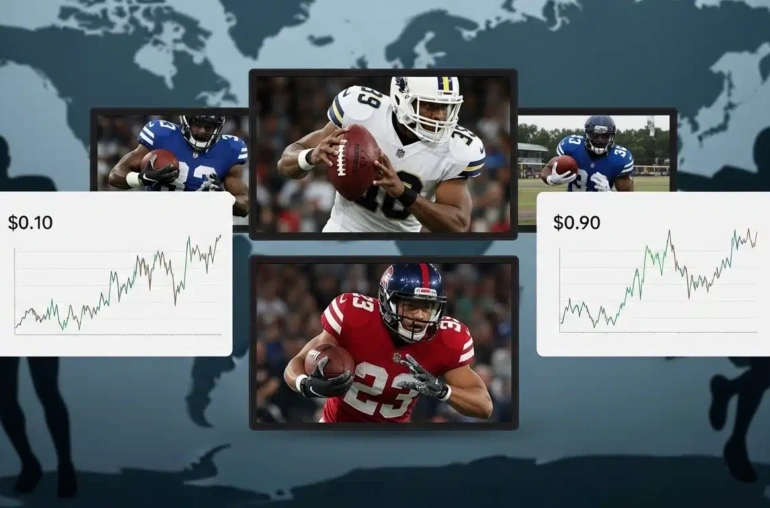
Prediction markets are event-based markets where people trade contracts based on what they think will happen in the future, with the sector projected to exceed $1 trillion in annual volume by 2026. These platforms let traders profit from their knowledge about real-world events like elections, economic data, and sports outcomes.
- Prediction markets let you trade on real-world events like elections, economic data, and sports outcomes
- Kalshi offers CFTC-regulated trading in the US, while Polymarket provides global crypto-based access
- Success requires understanding contract mechanics, platform differences, and risk management
Prediction Markets Explained: Trading Contracts on Future Events
Prediction markets are like stock markets, but for beliefs about future events. Traders buy and sell contracts whose payoff depends on the outcome of a specific event. A simple example: a contract pays $1 if Candidate A wins the election, and $0 otherwise. These markets trade between 0 and 100%, with prices reflecting the crowd’s probability estimate of an event occurring.
Users can trade contracts on the outcomes of specific, real-world future events such as Federal Reserve decisions, CPI rates, and employment figures. The most common form is a binary option market that expires at either 0 or 100%. Unlike traditional betting, prediction markets use financial incentives to aggregate information and create more accurate forecasts than individual experts.
The Evolution of Prediction Markets in 2026
Prediction markets have grown from niche platforms to mainstream trading venues, with the sector projected to exceed $1 trillion in annual volume by 2026. The expansion has moved beyond politics to include economics, weather, and sports events. Major financial platforms like Robinhood and Crypto.com have entered the space, leveraging their existing user bases to attract new traders.
The integration of prediction markets with traditional financial infrastructure has brought institutional-grade tools and analytics to retail traders. Services offering dedicated VPS optimized for low-latency connectivity to prediction market nodes are now essential for high-frequency trading strategies. This evolution has transformed prediction markets from simple betting venues into sophisticated trading platforms — prediction betting.
Major Prediction Market Platforms: Kalshi vs Polymarket
Kalshi: The Regulated US Prediction Market
Kalshi has operated as the only federally licensed prediction market in the United States since 2021. The platform offers CFTC-regulated trading with USD-based accounts, focusing on US-centric events including sports, elections, and economics. Kalshi’s institutional appeal comes from its higher average trade values and regulatory compliance, making it attractive to professional traders who need regulatory oversight.
The platform charges transaction fees on expected earnings from contracts, with different markets having varying fee structures. Kalshi’s regulatory status provides advantages for US-based traders who want the security of federal oversight while accessing prediction market opportunities. The platform’s focus on regulated events ensures compliance with US gambling and trading laws.
Polymarket: The Global Crypto-Native Leader
Polymarket is the world’s largest prediction market by transaction count, offering crypto-based access to global events. The platform excels in politics, crypto, and international events, boasting deep liquidity and major investments. Polymarket’s crypto-native approach allows for faster settlement and global accessibility without the restrictions of traditional financial systems.
The platform’s strength lies in its transaction volume and diverse event coverage. While Kalshi leads in dollar volume due to higher average trades, Polymarket dominates in user count and event variety. The platform’s decentralized nature attracts traders who prefer crypto-based trading and global market access over regulatory compliance.
Platform Comparison: Choosing Between Kalshi and Polymarket
Regulatory status differs significantly between platforms: Kalshi operates under CFTC regulation while Polymarket functions in the crypto space with less traditional oversight. Currency options vary as Kalshi uses USD while Polymarket accepts cryptocurrency. Geographic access also differs, with Kalshi focusing on US traders and Polymarket serving a global audience.
Event types available on each platform reflect their target markets. Kalshi emphasizes sports, elections, and economics for US traders, while Polymarket offers broader coverage including politics, crypto, and international events. User experience varies between institutional-focused Kalshi and retail-friendly Polymarket, with each platform catering to different trader preferences and regulatory needs.
How to Start Trading on Prediction Markets
Getting Started: Account Setup and Funding
Creating accounts on prediction market platforms requires identity verification to comply with regulatory requirements. Kalshi accepts bank transfers for funding, while Polymarket supports cryptocurrency deposits. Minimum deposit amounts vary by platform, with Kalshi typically requiring higher initial deposits due to its institutional focus.
The account setup process involves providing personal information, verifying identity documents, and linking funding sources. Kalshi’s regulated status means more extensive verification requirements compared to Polymarket’s crypto-based approach. Both platforms offer mobile apps and web interfaces for trading, with varying levels of complexity based on their target user bases. Crypto prediction markets
Understanding Contract Mechanics and Pricing
Contract prices in prediction markets reflect probability estimates between 0 and 100%. A contract trading at 60 means the market believes there’s a 60% chance of the event occurring. Bid and ask spreads indicate market liquidity, with tighter spreads suggesting more active trading and better price discovery.
Settlement occurs when the event outcome is determined, with winning contracts paying $1 and losing contracts paying $0. The timing of settlement varies by event type and platform rules. Liquidity considerations affect trading costs, as low-liquidity markets may have wider spreads and higher transaction costs for traders.
Basic Trading Strategies for Beginners
Event selection criteria should focus on familiar topics where traders have information advantages. Position sizing guidelines recommend starting with small positions to learn platform mechanics before scaling up. Risk management principles include never risking more than you can afford to lose and diversifying across multiple events.
Using data feeds and analysis tools helps identify mispriced events and arbitrage opportunities. Starting with small positions allows traders to understand contract mechanics and platform interfaces without significant risk. Successful prediction market trading requires combining market analysis with disciplined risk management and continuous learning about event dynamics.
Prediction markets are not gambling but rather a data-driven trading approach where success depends on skill and information advantage. The most effective traders combine fundamental analysis of events with technical trading strategies and risk management discipline. Start with a $50 position on a familiar event to learn the mechanics before scaling up your trading activities. trang Predictionmarketnews
Frequently Asked Questions About Prediction Crypto Markets
What does a prediction market company do?
A prediction market company operates a platform where users trade contracts whose value depends on the outcome of future events. For example, a contract might pay $1 if a specific candidate wins an election, allowing traders to profit from accurate predictions.
Who is the biggest prediction market?
Kalshi and Polymarket are the largest prediction markets, with Kalshi often leading in total dollar volume due to higher average trade sizes on regulated events like politics and sports.
Do people make money on prediction markets?
Yes, people can make money on prediction markets, but success depends on their skill in accurately forecasting outcomes. Skilled traders who consistently predict events correctly can profit over time.