
Trading sovereign debt defaults in 2026 requires navigating a complex landscape where developed market government debt is expected to reach $75.5 trillion (105% of GDP) by year-end. With global sovereign debt hitting these historic levels, understanding where the real risks lie becomes crucial for traders seeking opportunities in this volatile market. Prediction markets and CDS platforms are converging to offer new ways to trade sovereign default risk, democratizing access to what was once an institutional-only domain. Prediction markets are also transforming corporate decision-making across industries.
Platform Selection: Traditional CDS vs. Prediction Markets

Choosing between traditional CDS platforms and prediction markets determines your trading strategy’s effectiveness. Electronic CDS platforms like Tradeweb dominate with 200+ leading dealers and $9.5 trillion in market size, while regulated prediction markets like Kalshi offer retail accessibility with real-time economic event forecasting. The key difference lies in fee structures: prediction markets use volume-based fees with bid-ask spreads as hidden cost reduction, while CDS platforms charge $0.50-$2.00 per contract plus data costs from providers like IHS Markit. Prediction markets significantly impact price discovery by aggregating dispersed information efficiently.
Risk Management Framework for Sovereign Positions
Effective risk management in sovereign trading requires systematic position sizing and stop-loss discipline. The Kelly Criterion provides optimal position sizing with the formula f* = (bp – q)/b, where b represents odds, p is win probability, and q is lose probability. For practical application, allocate 1-2% of portfolio per sovereign position, with stop-loss levels set at 15-20% below entry for long positions and 200% spread widening for shorts. Diversification limits should cap exposure at 5% to any single sovereign to manage correlation risk during geopolitical events.
Timing Strategies for 2026 Market Conditions
2026 presents unique timing opportunities driven by specific calendar events and geopolitical dynamics. The Q2 IMF refinancing wall creates pressure on high-risk sovereigns as debt maturities force refinancing at potentially unsustainable rates. Geopolitical tensions between the US and China, along with Russia-EU conflicts, correlate with sudden spread widening opportunities. Real-time prediction market signals often precede traditional technical indicators, providing a 24-48 hour edge on major sovereign rating changes or election outcomes (Hedging energy price volatility with event derivatives 2026).
Step-by-Step Platform Navigation Tutorial
Setting up accounts on sovereign trading platforms requires understanding different verification and access requirements. Tradeweb demands institutional accreditation with minimum account balances of $100,000, while Kalshi accepts retail traders with standard KYC/AML verification. Contract selection focuses on high-risk sovereigns like Argentina, Egypt, and Ecuador, where CDS spreads exceed 500 basis points. Execution strategies emphasize minimizing bid-ask spreads through limit orders and timing trades during peak liquidity hours when dealer activity is highest.
Position Sizing Calculator and Risk Budgeting
Calculating optimal position sizes requires balancing Kelly Criterion recommendations with practical risk limits. A position sizing framework considers win probability estimates, market odds, and portfolio risk tolerance. For example, with a 70% estimated default probability and 2:1 odds, the Kelly formula suggests a 40% position, but practical application limits this to 20% (half-Kelly) for risk management. Correlation analysis matrices help identify cross-sovereign exposure, ensuring no more than 5% total portfolio exposure to any single country’s debt crisis.
2026 Market Environment and Default Risk Assessment
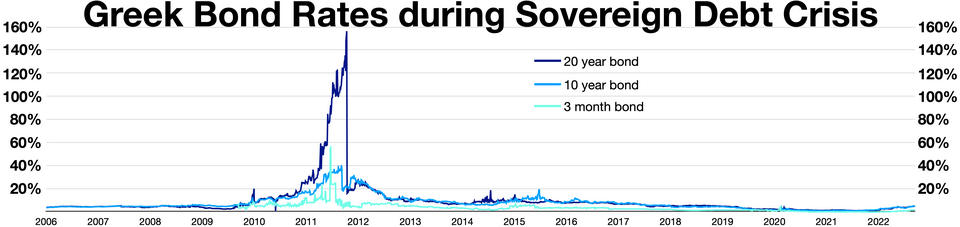
The 2026 sovereign debt landscape shows rising negative outlooks with twice as many sovereigns carrying negative ratings compared to 2025. Despite high debt levels, sovereign default rates are expected to remain below 1%, contrasting with corporate defaults in high-yield sectors that may reach mid-single-digit rates. The US fiscal outlook presents particular challenges with a $1.9 trillion deficit (5.8% of GDP) and $39 trillion public debt by April 2026, creating potential contagion risks for emerging market sovereigns.
Instrument Comparison: CDS vs. Prediction Markets vs. Distressed Debt
Each sovereign trading instrument offers distinct advantages based on trader objectives and risk tolerance. Sovereign CDS remains the most liquid credit derivative, providing institutional-grade hedging and speculation capabilities. Prediction markets democratize access, offering real-time probability estimates and lower entry barriers for retail traders. Distressed debt investing targets steep discounts on sovereign bonds, with potential recovery value through IMF intervention or political change. Cost-benefit analysis shows prediction markets excel for short-term event trading, while CDS platforms suit longer-term strategic positions. Understanding risk-neutral probabilities in event contract pricing is essential for advanced sovereign trading strategies (How to trade Oscars 2026 prediction markets).
Advanced Trading Strategies and Market Opportunities

Arbitrage opportunities between prediction markets and CDS platforms create risk-free profit potential when pricing discrepancies exceed transaction costs. High-frequency trading strategies leverage real-time economic event forecasts, executing trades within seconds of major announcements. Cross-platform liquidity analysis identifies optimal execution venues, comparing bid-ask spreads and order book depth across multiple platforms. The convergence of these markets in 2026 creates unprecedented opportunities for traders who understand both traditional and emerging trading mechanisms. Liquidity aggregation tools help traders find the best prediction market platforms for their strategies.
Regulatory Compliance and Platform Security
Navigating regulatory requirements is essential for sovereign trading across different jurisdictions. CFTC oversight governs prediction markets like Kalshi, while SEC requirements apply to CDS trading through traditional platforms. Data security protocols vary by platform, with institutional platforms offering enhanced clearing house mechanisms and retail platforms focusing on user authentication. Geographic restrictions impact platform availability, requiring traders to verify account eligibility based on their location and regulatory status before executing trades.
Performance Tracking and Strategy Optimization

Measuring trading performance requires tracking specific key performance indicators for sovereign strategies. Brier scores evaluate forecast accuracy, while Sharpe ratios measure risk-adjusted returns. Maximum drawdown analysis assesses position sizing effectiveness, and hit rates track entry signal accuracy. Backtesting frameworks using 2025 market data help optimize strategies before live deployment. Continuous improvement cycles incorporate performance data to refine position sizing, timing, and instrument selection for evolving market conditions. Traders can monetize prediction market data feeds to enhance their sovereign trading strategies.