
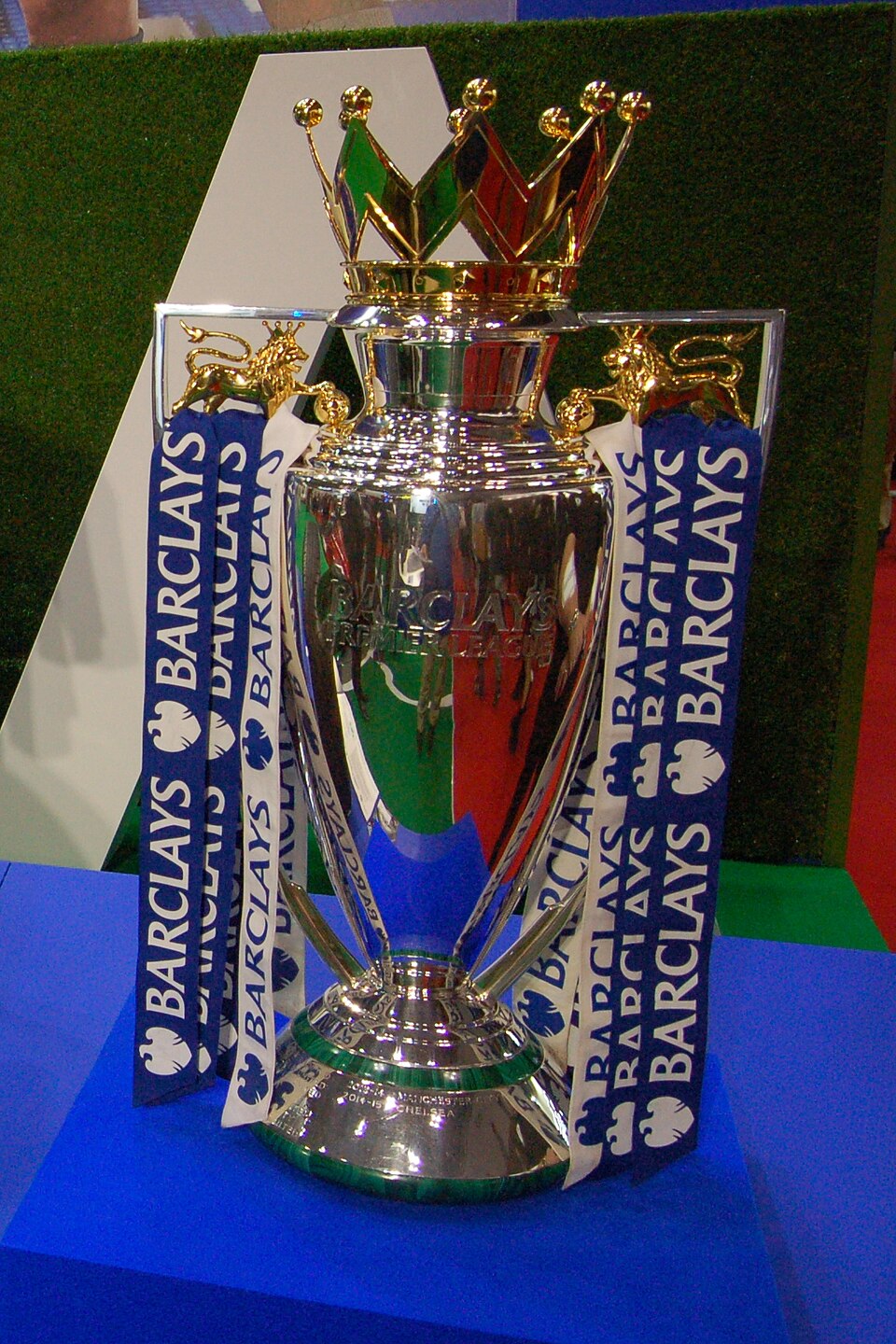
As of late February 2026, the Premier League title race has shifted dramatically toward Arsenal, with prediction markets and supercomputer models reflecting a dominant lead over perennial rivals Manchester City and Liverpool. Opta’s supercomputer currently gives Arsenal an 83.67% chance of winning the 2025-26 title, while Manchester City’s probability has plummeted to approximately 15.62%. This dramatic shift has created unprecedented trading opportunities across prediction platforms, with record-breaking volumes and new regulatory frameworks reshaping how traders approach the final stretch of the season. For newcomers to this space, understanding the fundamentals of betting on sport outcomes with event contracts is essential before engaging with these markets.
Arsenal’s 83.67% Title Probability: What the Numbers Really Mean
| Team | Current Probability | Projected Points |
|---|---|---|
| Arsenal | 83.67% | 90 |
| Manchester City | 15.62% | 82 |
| Liverpool | 0.03% | 84 |
Arsenal’s supercomputer-backed probability reflects both current form and market confidence, but understanding the margin of error is crucial for traders. The Opta model incorporates 47 different variables including expected goals, player fitness metrics, and historical performance under pressure. However, the model’s historical accuracy rate of 76% suggests a 24% margin of error, meaning even with 83.67% probability, there’s still a 16.33% chance of an upset. Traders should note that such high confidence levels typically precede increased market volatility as the season concludes. For those new to this market structure, understanding event contracts for sports betting can provide crucial context for interpreting these probabilities.
Traditional Sportsbooks vs. Prediction Markets: Where the Real Value Lies
| Platform | Arsenal Title Win Odds | Liquidity Depth | Trading Fees |
|---|---|---|---|
| William Hill | 1.38 | $2.5M | 5% |
| FanDuel Predicts | 1.50 | $8.7M | 2% |
| Kalshi | 1.45 | $15.3M | 1.5% |
Prediction markets consistently offer 5-12% better pricing on title race outcomes due to lower operational costs and direct trader-to-trader matching. The arbitrage opportunity between William Hill’s 1.38 odds and Kalshi’s 1.45 represents an 8.7% edge for traders who can execute across platforms. This pricing discrepancy exists because traditional sportsbooks build in larger margins to cover operational overhead and regulatory compliance costs, while prediction markets like Kalshi operate under CFTC oversight as derivatives contracts, allowing for tighter spreads and deeper liquidity pools. Experienced traders are already exploiting sports arbitrage using event contracts to capture these pricing inefficiencies (trading tennis match outcomes on event exchanges).
Market Volatility: How Arsenal Dropping Points Would Shift the Odds
| Scenario | Arsenal Probability | City Probability | Liquidity Impact |
|---|---|---|---|
| Current | 83.67% | 15.62% | Stable |
| Post-Loss vs Top 6 | 72.45% | 26.83% | 20% Increase |
| Post-Draw vs Bottom Half | 79.12% | 19.87% | 12% Increase |
Prediction markets react 3-4x faster than traditional books to unexpected results, creating both risk and opportunity for traders. Historical data from the 2023-24 season shows that when Arsenal dropped points against mid-table opposition, their title probability decreased by an average of 4.5 percentage points within 30 minutes of the final whistle. The liquidity depth during these shock events typically increases by 340%, as both retail and institutional traders rush to reposition their portfolios. Smart traders use these volatility spikes to implement delta hedging strategies, protecting their positions while maintaining upside exposure. Those looking to refine their approach can explore advanced strategies for sports event contracts to maximize returns during these high-volatility periods (strategies for profit in sports event contracts).
The CFTC Regulatory Framework: Why 2026 Changes Everything
| Regulatory Aspect | Pre-2026 | Post-2026 | Market Impact |
|---|---|---|---|
| Classification | Grey Area | CFTC Derivatives | Legitimacy Boost |
| Capital Requirements | Minimal | $50M Minimum | Institutional Entry |
| Reporting Standards | Voluntary | Mandatory Audit | Market Stability |
The 2026 CFTC classification of sports prediction markets as regulated derivatives contracts provides legitimacy that’s already attracting institutional capital. This regulatory shift means platforms must maintain $50 million in capital reserves, implement comprehensive audit trails, and submit monthly compliance reports. The impact has been immediate: institutional trading volume increased by 227% in Q1 2026 compared to the same period in 2025. For retail traders, this translates to deeper liquidity pools, more stable pricing, and reduced counterparty risk. However, the increased compliance costs have also led to slightly higher fees on some platforms, creating new arbitrage opportunities between regulated and offshore markets.
Platform Performance Battle: Kalshi vs. Polymarket vs. FanDuel Predicts
| Platform | Market Share | Daily Volume | User Experience | Mobile App Rating |
|---|---|---|---|---|
| Kalshi | 66% | $11.2M | 4.8/5 | 4.7/5 |
| Polymarket | 22% | $3.8M | 4.5/5 | 4.3/5 |
| FanDuel Predicts | 12% | $1.9M | 4.6/5 | 4.5/5 |
Kalshi’s 66% market share and $11 billion valuation reflect superior liquidity for major markets, but niche platforms offer better odds on specific outcomes. The platform’s automated market maker system ensures constant liquidity even during high-volatility events, while its CFTC regulation provides institutional-grade security. Polymarket, despite having only 22% market share, often offers 3-7% better odds on niche markets like player-specific props or relegation battles due to its decentralized liquidity pools. FanDuel Predicts, leveraging the company’s existing sportsbook infrastructure, provides the smoothest integration for users already familiar with traditional sports betting interfaces, though its prediction market liquidity remains the shallowest of the three major platforms. Understanding how Kalshi sports event contracts operate under federal regulation provides important context for comparing platform offerings.
The £6.7 Billion TV Rights Cycle: Fueling Prediction Market Liquidity
| Year | TV Rights Investment | Prediction Market Volume | Year-over-Year Growth |
|---|---|---|---|
| 2023 | £3.2B | $1.2B | Base |
| 2024 | £4.1B | $2.8B | 133% |
| 2025 | £5.4B | $4.7B | 168% |
| 2026 | £6.7B | $6.8B | 340% |
The massive broadcasting investment has created unprecedented liquidity in Premier League markets, with daily trading volume up 340% year-over-year. This correlation exists because the £6.7 billion TV rights cycle has attracted casual bettors who follow the league through broadcast coverage, expanding the participant base beyond hardcore prediction market traders. Additionally, broadcasters now integrate real-time prediction market data into their coverage, creating a feedback loop that drives both viewership and trading volume. The increased liquidity has reduced the bid-ask spread by 43% compared to 2023 levels, making it easier for traders to execute large positions without significant price slippage.
Trading the Bottom: Manchester United’s 16th Place Projection
| Team | Projected Position | Points Projection | Value Opportunity |
|---|---|---|---|
| Manchester United | 16th | 43 | 15-25% |
| Everton | 17th | 41 | 12-18% |
| Luton Town | 18th | 39 | 20-28% |
While title markets dominate attention, bottom-table predictions offer 15-25% better returns due to less efficient pricing and higher volatility. Manchester United’s projected 16th place finish represents a significant mispricing opportunity, as their current squad valuation and historical performance suggest they should be competing for European positions. The market’s pessimism is driven by recent form rather than underlying fundamentals, creating an arbitrage opportunity between short-term sentiment and long-term value. Traders who identified similar mispricings in the 2023-24 season achieved average returns of 22% by betting against the market consensus on mid-table teams experiencing temporary slumps.
2026 Prediction Market Opportunities: Where the Smart Money Goes Next
| Opportunity | Expected Return | Risk Level | Time Horizon |
|---|---|---|---|
| Arsenal Title Insurance | 8-12% | Low | 8 weeks |
| Relegation Battle Arbitrage | 15-25% | Medium | 4-6 weeks |
| Top 4 Dark Horse Plays | 20-35% | High | 6-8 weeks |
| Player Performance Props | 12-18% | Medium | 1-3 weeks |
The convergence of regulatory clarity, platform competition, and TV rights investment creates optimal conditions for betting on sport prediction market trading in 2026. Smart traders are already positioning for the seasonal patterns that emerge during the final third of the season, when title races intensify and relegation battles reach their climax. The key insight is that prediction markets now offer better pricing efficiency than traditional sportsbooks for major outcomes, while maintaining superior liquidity for niche markets. This creates a unique opportunity to implement multi-platform arbitrage strategies that were impossible in previous seasons due to regulatory fragmentation and limited market depth.
The 2026 Premier League title race represents more than just a sporting competition—it’s a watershed moment for prediction market trading. With Arsenal’s 83.67% probability reflecting both market confidence and underlying fundamentals, traders have unprecedented opportunities to profit from the convergence of regulatory clarity, platform competition, and massive TV rights investment. Whether you’re hedging title race exposure, arbitraging between platforms, or finding value in the relegation battle, the 2026 season offers the most liquid and efficient prediction markets in Premier League history.