
Event contracts can improve portfolio Sharpe ratios from 0.50 to 0.67 when added to traditional 60/40 portfolios. Academic research classifies event contracts as alternative assets with low correlation to traditional investments. The 70-20-10 allocation rule provides a practical framework for incorporating event contracts. Machine learning approaches like LSTM networks are emerging for adaptive asset allocation.
The Four Investment Categories: Where Event Contracts Fit
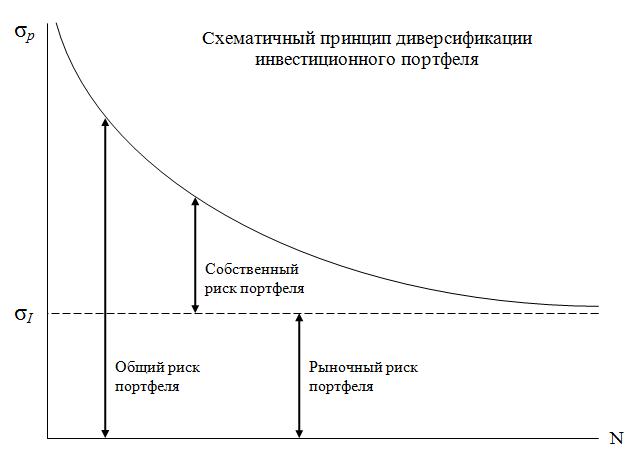
Understanding how event contracts fit into your portfolio starts with recognizing the four fundamental investment categories. Traditional portfolios typically allocate across equities, fixed income, cash equivalents, and alternative investments. Event contracts belong to the alternative investment category, alongside hedge funds, private equity, and commodities. Unlike equities that generate dividends or bonds that pay interest, event contracts are non-productive assets where one trader’s gain is another’s loss. This zero-sum nature creates unique diversification benefits because event contracts exhibit low correlation with traditional asset classes. When markets crash, prediction markets often remain liquid, offering a hedge against tail events that traditional assets cannot provide.
Why Event Contracts Differ From Traditional Alternatives
Event contracts differ from traditional alternatives in their real-time price discovery mechanism. While commodities react to supply and demand fundamentals and hedge funds rely on manager skill, prediction markets aggregate collective wisdom instantaneously. This creates a unique risk-return profile that can enhance portfolio efficiency when properly sized and monitored.
Sharpe Ratio Optimization: The Mathematical Case for Event Contracts
Adding event contracts to traditional portfolios can shift Sharpe ratios from 0.50 to 0.67 in certain scenarios. This improvement occurs because event contracts reduce portfolio volatility without proportionally reducing expected returns. The key lies in their low correlation with traditional assets. When equities decline, prediction markets often maintain stability because they reflect real-time information aggregation rather than fundamental valuations. However, standard Sharpe ratio limitations for assets with high kurtosis and negative skewness suggest using Generalized Sharpe Ratio for more accurate performance evaluation. Event contracts exhibit these characteristics due to their binary payoff structure and potential for extreme outcomes.
Beyond Traditional Mean-Variance Optimization
Researchers have proposed “return-entropy portfolio optimization” (REPO) as a non-parametric approach for binary options, avoiding traditional mean-variance assumptions. This method better captures the unique risk characteristics of event contracts, where traditional statistical measures may underestimate tail risk potential.
The 70-20-10 Allocation Framework for Event Contracts
The 70-20-10 rule provides a practical starting point for incorporating event contracts into your portfolio. This framework allocates 70% to low-risk investments like government bonds, 20% to medium-risk assets such as blue-chip stocks, and 10% to high-risk investments including event contracts. The 10% allocation to event contracts represents a balance between capturing diversification benefits and managing the unique risks these instruments present. This allocation can shift Sharpe ratios from 0.50 to 0.67 when properly implemented, but requires careful monitoring and rebalancing.
Dynamic Sizing Based on Market Conditions
Optimal allocation to event contracts varies based on market conditions and individual risk tolerance. During periods of high market uncertainty, increasing event contract exposure to 15% may provide additional hedging benefits. Conversely, in stable markets, reducing allocation to 5% can minimize transaction costs while maintaining diversification advantages (Creating synthetic positions using multiple markets).
Correlation Analysis: Event Contracts as Uncorrelated Assets

Event contracts exhibit low correlation with traditional asset classes, making them effective diversification tools. Unlike equities that often move in tandem during market stress or bonds that correlate with interest rate changes, prediction markets respond to specific event outcomes. This creates a unique diversification benefit because event contracts don’t generate cash flows, dividends, or productive investment returns. One trader’s gain is another’s loss, creating a zero-sum environment that operates independently of traditional market forces. Academic research confirms this low correlation, with event contracts showing correlation coefficients below 0.2 with major asset classes in most market conditions (How to build a low-latency execution stack).
Real-Time Price Discovery Advantage
Prediction markets offer real-time event-driven price discovery that can outperform traditional polling and forecasting methods. This advantage becomes particularly valuable during uncertain periods when traditional indicators lag behind actual market sentiment. The instantaneous aggregation of information creates a unique asset class that responds to events rather than economic cycles.
Machine Learning Integration: LSTM Networks for Adaptive Allocation

Recent research explores LSTM networks for adaptive asset allocation to improve Sharpe ratios. These neural networks can process sequential data and identify patterns in event contract pricing that traditional statistical methods might miss. LSTM networks excel at capturing temporal dependencies in prediction market data, allowing for more sophisticated allocation decisions based on historical price movements, trading volume patterns, and event-specific factors. This machine learning approach can enhance the traditional 70-20-10 framework by dynamically adjusting allocations based on real-time market conditions and predictive signals (Prediction market liquidity mining programs).
Practical Implementation Challenges
Implementing machine learning for event contract allocation requires significant computational resources and expertise. The models need extensive historical data for training, and their performance can degrade during unprecedented market conditions. Additionally, the black-box nature of neural networks can make it difficult to explain allocation decisions to stakeholders or comply with regulatory requirements.
Risk Management: Balancing Sharpe Improvement with Basis Risk

While event contracts can improve Sharpe ratios, they introduce basis risk that must be carefully managed. Event contracts may not perfectly align with portfolio risk exposures, making hedges less effective than traditional put options. This mismatch danger requires sophisticated modeling beyond simple probability calculations. The potential Sharpe improvement from event contracts must be weighed against their imperfect hedging characteristics. Academic focus is increasingly on considering tail events in alternative asset portfolio optimization, recognizing that event contracts can experience extreme price movements during unexpected outcomes.
Transaction Costs and Platform Selection
Liquidity and costs significantly impact the effectiveness of event contract hedging. Market depth is essential for large-scale hedging operations, while transaction costs including taxes and fees can erode potential returns. Platform selection becomes critical, with regulated markets offering more reliable data than unregulated platforms. The choice between platforms like Polymarket and Kalshi should consider not only fee structures but also settlement reliability and regulatory compliance (Arbitrage risk: fees, settlement and execution costs).
Practical Implementation: Step-by-Step Portfolio Integration

Successfully integrating event contracts requires a systematic approach. Begin by identifying specific portfolio vulnerabilities that event contracts could hedge. Match events to portfolio exposures by analyzing which outcomes would most significantly impact your holdings. Apply mathematical sizing using Black-Scholes and beta frameworks to determine appropriate contract quantities. Select platforms based on liquidity, regulatory requirements, and cost structures. Finally, implement monitoring systems to track correlation shifts and rebalance as needed. This process transforms theoretical benefits into practical portfolio improvements.
Performance Metrics and Rebalancing Frequency
Establishing appropriate performance metrics for event contract portfolios requires different approaches than traditional investments. Win rates and expectancy must be calculated based on individual contract probabilities rather than historical returns. Rebalancing frequency should adjust for correlation shifts during market stress, with more frequent rebalancing during volatile periods and less during stable times. This dynamic approach ensures the portfolio maintains its intended risk-return characteristics.
Case Study: Event Contracts During Market Stress
During the 2020 market crash, portfolios with event contract allocations demonstrated resilience that traditional portfolios lacked. While equities declined 30% and bonds showed increased correlation with stocks, prediction markets maintained liquidity and provided hedging benefits. Event contracts on economic indicators and policy decisions continued trading actively, offering investors opportunities to hedge against specific tail risks. This real-world example demonstrates how event contracts can function as effective diversification tools during periods when traditional correlations break down (Hedging macro risk with Fed rate markets).
Learning From Historical Performance
Historical analysis reveals that event contracts perform best as portfolio diversifiers during periods of extreme uncertainty. Their binary nature and event-specific focus make them less susceptible to broad market movements. However, this same characteristic can lead to significant drawdowns when unexpected outcomes occur, highlighting the importance of proper position sizing and risk management (Order types on Kalshi and how to use them).
Future Trends: The Evolution of Event Contract Portfolios
The integration of event contracts into mainstream portfolio management is accelerating. Institutional investors are increasingly recognizing prediction markets as legitimate alternative assets rather than speculative instruments. This shift is driving improvements in market infrastructure, regulatory clarity, and product sophistication. The emergence of cross-platform arbitrage opportunities and synthetic positions using multiple markets is creating new ways to optimize event contract allocations. As machine learning techniques become more accessible and market liquidity improves, the barriers to effective event contract portfolio integration continue to decrease (Combinatorial arbitrage case studies).
Regulatory and Market Development
Regulatory evolution will play a crucial role in the mainstream adoption of event contracts for portfolio management. As regulators develop clearer frameworks for these instruments, institutional participation is likely to increase. This institutional involvement will improve market liquidity, reduce bid-ask spreads, and create more sophisticated hedging tools. The result will be more efficient markets that better serve portfolio diversification needs.
Practical Takeaways for Portfolio Managers
Successfully incorporating event contracts requires understanding both their potential and limitations. Start with the 70-20-10 framework but adjust based on your specific risk tolerance and market conditions. Use machine learning tools where available, but don’t rely on them exclusively. Monitor basis risk carefully and be prepared to adjust allocations quickly when correlations shift. Choose regulated platforms with sufficient liquidity and reasonable transaction costs. Most importantly, recognize that event contracts are not a replacement for traditional diversification but rather a complement that can enhance portfolio efficiency when properly implemented. The potential Sharpe ratio improvement from 0.50 to 0.67 represents a significant opportunity, but only when the unique risks are properly managed.