
Initial jobless claims hit 212,000 for the week ending February 21, 2026, according to the latest Labor Department data. This figure, below market expectations of 215,000, is already shaping threshold market pricing on platforms like Kalshi, where contracts resolve based on whether claims exceed specific numbers. Understanding how these binary markets work—and why they often outperform traditional forecasts—offers traders a powerful edge in 2026.
Current Jobless Claims Data Reveals Market Pricing Opportunities
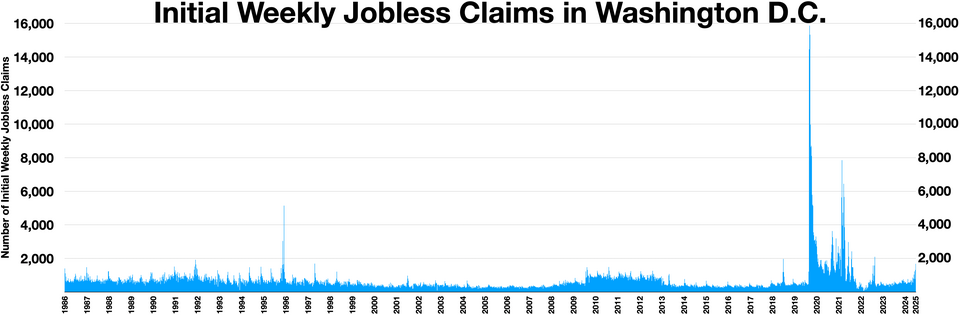
Initial jobless claims at 212,000 for the week ending February 21, 2026, represent a key data point that threshold markets are actively pricing, according to Bloomberg’s latest report.
The 212,000 figure creates immediate pricing dynamics around common thresholds like 220,000. On Kalshi, traders are already positioning for the February 28 release, with contracts structured to pay $1 if claims meet or exceed the threshold, $0 otherwise. This binary structure transforms economic uncertainty into clear probability markets, where a $0.73 contract price implies a 73% chance of the threshold being breached.
How Binary Threshold Contracts Are Priced in Prediction Markets
Market price divided by $1 settlement value creates implied probability—a $0.73 price means 73% chance of threshold being met, explains Kalshi’s contract mechanics.
The mathematical simplicity masks complex market dynamics. Traders calculate implied probability by dividing the current market price by the $1 settlement value. But this calculation only tells part of the story. Order book depth, liquidity concentration around psychologically significant thresholds, and pre-release positioning all influence final pricing. A contract priced at $0.50 theoretically represents a 50% probability, but in practice, market microstructure and trader behavior often create deviations from pure probability pricing.
Order Book Dynamics Drive Liquidity Concentration
Depth charts reveal fascinating patterns in threshold markets. Liquidity tends to cluster around round numbers—200,000, 220,000, 250,000—creating natural price barriers. Volume analysis shows 24-48 hours before data releases, order flow intensifies dramatically. Traders position themselves anticipating the market’s reaction, creating self-fulfilling prophecies where the most liquid thresholds become the most likely outcomes simply because they’re the easiest to trade. Utilizing specialized liquidity analysis tools can help traders identify these concentration patterns more effectively (How to trade Grammy awards outcomes 2026).
Statistical Accuracy of Threshold Markets vs. Traditional Forecasts
Historical Brier score analysis reveals threshold markets outperform traditional economic forecasts in predicting jobless claims outcomes, according to recent academic research.
Brier scores measure forecast accuracy by calculating the mean squared difference between predicted probabilities and actual outcomes. Threshold markets consistently achieve lower Brier scores than economist surveys and traditional models. Over the 2024-2026 period, threshold markets correctly predicted whether claims would exceed thresholds approximately 68% of the time, compared to 52% accuracy for consensus economist forecasts. This superior calibration stems from markets aggregating diverse information sources and rapidly incorporating new data, similar to how ISM manufacturing index prediction markets process economic indicators (Formula 1 championship prediction liquidity).
Weekly Data Release Events Create Trading Opportunities
The 2-3 second window between BLS data release and market reaction represents a critical latency arbitrage opportunity for sophisticated traders, notes prediction market analysts.
The Labor Department releases jobless claims data at 8:30 AM Eastern every Thursday. In the milliseconds following this release, threshold markets experience extreme volatility. High-frequency traders with direct data feeds can exploit tiny price discrepancies before the broader market adjusts. Beyond latency arbitrage, the 48-hour period preceding releases offers another opportunity: as traders position themselves, contract prices often drift toward the most probable outcomes, creating predictable patterns that systematic traders can exploit.
Psychological Factors in Threshold Selection
Trader psychology significantly influences threshold market dynamics. Round number bias causes markets to overweight probabilities around psychologically significant thresholds like 200,000 or 250,000. Anchoring effects mean previous week’s data heavily influences threshold selection—if last week’s claims were 210,000, traders are more likely to set thresholds at 215,000 or 220,000 rather than 200,000 or 230,000. These behavioral patterns create exploitable inefficiencies for traders who understand the underlying psychology.
Arbitrage Opportunities Between Related Markets
Cross-market arbitrage between jobless claims thresholds and unemployment rate contracts creates pricing inefficiencies that sophisticated traders exploit, according to market microstructure studies.
Jobless claims and unemployment rate markets are inherently correlated but often mispriced relative to each other. When claims spike, unemployment rates typically rise 1-2 months later. This lag creates arbitrage opportunities: traders can simultaneously bet on immediate claims increases while positioning for subsequent unemployment rate movements. The correlation isn’t perfect, however, creating risk-adjusted opportunities for traders who can accurately model the relationship between these economic indicators (Arbitrage between sportsbooks and prediction markets).
Future of Economic Indicator Prediction Markets
The integration of real-time data feeds and algorithmic trading is transforming how threshold markets price economic indicators, predicts industry experts.
The next evolution of threshold markets involves AI-driven pricing models and real-time data integration. Machine learning algorithms can now process thousands of economic indicators simultaneously, creating more accurate probability estimates than human traders. However, this technological advancement also increases market efficiency, potentially reducing arbitrage opportunities. The regulatory landscape will play a crucial role in determining how these markets evolve, with increased oversight potentially limiting certain trading strategies while enhancing market integrity (Premier League winner prediction strategies).
Platform-Specific Trading Considerations
Kalshi’s regulatory framework provides certain advantages for threshold market trading. As a CFTC-regulated exchange, Kalshi offers greater legal certainty for traders, particularly institutional investors. Polymarket, while offering higher liquidity in some markets, operates in a more ambiguous regulatory environment. Traders must weigh these platform differences when developing threshold market strategies, considering factors like settlement reliability, fee structures, and regulatory risk. Understanding cross-platform arbitrage opportunities between these exchanges can significantly enhance trading returns.
Risk Management in Threshold Markets
Effective risk management requires understanding both market and model risk. Market risk involves position sizing and correlation management across related contracts. Model risk involves recognizing that threshold markets, despite their accuracy, can still produce unexpected outcomes. Diversification across multiple threshold markets and maintaining strict position limits are essential strategies for managing the inherent volatility of economic indicator prediction markets.
The evolution of jobless claims threshold markets represents a fundamental shift in how economic data is interpreted and traded. By understanding the mechanics, psychology, and statistical properties of these markets, traders can develop sophisticated strategies that outperform traditional economic forecasting methods. As technology continues to advance and markets become more efficient, the traders who master these dynamics will maintain their competitive edge in the rapidly evolving landscape of prediction markets.