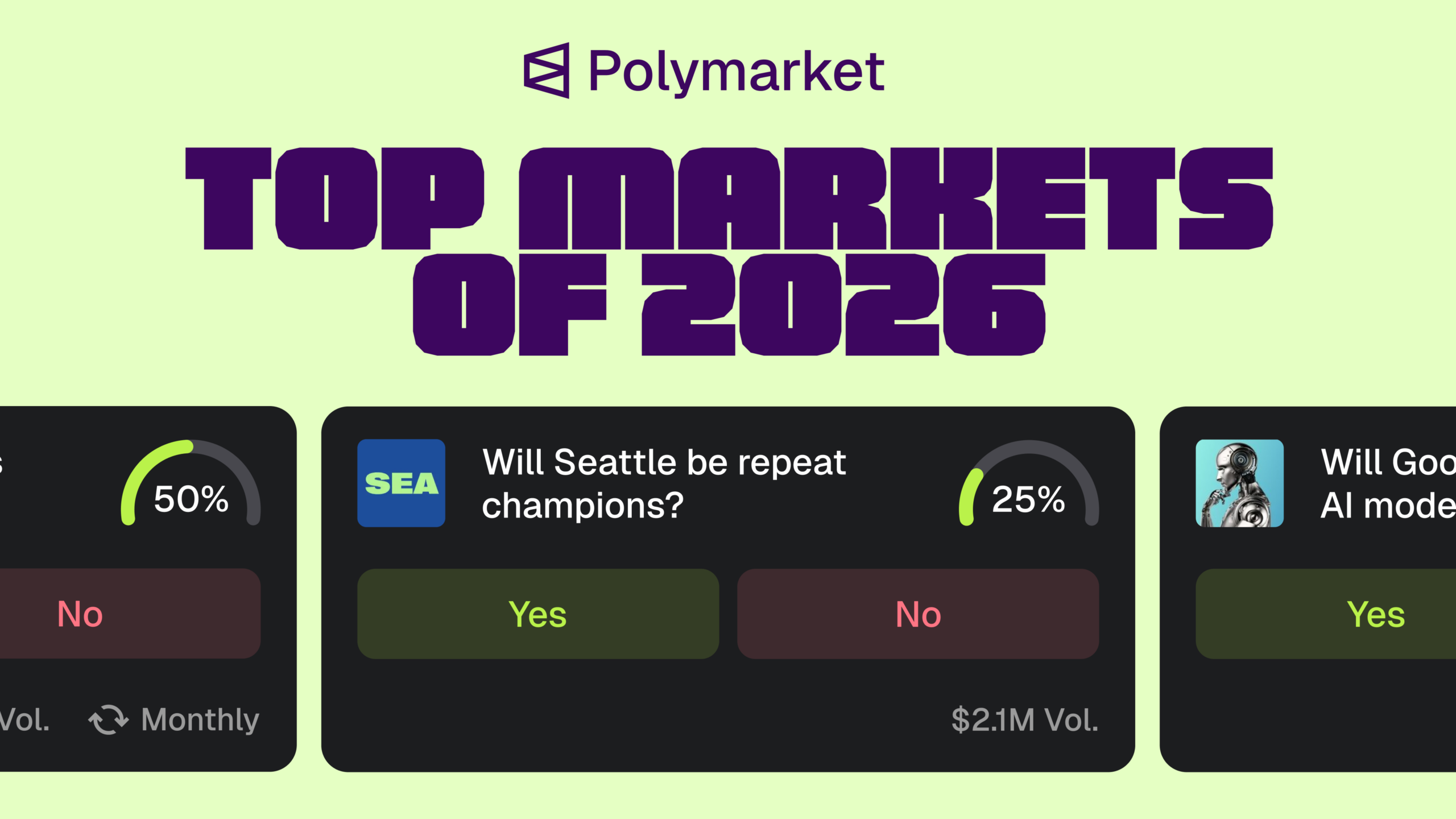
The convergence is driven by blockchain’s automated settlement and DeFi’s enhanced liquidity, creating a “new information layer” for global forecasting. This integration transforms prediction markets from niche gambling sites into indispensable financial infrastructure with $40 billion in projected 2026 volume.
Global trading volume in prediction markets is estimated to surpass $40 billion in 2026, driven by increased participation in politics, finance, and major world events. Weekly notional volumes on leading platforms like Polymarket are projected to consistently exceed $1.5 billion, driven by new capital efficiency layers and AI-driven order flow. This explosive growth stems from prediction markets evolving beyond single-event bets to “state-level” forecasting, such as long-term Bitcoin price ranges or economic recession probabilities, with open interest reaching tens of billions. 2026 Volume Trends: Where is the Money Flowing in Global Event Prediction Markets?
The DeFi integration provides the missing piece: liquidity. Traditional prediction markets struggled with thin markets and wide spreads, but DeFi liquidity pools now offer deeper capital reserves than traditional market makers. This results in tighter spreads and more accurate pricing, allowing prediction markets to handle $1.5+ billion in weekly notional volumes while maintaining 24/7 global access without centralized restrictions.
How DeFi Liquidity Pools Transform Prediction Market Trading
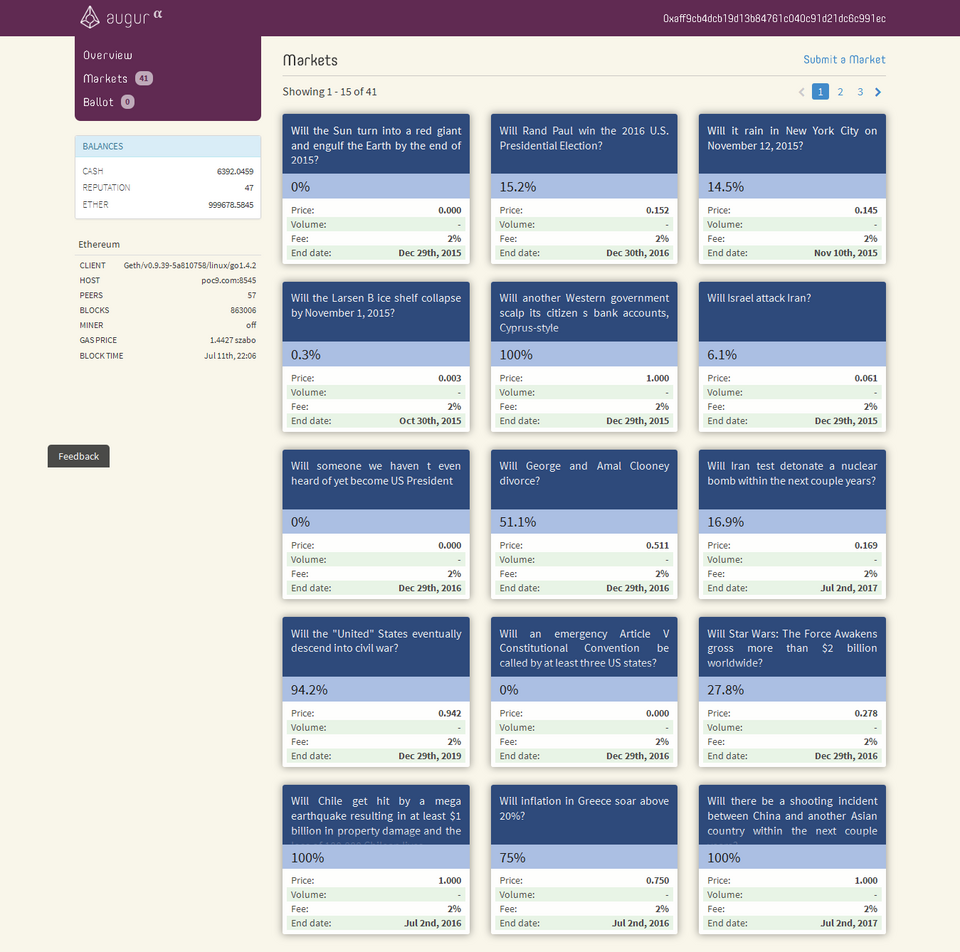
DeFi liquidity pools provide deeper capital reserves than traditional market makers, resulting in tighter spreads and more accurate pricing. This integration allows prediction markets to handle $1.5+ billion in weekly notional volumes while maintaining 24/7 global access without centralized restrictions. Setting Up Real-Time Liquidity Alerts for Arbitrage in Prediction Markets (2026) enables traders to monitor these opportunities effectively.
The USDC Settlement Advantage
Major platforms like Polymarket rely on USD Coin (USDC) for settlement, eliminating native token volatility risk and providing stability for traders. This stablecoin standardization creates trustless, automated payouts that traditional betting platforms cannot match.
The shift to USDC settlement represents a fundamental transformation in how prediction markets operate. Unlike volatile native tokens that introduce additional risk layers, USDC provides price stability that traders can rely on. When a prediction resolves, smart contracts automatically execute payouts in USDC without manual intervention, eliminating counterparty risk and settlement delays that plague traditional betting platforms.
Cross-Protocol Yield Opportunities
Traders can now stake prediction market positions in DeFi protocols like Aave and Compound, earning additional yield while maintaining exposure to event outcomes. This composability turns prediction markets into multi-layered financial instruments rather than simple binary bets.
The yield farming integration creates entirely new trading strategies. For example, a trader might take a position on an election outcome while simultaneously lending the collateral to Aave, earning both the prediction market return and DeFi yield. This dual-layer return structure can significantly enhance risk-adjusted returns, though it also introduces additional complexity in managing multiple protocol interactions and smart contract risks.
Which DeFi Protocols Are Leading Prediction Market Integration?
Uniswap V3 provides concentrated liquidity for high-volume prediction markets, while Aave enables flash loans for arbitrage opportunities between prediction markets and traditional exchanges. Compound’s governance token integration allows users to participate in protocol decisions while trading event contracts. Decentralized vs. Regulated: Choosing a Prediction Market Platform in 2026 helps traders evaluate these different approaches (Mispriced contract detection algorithms 2026).
Technical Integration Challenges
Smart contract compatibility issues arise when prediction markets attempt to interface with multiple DeFi protocols simultaneously. Oracle reliability becomes critical as prediction markets require accurate event resolution data to trigger automated DeFi settlements.
The integration complexity extends beyond simple liquidity provision. Prediction markets must ensure their smart contracts can communicate seamlessly with multiple DeFi protocols while maintaining security and efficiency. Oracle reliability is paramount—a prediction market’s payout depends on accurate event resolution data, which must then trigger automated settlements across DeFi protocols. Platforms utilizing advanced oracles like UMA have demonstrated superior reliability in ensuring decentralized, tamper-proof resolution of real-world outcomes. Deploying AI Bots for Arbitrage Scanning on Prediction Markets in 2026 can help identify opportunities across these integrated systems.
Risk Assessment Framework for DeFi-Prediction Market Investments
Evaluate platforms based on three criteria: oracle decentralization score (minimum 7/10), liquidity depth relative to trading volume (ratio >2:1), and smart contract audit history (no critical vulnerabilities in past 12 months). This framework helps traders identify platforms with sustainable integration models.
Mathematical Portfolio Optimization Using Prediction Signals
Apply Kelly Criterion calculations using prediction market probabilities as inputs, adjusting for DeFi yield rates and platform-specific risk premiums. This approach maximizes long-term growth while accounting for the unique volatility characteristics of prediction market assets.
The mathematical optimization framework treats prediction market positions as probabilistic assets with asymmetric payoffs. By incorporating prediction market probabilities into Kelly Criterion calculations, traders can determine optimal position sizes that account for both the binary nature of prediction outcomes and the additional yield from DeFi integration. This approach requires adjusting for platform-specific risk premiums—for instance, a platform with a recent smart contract audit finding might warrant a higher risk premium adjustment in the calculation. Integrating Prediction Market Signals into Portfolio Optimization for 2026 provides advanced techniques for this process.
Tax Implications of Prediction Market Earnings in DeFi
Prediction market gains are treated as capital gains in most jurisdictions, but DeFi yield complicates reporting as it may be classified as ordinary income. Traders must track cost basis across multiple protocols and maintain detailed transaction logs for tax compliance.
Cross-Border Regulatory Considerations
Different jurisdictions classify prediction markets and DeFi activities differently, creating complex compliance requirements for international traders. Understanding these distinctions is crucial for avoiding penalties and optimizing tax efficiency across multiple markets.
The regulatory landscape presents significant challenges for traders operating across jurisdictions. While platforms like Kalshi operate under CFTC regulation in the United States, providing a compliant, KYC-verified venue for institutional traders, other jurisdictions may classify prediction market activities differently. European traders face different tax treatment than their American counterparts, and Asian markets present their own regulatory frameworks. Traders must maintain jurisdiction-specific records and may need to consult tax professionals familiar with both prediction markets and DeFi yield farming. Profitable Strategies for Trading Economic Indicators on Kalshi in 2026 offer insights for navigating these regulatory environments.
How to Evaluate Prediction Market-DeFi Integration Opportunities
Compare platforms using a weighted scoring system: liquidity depth (40%), settlement reliability (30%), yield opportunities (20%), and regulatory compliance (10%). This systematic approach helps traders identify the most robust integration models for their specific needs.
The Future of Prediction Markets as Financial Infrastructure
Prediction markets integrated with DeFi are evolving into a “new information layer” that provides real-time probability signals for traditional financial markets. This convergence creates opportunities for sophisticated traders to arbitrage between prediction markets and conventional trading venues.
Building Your Integration Strategy
Start with established platforms like Polymarket for USDC settlement reliability, then gradually expand to newer protocols offering higher yields. Monitor oracle performance and liquidity depth metrics weekly to ensure continued platform stability and optimal returns.
The strategic approach to prediction market-DeFi integration requires balancing multiple factors. Begin with platforms that have proven track records of reliable settlement and strong liquidity depth ratios. As you gain experience, explore newer protocols that may offer higher yields but come with additional risks. Regular monitoring of oracle performance scores, liquidity depth ratios, and platform-specific metrics ensures you can quickly identify and respond to any degradation in platform quality or reliability.