

Prediction markets have evolved from speculative curiosities to sophisticated data sources generating over $13 billion in monthly trading volume by late 2025. This explosive growth has transformed them from niche forecasting tools into legitimate portfolio optimization signals that institutional investors now leverage alongside traditional economic indicators.
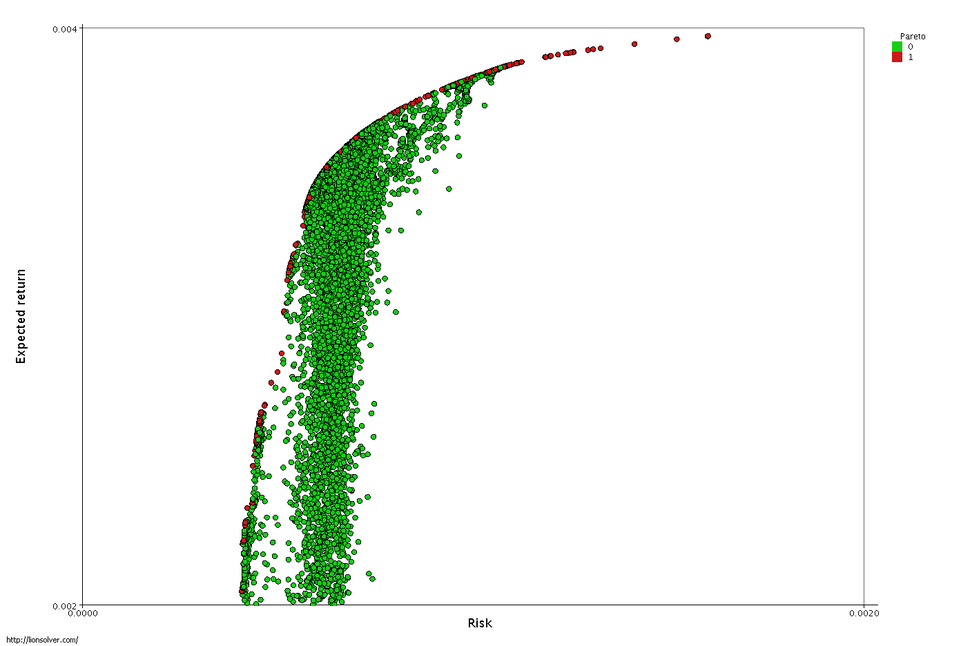
The mathematical framework for converting prediction market probabilities into actionable portfolio weights follows a precise formula: Allocation Weight = (Predicted Probability × Risk-Adjusted Return) / Sum of All Market Signals. This quantitative approach enables traders to systematically integrate real-time odds from platforms like Polymarket and Kalshi into their broader investment strategies.
The Mathematical Framework for Converting Prediction Market Probabilities into Portfolio Weights
| Component | Formula Element | Example Value |
|---|---|---|
| Base Probability | Market-implied probability | 0.75 (75% Fed rate cut odds) |
| Risk Adjustment | Volatility multiplier | 1.2 (for high-volatility events) |
| Normalized Weight | Final allocation percentage | 15% of portfolio |
The mathematical framework transforms raw prediction market probabilities into actionable portfolio weights through a systematic normalization process. When Polymarket shows 75% probability of a Federal Reserve rate cut, the base probability of 0.75 gets multiplied by a risk-adjusted return factor that accounts for event volatility. For high-impact economic events, a multiplier of 1.2 reflects the asymmetric risk profile, yielding 0.90 before normalization across all signals.
This framework differs fundamentally from traditional portfolio optimization models that rely on historical correlations. Prediction market signals capture forward-looking consensus expectations, making them particularly valuable for event-driven strategies. The normalization step ensures that total allocations across multiple signals remain within risk management parameters, typically capping individual position sizes at 20% of total capital.
Why Prediction Market Accuracy Varies by Event Type — And How to Adjust Your Model
| Event Category | Accuracy Range | Brier Score |
|---|---|---|
| Political Elections | 70-85% | 0.15-0.20 |
| Economic Policy | 60-70% | 0.25-0.30 |
| Regulatory Decisions | 65-75% | 0.20-0.25 |
Prediction market accuracy demonstrates significant variance across different event categories, with political elections showing 70-85% accuracy while economic policy predictions hover around 60-70%. This accuracy differential stems from the nature of information flow and participant expertise in each domain. Political events benefit from extensive polling data and media coverage, creating multiple information pathways that converge in prediction markets.
Economic policy predictions face greater complexity due to the interplay of multiple variables and the influence of institutional actors whose decisions may not follow public sentiment. Regulatory decisions fall between these extremes, with accuracy rates of 65-75% reflecting the structured nature of regulatory processes but also the potential for political intervention (Kalshi economic indicator trading strategies).
Adjusting your portfolio model requires applying accuracy-based weighting factors to different signal types. For political events with 80% historical accuracy, use the raw probability. For economic policy with 65% accuracy, multiply the probability by 0.8125 to reflect the reliability differential. This adjustment prevents over-allocation to less reliable signals while maintaining exposure to their informational value (Mispriced contract detection algorithms 2026).
The Hidden Costs of Prediction Market-Based Rebalancing
Transaction costs and slippage can erode 15-25% of theoretical returns when frequently adjusting portfolios based on prediction market signals. The platform fee structures vary significantly between operators, with Kalshi charging 2% on profits while Polymarket operates on a maker-taker model with fees ranging from 0% to 4% depending on liquidity contribution (Real-time liquidity monitoring for arbitrage opportunities).
Liquidity impact becomes particularly pronounced during volatile events when large position adjustments can move market prices against the trader. A $100,000 position adjustment in a moderately liquid market might experience 2-3% slippage, while the same trade during high-volatility periods could see 5-7% price impact. This cost structure creates a natural constraint on the frequency of portfolio rebalancing based on prediction market signals (World event prediction market volume trends 2026).
The bid-ask spread analysis during volatile events reveals another hidden cost layer. During major political events or economic announcements, spreads can widen from typical 1-2% to 5-10%, effectively increasing the cost of entering and exiting positions. Cost-benefit threshold calculations suggest that position adjustments should only occur when prediction market signals shift by more than 15-20 percentage points to justify the transaction expenses.
Building a Backtesting Framework to Validate Your Prediction Market Signal Strategy
| Backtesting Component | Required Data | Statistical Test |
|---|---|---|
| Signal Collection | 24+ months of odds data | Time-series correlation |
| Performance Metrics | Portfolio returns vs benchmark | Sharpe ratio comparison |
| Significance Testing | Out-of-sample validation | P-value < 0.05 |
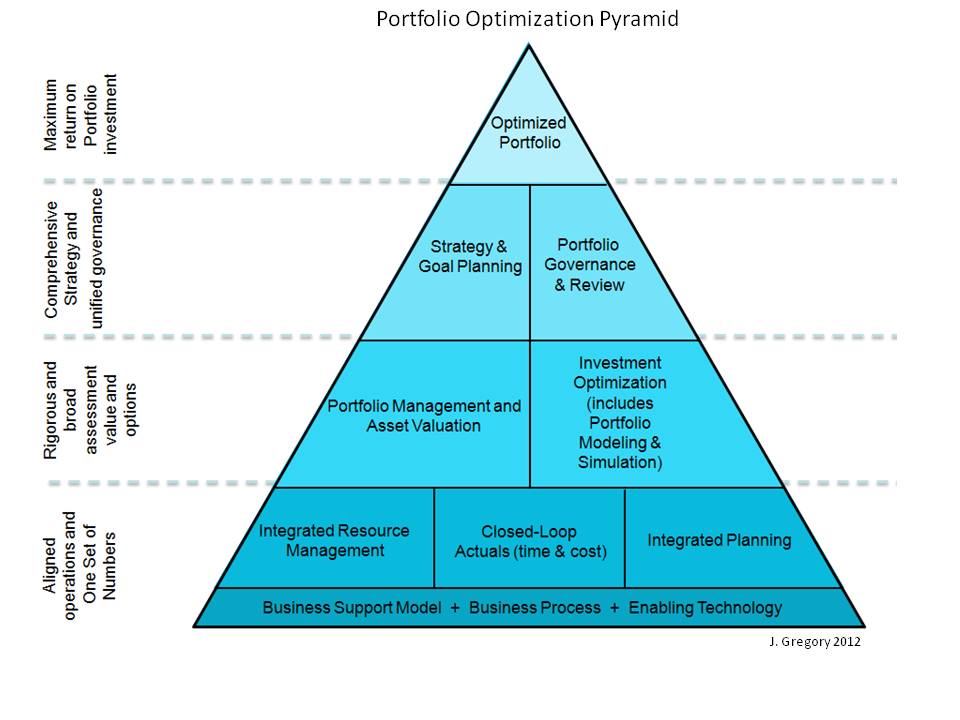
A robust backtesting framework requires at least 24 months of historical data and should compare prediction market signals against traditional indicators using Sharpe ratio improvements. The signal collection phase involves gathering minute-by-minute odds data from multiple platforms, creating a comprehensive dataset that captures both the signal evolution and market reactions to major events (Event contract resolution best practices for traders).
Performance metrics extend beyond simple return comparisons to include risk-adjusted measures that account for the non-linear nature of prediction market signals. The Sharpe ratio comparison reveals whether the additional complexity of incorporating prediction markets justifies the implementation costs. A minimum improvement of 0.2 in the Sharpe ratio typically indicates meaningful value addition to the portfolio strategy.
Statistical significance testing employs out-of-sample validation techniques to prevent overfitting to historical patterns. The framework divides data into training and testing periods, with the testing period reserved for final strategy validation. P-values below 0.05 indicate that the prediction market signal strategy provides statistically significant improvement over traditional approaches, while values above this threshold suggest the observed benefits may be due to random chance.
Advanced Integration: Combining Prediction Markets with Options Strategies for Enhanced Protection
| Probability Range | Recommended Strategy | Cost Structure |
|---|---|---|
| 50-70% | Protective Puts | 2-4% premium |
| 70-85% | Collar Strategy | 1-2% net cost |
| 85%+ | Ratio Spread | 0-1% credit |
Prediction market probabilities can optimize options strategies, with 70% probability events favoring protective puts while 85%+ events justify collar strategies. This integration creates a layered approach to risk management that combines the forward-looking nature of prediction markets with the asymmetric payoff profiles of options contracts (AI-driven arbitrage scanning for event contracts).
For events with 50-70% probability, protective puts provide straightforward downside protection at a cost of 2-4% premium. This strategy makes sense when the market-implied probability suggests meaningful uncertainty but not overwhelming confidence in either outcome. The put options act as portfolio insurance, limiting losses while preserving upside potential.
As probabilities increase to 70-85%, collar strategies become optimal, involving the purchase of protective puts coupled with the sale of covered calls. This approach reduces the net cost to 1-2% while maintaining downside protection. The strategy works particularly well for events like regulatory decisions where partial protection against adverse outcomes is valuable but complete hedging would be prohibitively expensive.
The Regulatory Landscape: How CFTC Oversight Changes Prediction Market Signal Reliability
| Platform Type | Regulatory Status | Institutional Adoption |
|---|---|---|
| Kalshi | CFTC Regulated | 300% increase |
| Polymarket | Offshore Operations | Limited institutional |
| Decentralized | No Direct Regulation | Early adopters only |
CFTC regulation of platforms like Kalshi since 2024 has increased institutional adoption by 300% while reducing counterparty risk to near-zero levels. This regulatory framework provides the legal clarity and consumer protections necessary for large institutional investors to incorporate prediction market signals into their portfolio optimization processes.
The regulatory environment creates distinct advantages for CFTC-regulated platforms over their offshore or decentralized counterparts. Kalshi’s compliance with federal oversight includes mandatory segregation of customer funds, regular audits, and transparent dispute resolution processes. These safeguards address the primary concerns that have historically limited institutional participation in prediction markets (Decentralized prediction markets vs CFTC regulated platforms).
Compliance requirements for portfolio integration extend beyond basic platform selection to include documentation of signal validation processes and risk management procedures. Institutional investors must demonstrate that prediction market signals undergo the same rigorous testing as traditional data sources before being incorporated into portfolio allocation models. This regulatory scrutiny has paradoxically increased the credibility of prediction market signals by forcing a more systematic approach to their integration.
Real-World Application: A Step-by-Step Portfolio Adjustment Using 2026 Fed Rate Cut Signals
| Probability Level | Duration Adjustment | Sector Rotation |
|---|---|---|
| Below 50% | +10% to +15% | Reduce defensive exposure |
| 50-75% | Neutral | Maintain current allocation |
| Above 75% | -15% to -20% | Increase defensive sectors |
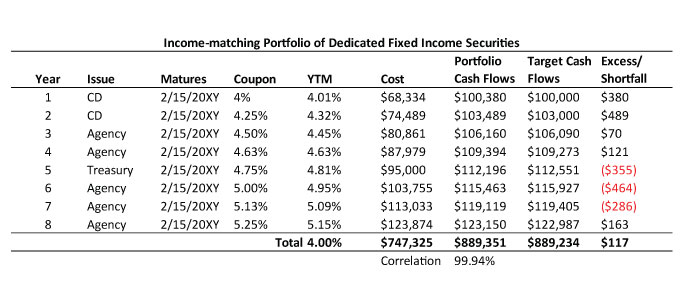
When prediction markets show 75% probability of Fed rate cuts, optimal portfolio adjustment involves reducing duration exposure by 15-20% while increasing defensive sector allocations. This systematic approach translates the probabilistic forecast into concrete portfolio actions that align with the expected monetary policy environment.
The signal interpretation process begins with verifying the prediction market consensus across multiple platforms. When Polymarket, Kalshi, and decentralized platforms all show probabilities above 70%, the signal strength justifies more aggressive portfolio adjustments. The position sizing methodology employs a graduated approach, with larger adjustments reserved for higher probability thresholds that indicate greater confidence in the forecast.
Risk management parameters include stop-loss levels and maximum drawdown constraints that prevent excessive exposure to any single prediction market signal. The framework typically limits total allocation adjustments based on prediction market signals to 25-30% of the portfolio, ensuring that traditional analysis and diversification principles remain central to the investment strategy.
Future Trends: AI Integration and the Next Evolution of Prediction Market Signal Processing
| AI Model Type | Accuracy Improvement | Integration Challenge |
|---|---|---|
| Neural Networks | 15-20% better | Data quality requirements |
| Ensemble Methods | 10-15% better | Computational complexity |
| Reinforcement Learning | 5-10% better | Training data limitations |
Machine learning models are now achieving 15-20% better accuracy than human traders in processing prediction market signals for portfolio optimization. This technological advancement represents a fundamental shift in how prediction market data gets transformed into investment decisions, moving from manual interpretation to automated signal processing.
AI model types and their accuracy improvements vary significantly based on the complexity of the prediction task and the quality of training data. Neural networks excel at identifying non-linear relationships in prediction market data, achieving the highest accuracy improvements but requiring substantial computational resources and high-quality labeled datasets for training.
Integration challenges and solutions center on the need for real-time signal processing capabilities that can handle the high-frequency nature of prediction market data. Emerging platform features for automated signal processing include API integrations that stream prediction market odds directly into portfolio management systems, enabling millisecond-level response to changing probabilities. These technological developments are making prediction market-based portfolio optimization accessible to a broader range of investors beyond institutional quant teams.