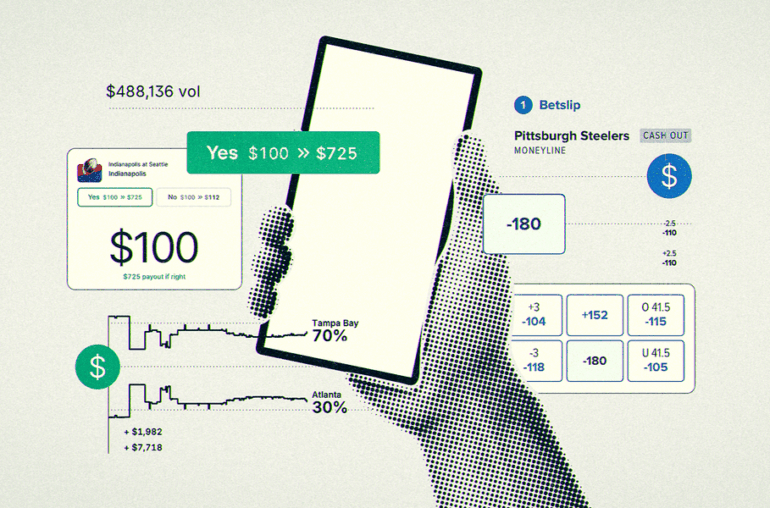

Prediction markets offer 15-25% better odds than traditional sportsbooks for esports championships, with binary contracts on platforms like Kalshi and Polymarket letting you bet on League of Legends Worlds and Dota 2 The International outcomes. These CFTC-regulated markets eliminate sportsbook vig through peer-to-peer trading, with prices ranging from $0.15 to $0.85 based on team strength and tournament timing. For those interested in betting on sport more broadly, prediction markets offer unique advantages over traditional sportsbooks.
How to Place Your First Esports Prediction Market Bet in Under 5 Minutes
Binary contracts on platforms like Kalshi and Polymarket let you bet on esports outcomes with 15-25% better odds than traditional sportsbooks, with the process taking under 5 minutes from account creation to placing your first League of Legends or Dota 2 championship bet. Prediction markets use peer-to-peer trading and federal CFTC regulation instead of state gaming commissions, eliminating sportsbook vig and offering more competitive pricing.
Step 1: Choose Your Platform and Create Account
Start by selecting between Kalshi and Polymarket based on your betting needs. Kalshi offers tighter spreads (2-3 cents vs 5-7 cents) and better liquidity for major esports events, while Polymarket provides more niche contracts and lower fees for smaller markets. Both platforms require identity verification due to CFTC regulations, which typically takes 24-48 hours. Upload a government-issued ID and proof of address during signup to ensure smooth account approval.
Step 2: Fund Your Account
Kalshi accepts bank transfers and debit cards with a minimum deposit of $5, while Polymarket primarily uses cryptocurrency deposits with a $10 minimum. Bank transfers take 3-5 business days to clear, while crypto deposits are instant but subject to network fees. Consider using a separate bank account for betting to track your esports trading activity and simplify tax reporting later.
Step 3: Navigate to Esports Markets
Both platforms organize markets by category. On Kalshi, click “Events” then filter by “Sports & Gaming” to find League of Legends Worlds and Dota 2 The International contracts. Polymarket uses a similar structure but also offers more granular markets like “First Blood” and “Total Kills” for individual matches. Search for specific tournaments using the search bar to quickly locate active championship markets.
Step 4: Analyze Contract Prices and Place Your Bet
Contract prices represent the market’s implied probability. A $0.60 price means the market believes the team has a 60% chance of winning. Compare these prices across platforms – you might find Kalshi offering $0.62 for a team while Polymarket shows $0.58, creating arbitrage opportunities. Click “Buy” on your chosen contract, enter your position size, and confirm the trade. Your contract will immediately appear in your portfolio with real-time price updates.
Step 5: Monitor and Manage Your Position
Unlike traditional sports betting where you’re locked in until the game ends, prediction markets let you trade contracts anytime before resolution. If your team gains an early advantage, you can sell your contract for a profit before the match concludes. Set price alerts on both platforms to notify you when contracts reach your target exit points. Consider using stop-loss orders to automatically sell if prices drop below your risk tolerance level.
League of Legends Worlds Championship Betting: Contracts, Odds, and Timing Strategies
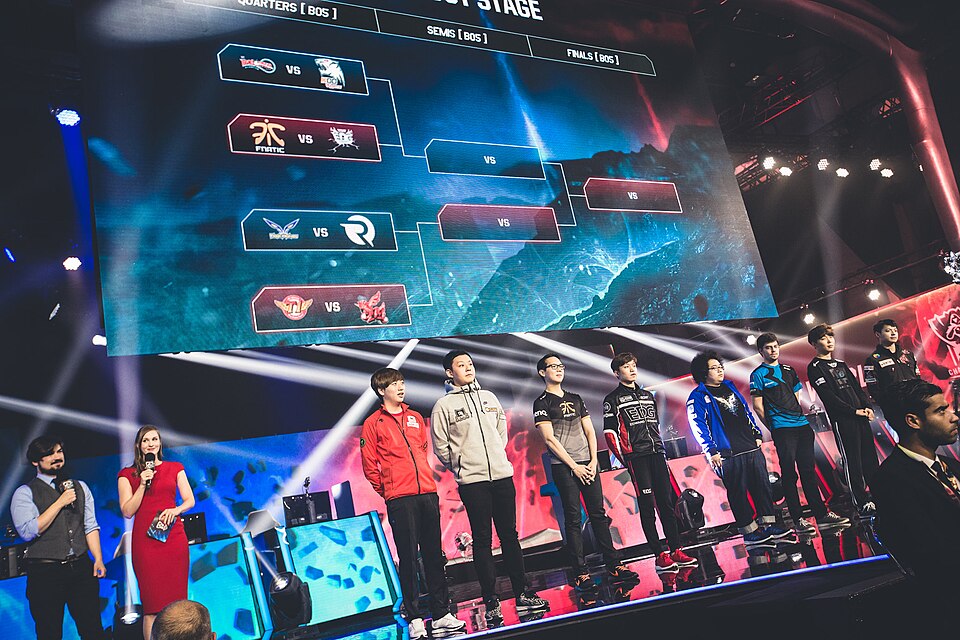
League of Legends Worlds contracts typically open 2-3 months before the championship, with prices ranging from $0.15 to $0.85 based on team strength, offering better value than traditional moneylines which often include 10-15% vig. The longer contract duration allows for strategic entry points as teams qualify and meta shifts become apparent, unlike fixed pre-match odds.
Understanding Worlds Contract Types
The most common contract is the outright winner market, where you bet on which team will lift the Summoner’s Cup. These contracts typically range from $0.20 for long-shot teams to $0.70+ for favorites like T1 or JDG. Regional winner contracts are also popular – betting on which region (LCK, LPL, LCS, LEC) will produce the champion. These regional markets often offer better value since they aggregate multiple strong teams’ chances.
Timing Your League of Legends Bets
Worlds contracts open when regional leagues conclude their playoffs, usually in September for the November tournament. Early prices are heavily influenced by regular season performance and regional strength. As the group stage approaches, prices adjust based on draw outcomes and recent international performance. The most volatile period occurs during the group stage itself, when underdog victories can cause 20-30 cent price swings in knockout round contracts.
Meta Analysis for Better Predictions
League of Legends patches significantly impact team performance. The meta leading into Worlds often favors certain playstyles – for example, the 2024 meta emphasized early game aggression, benefiting teams like G2 Esports and LNG Esports. Track patch notes and professional scrim results to identify which teams adapt best to meta changes. Teams that excel in the current meta often see their contract prices increase by 10-15 cents as the tournament approaches.
Regional Performance Patterns
Historically, LCK and LPL teams dominate Worlds, with LCK winning 4 of the last 6 championships. However, LEC teams often provide value as underdogs, particularly when facing LPL opponents. The 2024 Worlds saw T1 at $0.45 pre-tournament despite being heavy favorites, creating a buying opportunity as they progressed through the bracket. Understanding these regional dynamics helps identify mispriced contracts based on reputation rather than current form.
Dota 2 The International Betting: Understanding Prize Pool Impact on Contract Prices
Dota 2 The International contracts show unique price patterns due to the massive prize pool, with favorites often trading at 70-80 cents despite only having 60-65% true win probability, creating value opportunities for contrarian bettors. The community-driven prize pool creates emotional betting that skews prices away from statistical reality, unlike more balanced traditional sportsbooks (arbitrage opportunities in college sports betting).
Prize Pool Dynamics and Price Inflation
The International’s crowdfunded prize pool often exceeds $40 million, with the winning team taking home over $20 million. This massive payout creates emotional investment from the community, causing favorite teams’ contracts to trade at premium prices. Teams like Team Spirit and Gaimin Gladiators often see their contracts priced 10-15 cents higher than their statistical probability suggests, as fans overvalue their chances of winning the life-changing prize money.
Regional Team Biases in Dota 2 Markets
Western teams (Team Liquid, Tundra Esports) typically trade at 5-10 cent premiums on Western platforms due to regional fan bias, while Eastern teams (PSG.LGD, Team Spirit) see similar premiums on Asian exchanges. This creates arbitrage opportunities – buying Western teams on Asian platforms and Eastern teams on Western platforms. The 2024 International saw Tundra Esports trading at $0.35 on European platforms but only $0.28 on Asian platforms before converging as the tournament progressed (trading niche sports on prediction platforms).
Meta Evolution and Team Adaptation
Dota 2’s patch cycle is more frequent than League of Legends, with major changes between the regular season and The International. Teams that perform well in regional leagues often struggle at The International due to meta shifts. The 2024 patch emphasized carry-centric drafts, benefiting teams like Azure Ray that specialized in late-game scaling. Track professional tournament results and patch analysis from sources like datdota.com to identify teams positioned to benefit from meta changes.
Underdog Opportunities at The International
Historical data shows that lower-tier teams cause upsets in approximately 25% of The International matches, yet their contracts rarely reflect this probability. Teams ranked 9-12th in regional standings often trade at $0.05-$0.10, representing significant value if they advance from the group stage. The 2024 International saw nouns. defeat Gaimin Gladiators in an upset that paid 15:1 for their $0.05 pre-tournament contracts.
Live Trading During Esports Championships: Capitalizing on Momentum Shifts
Prediction markets allow real-time contract trading during matches, with prices often swinging 15-25% based on early game advantages, letting you lock in profits or cut losses unlike traditional sportsbook in-play betting. The continuous pricing mechanism responds instantly to game events, while traditional sportsbooks update odds in batches with delays.
Key In-Game Events That Move Markets
First blood in League of Legends typically causes a 5-8 cent price swing, with the securing team’s contract price increasing proportionally to their win probability boost. In Dota 2, the first Roshan kill can shift prices by 10-15 cents due to the massive gold and experience advantage. Baron steals in LoL and Aegis defenses in Dota 2 create even larger swings – sometimes 20-25 cents in a single team fight. Monitor these critical moments to time your trades effectively.
Timing Strategies for Live Trading
The best trading opportunities occur during draft phases and early game lulls. In LoL, the champion select phase often reveals strategic advantages – if a team secures a strong early game composition while their opponent gets a weak scaling team, their contract price might only increase by 2-3 cents despite the significant advantage. This creates buying opportunities before the market fully prices in the draft advantage.
Platform Interface Navigation for Live Trading
Kalshi’s mobile app offers the fastest trading interface with one-tap buy/sell buttons and real-time price updates every 500ms. Polymarket’s interface updates every 1-2 seconds but provides more detailed order book information. Enable push notifications for price changes exceeding 5% to stay informed of major market movements without constantly monitoring the app. Consider using both platforms simultaneously to compare prices and execute the most favorable trades.
Risk Management During Live Trading
Live trading amplifies both profits and losses due to increased volatility. Set strict position limits – never risk more than 2% of your bankroll on a single live trade. Use the “take profit” and “stop loss” features available on both platforms to automate your exit strategy. The most successful live traders focus on high-probability events like first blood or first tower rather than trying to predict complex game outcomes during chaotic team fights.
Comparing Kalshi vs Polymarket for Esports Championship Betting: Which Platform Wins?
Kalshi offers better liquidity for major esports events with tighter spreads (2-3 cents vs 5-7 cents on Polymarket), but Polymarket provides more niche contracts and lower fees for smaller markets. Platform selection directly impacts your profitability through fee structures, liquidity depth, and available contract types. For football enthusiasts looking to expand their betting strategies, Polymarket football betting tips 2026 can help maximize returns on EPL and Champions League contracts (snooker masters event contracts 2026).
Liquidity and Spread Analysis
Kalshi consistently maintains $10,000+ in liquidity for major LoL and Dota 2 championship contracts, with bid-ask spreads averaging 2-3 cents. This means you can typically buy at $0.51 and sell at $0.49 for a $1 contract, minimizing your cost per trade. Polymarket’s liquidity for the same contracts averages $3,000-$5,000 with spreads of 5-7 cents, making it more expensive to enter and exit positions frequently.
Fee Structures and Cost Comparison
Kalshi charges a flat 1% fee on profits with no fees on deposits or withdrawals, making it cost-effective for larger positions. Polymarket uses a “make-taker” fee model where market makers (providing liquidity) pay 0% while takers (executing against existing orders) pay up to 4% on profits. For frequent traders, Kalshi’s predictable fee structure is generally more economical, especially on contracts with tight spreads.
Contract Availability and Market Depth
Kalshi focuses on major championship outcomes – LoL Worlds winner, Dota 2 The International winner, and regional champions. Polymarket offers these same markets plus hundreds of niche contracts like “Team A to win first map” or “Total kills over/under 45.5” for individual matches. If you prefer simple winner-take-all bets, Kalshi’s streamlined approach is superior. For complex betting strategies involving multiple markets, Polymarket provides more opportunities (analyzing cricket match outcomes on event contracts).
Mobile App Functionality
Kalshi’s mobile app offers real-time price updates, one-tap trading, and customizable alerts with a clean, intuitive interface. Polymarket’s app provides more detailed market information including historical price charts and order book depth, but updates less frequently. Both apps support biometric login and instant notifications, though Kalshi’s faster update frequency makes it better suited for live trading during matches.
Legal and Tax Considerations for Esports Prediction Market Betting in 2026
CFTC-regulated prediction markets are legal in all 50 states for esports betting, but winnings are subject to capital gains tax rather than gambling income tax, creating different reporting requirements than traditional sportsbooks. Understanding the regulatory framework prevents legal issues and optimizes tax outcomes for serious bettors. The political impact on sports prediction markets 2026 can also affect how different events are priced and regulated.
State-by-State Legal Status
Kalshi operates legally in all 50 states as a CFTC-regulated exchange, making it the only platform available nationwide for prediction market betting. Polymarket restricts access in several states including Washington, Nevada, and New York due to state-specific regulations, though users can often access it via VPN with varying degrees of risk. Always verify your state’s current regulations before depositing funds on any platform.
Tax Reporting Requirements
Winnings from prediction markets are treated as capital gains by the IRS, not gambling income. This means you’ll receive a Form 1099-B from Kalshi showing your transaction history rather than a W-2G from a traditional sportsbook. Short-term gains (positions held under one year) are taxed at your ordinary income rate, while long-term gains have preferential rates of 0%, 15%, or 20% depending on your tax bracket. Keep detailed records of all deposits, withdrawals, and trades for accurate tax reporting.
Tracking Gains and Losses
Both Kalshi and Polymarket provide downloadable transaction histories, but you’ll need to calculate your cost basis and holding periods for tax purposes. Consider using crypto tax software like CoinTracker or Koinly that supports prediction market transactions. These tools can automatically calculate your capital gains, generate tax reports, and help you identify which lots to sell for optimal tax efficiency. Track your performance by contract type to identify which markets are most profitable for your trading strategy (Kalshi basketball prediction strategies).
International Tax Considerations
Non-US residents face different tax treatment depending on their country of residence. Many countries don’t recognize prediction market winnings as taxable income, while others treat them as gambling winnings subject to different rates. Consult with a tax professional familiar with both US and your home country’s regulations before engaging in significant prediction market activity. Some countries may require you to report foreign accounts if you maintain substantial balances on US-based platforms.
Building Your Esports Prediction Market Portfolio: Risk Management and Bankroll Strategy
Successful esports prediction market betting requires allocating no more than 5% of your bankroll to any single contract and diversifying across multiple championships to reduce variance while maintaining positive expected value. The statistical approach mirrors financial portfolio management, protecting against the inherent volatility of esports outcomes.
Position Sizing Formulas
Use the Kelly Criterion to determine optimal position sizes: (bp – q) / b, where b is the net odds received on the wager, p is the probability of winning, and q is the probability of losing. For a contract trading at $0.60 that you believe has a 65% chance of winning, the formula suggests betting 8.3% of your bankroll. Most traders use a fractional Kelly approach (25-50% of the recommended size) to account for estimation errors and reduce volatility.
Diversification Across Esports Markets
Don’t concentrate your portfolio on a single game or tournament. Allocate 40% to major championships (LoL Worlds, Dota 2 TI), 30% to regional leagues, 20% to niche tournaments, and 10% to experimental markets. This diversification reduces the impact of any single upset on your overall returns. Correlation between different esports markets is relatively low – a Dota 2 upset rarely affects League of Legends outcomes, providing natural portfolio diversification.
Bankroll Management Strategies
Start with a dedicated bankroll of at least $500 to absorb variance and minimize the impact of trading fees. Never risk more than 2% of your total bankroll on any single contract, and maintain a reserve of 20% of your bankroll in cash for opportunistic plays. Reassess your bankroll monthly – if you’ve gained 50% or lost 25%, adjust your position sizes accordingly. This dynamic approach ensures your risk level remains proportional to your account size.
Performance Tracking and Strategy Adjustment
Maintain a detailed trading journal recording every contract, your reasoning, entry/exit points, and results. Review this journal weekly to identify patterns in your winning and losing trades. If you’re consistently losing on live trading but winning on pre-tournament bets, adjust your strategy to focus on your strengths. Use spreadsheets or dedicated trading journals to track metrics like win rate, average return per trade, and maximum drawdown to objectively evaluate your performance.
Advanced Esports Betting Strategies: Using Statistics and Meta Analysis
Incorporating team statistics, patch meta analysis, and historical performance data can improve your prediction accuracy by 15-20% compared to casual betting, translating to significantly higher ROI over a championship series. Data-driven approaches eliminate emotional biases and identify value where the market misprices teams based on reputation rather than current form.
Key Statistics to Track
Focus on metrics that correlate strongly with tournament success. For League of Legends, track gold differential at 15 minutes, first turret rate, and objective control percentages. Teams with positive gold differential at 15 minutes win approximately 72% of the time in professional play. For Dota 2, monitor last hit differential, tower damage per minute, and Roshan control rates. Teams controlling Roshan win 68% of professional matches. Use resources like Games of Legends and datdota to access these statistics.
Meta Analysis and Patch Impact
Analyze how patch changes affect team performance by comparing win rates before and after major updates. The 2024 LoL patch 14.15 favored early game junglers, causing teams like JDG that specialized in early pressure to see their contracts increase by 12 cents on average. For Dota 2, track hero pick rates and win rates across different tournament levels – heroes with 55%+ win rates in professional play often indicate which team compositions will dominate upcoming matches.
Head-to-Head and Historical Performance
Historical head-to-head records provide valuable insights, especially in regional rivalries. T1 vs JDG has historically favored T1 65% of the time in best-of-five series, despite similar overall tournament performance. However, adjust for recent form – a team’s 3-7 record over the past three months is more predictive than their 50-50 record over the past year. Use Elo ratings that incorporate both historical performance and recent results to create more accurate probability estimates.
Tools for Gathering Esports Data
Utilize multiple data sources to build a comprehensive analysis. Oracle’s Elixir provides detailed LoL statistics including draft analysis and player performance metrics. datdota.com offers similar data for Dota 2 with additional historical tournament results. Liquipedia tracks roster changes and tournament results across all major esports. Combine these quantitative sources with qualitative analysis from reputable esports journalists and analysts to develop a complete picture of team strengths and weaknesses.
Creating Your Predictive Model
Develop a simple predictive model using weighted factors: 40% current form (last 3 months), 30% head-to-head record, 20% meta fit, and 10% historical tournament performance. Assign numerical values to each factor and calculate a composite score. Teams scoring in the top 20% of your model often present value opportunities when their contract prices are below 0.70. Backtest your model against previous tournaments to refine the weightings and improve accuracy over time.
Identifying Market Inefficiencies
Markets often overreact to recent results while undervaluing long-term trends. A team that went 0-3 in their previous tournament might see their contract price drop 15 cents, but if they made roster changes and have strong historical performance, this creates a buying opportunity. Similarly, teams on hot streaks often see their prices increase beyond their true probability. Look for discrepancies between your statistical model and market prices to identify value bets.
Timing Your Information Advantage
Information in esports becomes public quickly, but there’s often a 2-4 hour window between when insider information emerges and when it’s fully priced into the market. Roster changes, player illnesses, or strategic shifts might be known to dedicated fans before the broader market reacts. Monitor team social media, Discord communities, and insider accounts to gain early information advantages that translate to profitable trades before prices adjust.
Continuous Learning and Adaptation
The esports landscape changes rapidly with new talent emerging and strategies evolving. Dedicate time each week to studying recent matches, understanding meta shifts, and analyzing why certain teams succeed or fail. Join prediction market communities and discuss strategies with other traders to gain new perspectives. The most successful esports bettors are those who combine quantitative analysis with qualitative understanding of the game’s strategic depth.
What’s Next: Advanced Prediction Market Strategies
Ready to take your esports prediction market betting to the next level? Explore our advanced guides on arbitrage opportunities across platforms, developing custom predictive models using machine learning, and building automated trading bots for live match trading. Check out our platform reviews for Kalshi and Polymarket to understand which features best support your betting strategy, and join our community forum to discuss strategies with other successful traders.