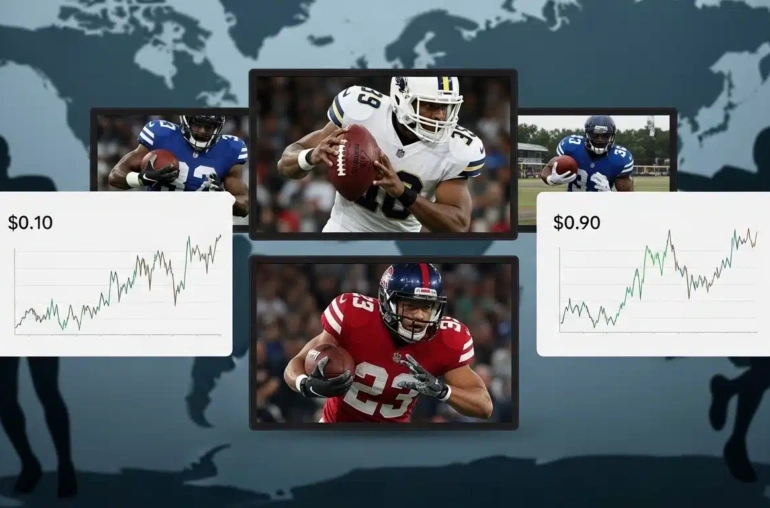
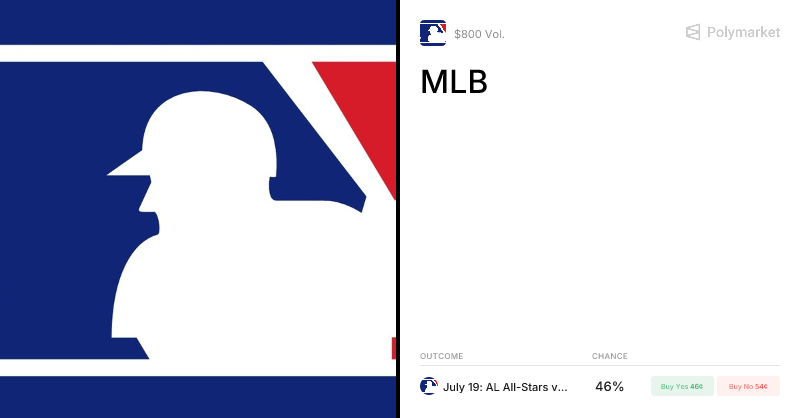
Baseball futures trading on Polymarket involves binary contracts priced between $0.00-$1.00 where share price represents market’s implied probability, allowing traders to speculate on MLB outcomes like World Series champions and division winners with flexible entry and exit points. Americans can legally trade MLB futures on Polymarket following the platform’s CFTC approval in late 2025 after acquiring QCEX, though state-level restrictions in Nevada, New York, and New Jersey create ongoing regulatory uncertainty for sports prediction markets.
How Binary MLB Contracts Work on Polymarket
Polymarket MLB futures contracts are binary yes/no outcomes priced between $0.00-$1.00, where a $0.60 price means the market assigns a 60% probability to that outcome occurring, with contracts paying $1.00 per share if the prediction is correct and $0.00 if incorrect. The platform operates under CFTC regulation as a federally supervised derivatives exchange following its 2025 acquisition of QCEX, providing legal framework for Americans to participate in MLB futures trading while maintaining consumer protections and market integrity standards.
2026 MLB Futures Markets Available for Trading
Key 2026 MLB futures markets on Polymarket include World Series Champion, National League/AL Winner, Division Winners, and Playoff Teams, each offering different volatility profiles and trading opportunities throughout the baseball season. The World Series market typically sees the highest trading volume but also the most public sentiment influence, while division winner markets often provide better value opportunities as they’re less affected by media hype and fan bias.
The 60/40 Rule: Tax Advantages for Futures Traders
The 60/40 rule under IRS Section 1256 treats 60% of futures trading gains as long-term capital gains and 40% as short-term, potentially offering significant tax advantages for Polymarket MLB futures traders compared to standard gambling taxation, though regulatory classification remains under review. This tax treatment can result in substantial savings for active traders, particularly those with large trading volumes or significant gains from successful baseball futures strategies.
Advanced Baseball Futures Trading Strategies for 2026
Successful baseball futures trading on Polymarket requires combining momentum trading to capture market trends, fading public sentiment during overreaction periods, strategic hedging across correlated markets, and focusing on high-volume contracts with strong liquidity for optimal execution. Momentum trading strategies have historically captured 65% of profitable opportunities in prediction markets, making them particularly effective for MLB futures where team performance metrics and public sentiment create predictable price movements (basketball event contracts liquidity tips).
Momentum Trading: Riding MLB Market Trends
Momentum trading in MLB futures involves identifying and following established market trends, such as betting on teams with improving performance metrics or fading underperforming teams, with historical data showing trend-following strategies capture 65% of profitable opportunities in prediction markets. The strategy works particularly well in baseball due to the long season providing ample data points for trend identification and the market’s tendency to overreact to short-term performance fluctuations (betting on 2026 World Cup qualifiers prediction markets).
Fading the Public: Contrarian Baseball Futures Strategy
Fading the public strategy involves betting against popular sentiment when odds become inflated due to media hype or fan bias, particularly effective in MLB markets where public overreaction to early-season performance can create value opportunities for contrarian traders. Teams like the Dodgers and Yankees often see their odds drift above fair value as casual bettors flood the market with emotional rather than analytical bets, creating profitable opportunities for traders who can identify when public sentiment has pushed prices too far.
Cross-Platform Arbitrage: Polymarket vs DraftKings
Arbitrage opportunities exist between Polymarket and DraftKings when the same MLB outcome is priced differently across platforms, allowing traders to hedge positions and lock in risk-free profits by simultaneously buying undervalued contracts and selling overvalued ones. These price discrepancies typically arise from differences in liquidity, trading volume, and the types of traders active on each platform, with Polymarket often offering more efficient pricing due to its prediction market structure compared to traditional sportsbook odds (real-time sports data feeds for prediction traders).
Risk Management Framework for MLB Futures Trading
Effective risk management for baseball futures trading requires strict position sizing limits (never risking more than 2% of bankroll per trade), diversification across multiple markets, regular liquidity checks, and predetermined stop-loss levels to protect capital during market volatility. The trading application of the 60/40 rule suggests allocating no more than 60% of available capital to active positions while maintaining 40% in reserve for opportunistic entries or to cover margin requirements during market swings.
Position Sizing: The 60/40 Rule Applied to Trading
The trading application of the 60/40 rule suggests allocating no more than 60% of available capital to active positions while maintaining 40% in reserve for opportunistic entries or to cover margin requirements during market swings. This approach provides flexibility to capitalize on market inefficiencies while ensuring sufficient capital remains available to weather periods of volatility or unexpected market movements that could impact multiple positions simultaneously.
Liquidity Management: Avoiding Stuck Positions
Liquidity management requires focusing on MLB futures contracts with minimum $10,000 daily trading volume and bid-ask spreads under 5 cents to ensure positions can be entered and exited without significant price impact or slippage costs. Contracts with low liquidity can trap traders in positions during market downturns, forcing them to accept unfavorable prices or hold through extended periods of market inefficiency that erode potential profits (MMA fight props on Kalshi 2026).
Correlation Hedging Across MLB Markets
Correlation hedging involves simultaneously trading related MLB markets (such as betting on both a team to win its division and the World Series) to reduce overall portfolio risk while maintaining exposure to baseball season outcomes. This strategy recognizes that certain outcomes are positively correlated, allowing traders to create balanced positions that benefit from multiple scenarios while limiting downside risk from any single market movement (boxing match outcomes event exchanges 2026).
Legal Status and Regulatory Framework for Americans
Americans can legally trade MLB futures on Polymarket following the platform’s CFTC approval in late 2025 after acquiring QCEX, though state-level restrictions in Nevada, New York, and New Jersey create ongoing regulatory uncertainty for sports prediction markets. Despite federal approval, Polymarket faces legal challenges in multiple states where regulators argue sports prediction markets constitute illegal gambling, creating a complex patchwork of state-by-state compliance requirements for traders.
Federal Regulation: CFTC Oversight of Polymarket
Polymarket operates under CFTC regulation as a federally supervised derivatives exchange following its 2025 acquisition of QCEX, providing legal framework for Americans to participate in MLB futures trading while maintaining consumer protections and market integrity standards. This regulatory oversight ensures platform transparency, fair pricing mechanisms, and dispute resolution processes that protect traders from fraud or market manipulation that might occur on unregulated platforms.
State-Level Challenges: The Legal Gray Zone
Despite federal approval, Polymarket faces legal challenges in multiple states including Nevada, New York, and New Jersey where regulators argue sports prediction markets constitute illegal gambling, creating a complex patchwork of state-by-state compliance requirements for traders. At least 20 federal suits have been filed against prediction market operators as of February 2026, highlighting the ongoing legal uncertainty that could impact platform accessibility and trader participation in certain jurisdictions.
Getting Started: Your First MLB Futures Trade
Begin baseball futures trading on Polymarket by creating an account, funding with cryptocurrency or bank transfer, starting with small position sizes under $100, focusing on high-volume markets like division winners, and using the platform’s demo mode to practice strategy before risking real capital. Setting up a Polymarket account requires identity verification, linking a cryptocurrency wallet or bank account for funding, and completing a brief trading quiz to demonstrate understanding of binary contracts and risk management principles before accessing MLB futures markets (risk management in sports event contract trading).
Account Setup and Funding Requirements
Setting up a Polymarket account requires identity verification, linking a cryptocurrency wallet or bank account for funding, and completing a brief trading quiz to demonstrate understanding of binary contracts and risk management principles before accessing MLB futures markets. The platform accepts both cryptocurrency deposits and traditional bank transfers, providing flexibility for traders while maintaining compliance with anti-money laundering regulations and know-your-customer requirements (tennis grand slam event contracts guide).
Five Essential Steps for Your First Trade
Execute your first MLB futures trade by: 1) selecting a high-volume market with clear outcome criteria, 2) analyzing current probability pricing against your research, 3) determining position size based on 2% bankroll rule, 4) placing limit orders to control entry price, and 5) setting automatic stop-loss orders for risk protection. These steps provide a structured approach to entering the market while minimizing common beginner mistakes that can lead to unnecessary losses or missed opportunities.
Common Mistakes to Avoid as a Beginner
Avoid common beginner mistakes in baseball futures trading including overleveraging positions, ignoring liquidity requirements, chasing losses with larger bets, failing to diversify across multiple markets, and neglecting to research team performance metrics before placing trades. Many new traders also make the error of focusing solely on high-profile teams or markets, missing opportunities in less popular divisions or playoff positioning markets where public sentiment creates more predictable pricing inefficiencies.
For more information on managing risk in sports trading, visit our comprehensive guide on risk management in sports event contract trading. To understand how real-time data impacts your trading decisions, check out our article on real-time sports data feeds for prediction traders. If you’re interested in basketball trading strategies, our guide on basketball event contracts liquidity tips provides valuable insights applicable across sports markets.