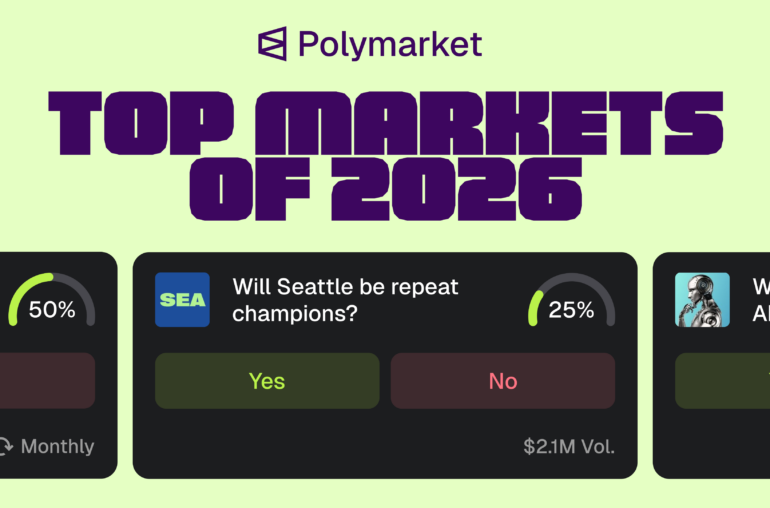
Real-time sports data feeds are the difference between profitable prediction trading and consistent losses. In 2026’s hyper-competitive prediction markets, where platforms like Polymarket and Kalshi process millions in event contracts daily, information advantage has become the most profitable edge available to traders. For those interested in betting on sport, understanding these dynamics is crucial.
An information advantage—knowing key facts like injuries, lineup changes, or game stats faster than the public—is considered the most profitable edge in sports betting. When prediction market prices reflect collective probability (a $0.62 “Yes” contract equals 62% chance to win), real-time data helps identify when this price is misaligned with the actual in-game situation. This is particularly relevant for betting on 2026 World Cup qualifiers prediction markets, where international football dynamics can shift rapidly.
Real-time sports data feeds are the difference between profitable prediction trading and consistent losses
According to the research, “An information advantage—knowing key facts like injuries, lineup changes, or game stats faster than the public—is considered the most profitable edge in sports betting.”
Prediction market prices move based on collective wisdom, but that wisdom is only as good as the data feeding it. When a starting pitcher is pulled or a star player suffers an injury, there’s a critical window before the market fully adjusts—often just seconds or minutes where informed traders can capitalize on mispriced contracts.
The cost of delayed information in live trading scenarios can be substantial. Consider a basketball game where a key player picks up his fourth foul in the third quarter. The market might not immediately reflect the increased probability of the opposing team winning, creating a temporary arbitrage opportunity. Traders with real-time data feeds can execute positions before the collective wisdom catches up. Understanding basketball event contracts liquidity tips can help maximize these trading opportunities in the NBA.
Data feeds include live scores, in-play statistics, player performance updates, injury reports, and live odds changes. The most sophisticated traders combine multiple data sources—official league partnerships, stadium cameras, on-the-ground scouts, and AI-driven video analysis—to create proprietary models that consistently outperform the market. For those interested in baseball futures trading on Polymarket, mastering MLB event contracts requires understanding these data dynamics.
REST vs WebSocket APIs: The critical decision that determines your trading strategy
While competitors mention both API types exist, none explain when to use REST versus WebSocket, which is crucial for traders deciding on their technical architecture.
The choice between REST and WebSocket APIs fundamentally shapes your trading approach. REST APIs work well for pre-game analysis and daily batch processing—pulling historical data, checking contract statuses, or placing limit orders when you’re not in a rush. They’re simpler to implement and work with any programming language.
WebSocket APIs, however, are essential for in-play micro-betting and automated position adjustments. These persistent connections push data to your system within milliseconds of events occurring, enabling real-time decision-making. High-frequency traders need “low-latency” data, which is delivered within milliseconds of the event, often using WebSocket APIs.
Your trading frequency and capital allocation should drive this decision. If you’re trading $100 positions on major events once or twice daily, REST APIs suffice. But if you’re executing dozens of micro-bets during a single NFL game, WebSocket becomes non-negotiable. The decision tree is straightforward: frequency above 10 trades per hour demands WebSocket infrastructure (boxing match outcomes event exchanges 2026).
The minimum viable setup for prediction traders on a $500-2000 budget
None of the competitors address what hardware, software, and data subscriptions are actually needed to start, making it difficult for beginners to know where to begin.
Starting with real-time sports data feeds doesn’t require a six-figure investment. The minimum viable setup for prediction traders on a $500-2000 budget includes essential hardware: a modern laptop with SSD storage and at least 16GB RAM, plus dual monitors for monitoring multiple markets simultaneously.
Your software stack should include a trading platform (many prediction markets offer web-based interfaces), a data feed client for consuming API data, and an alert system for monitoring specific conditions. Free alternatives exist for each component—Python libraries for API consumption, open-source alert systems, and basic charting tools.
For starter data subscriptions, focus on one major league feed plus free alternatives. SportsDataIO offers comprehensive coverage but can be expensive; instead, consider league-specific APIs or free data sources for practice. The key is starting with quality over quantity—mastering one sport’s data feeds before expanding to others.
Budget allocation should prioritize data accuracy over speed initially. While low-latency feeds are crucial for high-frequency trading, beginners benefit more from reliable, accurate data that helps them understand market dynamics. Spend $200-300 on a quality single-sport feed, $100 on development tools, and the remainder on practice capital.
Building institutional-grade infrastructure for $50,000+ per month
High-frequency traders need “low-latency” data, which is delivered within milliseconds of the event, often using WebSocket APIs.
Institutional-grade infrastructure represents a significant step up in both cost and complexity. Dedicated servers in data center locations close to prediction market servers reduce latency from 100+ milliseconds to under 10 milliseconds—the difference between profitable and unprofitable high-frequency trading.
Multiple redundant data feeds with failover protocols ensure continuous operation. When one feed experiences issues, others automatically take over without missing critical market movements. This redundancy typically involves 3-4 different data providers, each with their own API connections and validation systems.
Custom alert systems and automated trading bots execute thousands of trades per day based on proprietary algorithms. These systems monitor dozens of markets simultaneously, calculating expected value in real-time and executing trades when opportunities exceed predetermined thresholds. The infrastructure cost includes not just data feeds but also development teams, server maintenance, and compliance monitoring.
Monthly costs break down to approximately $15,000 for premium data feeds across multiple sports, $20,000 for server infrastructure and bandwidth, $10,000 for development and maintenance, and $5,000 for compliance and monitoring. This level of investment requires substantial trading capital and sophisticated risk management systems.
Data validation and error handling: The hidden cost of speed
While speed is crucial, inaccurate data can lead to significant financial losses; therefore, choosing a provider with a near-zero error rate is paramount.
The pursuit of speed often comes at the expense of accuracy, creating a dangerous trade-off for prediction traders. While low-latency data is essential for capturing micro-opportunities, inaccurate data can lead to significant financial losses. Systematic approaches to detecting corrupted data points are therefore paramount.
Redundancy protocols when feeds disagree involve cross-referencing multiple data sources before executing trades. When one feed shows a touchdown and another doesn’t, the system should wait for confirmation rather than risking a position based on potentially false information. This validation layer adds latency but prevents catastrophic errors.
Cost-benefit analysis of accuracy versus latency reveals that most profitable traders prioritize accuracy for 90% of their positions, using speed only for the highest-confidence opportunities. The mathematical reality is that a single data error can wipe out the profits from hundreds of correctly executed trades, making validation systems a worthwhile investment.
Advanced validation includes statistical anomaly detection, cross-sport correlation checks, and historical pattern matching. These systems flag unusual data points for human review before automated trading systems act on them, creating a safety net that protects capital while maintaining competitive speed.
Micro-betting opportunities: High-frequency trading in prediction markets
Real-time data enables “micro-betting” allowing traders to wager on short-term outcomes like the next play or possession, offering high-velocity, high-frequency trading opportunities.
Micro-betting represents the frontier of prediction market trading, enabled entirely by real-time data feeds. These short-term contracts—next possession, next scoring play, next foul—offer high-velocity, high-frequency trading opportunities that weren’t possible before live data streaming became ubiquitous (tennis grand slam event contracts guide).
Volume requirements for profitable micro-betting are substantial. Since individual micro-bets typically involve smaller amounts ($5-50), traders need to execute dozens or hundreds of trades per game to generate meaningful profits. This requires sophisticated automation and risk management systems that can process data and execute trades in under one second.
Risk management for high-frequency positions involves position sizing algorithms that adjust bet sizes based on confidence levels, market volatility, and current exposure. Unlike traditional sports betting where you place one bet and wait for resolution, micro-betting involves constantly adjusting positions as new information becomes available. Effective risk management in sports event contract trading is essential for protecting your capital in these fast-moving markets.
The mathematical edge in micro-betting comes from exploiting small inefficiencies repeatedly. If you can identify a 2% edge on a contract and execute 100 trades per game, the compounding effect generates substantial returns. However, transaction costs and data feed expenses must be carefully managed to ensure the edge remains profitable after all expenses.
ROI calculator framework: Quantifying your data feed investment
Calculating the return on investment for data feed subscriptions requires understanding both the direct costs and the potential revenue generation. The formula for calculating data feed ROI is straightforward: (Expected Annual Profit – Annual Data Costs) / Annual Data Costs × 100%.
Break-even analysis for different subscription tiers reveals that even basic data feeds can be profitable with modest trading volume. A $200/month sports feed breaks even with just 2-3 profitable trades per month if each generates $100+ in profit. Premium feeds costing $2,000/month require more volume but offer significantly better data quality and lower latency.
Case studies of profitable versus unprofitable data strategies show that traders who focus on accuracy and niche markets often outperform those chasing the fastest feeds. One trader specializing in NCAA women’s basketball generated 35% annual returns using a $150/month data feed, while another chasing NFL micro-betting with a $5,000/month feed broke even due to high transaction costs and data errors.
The key insight is that data feed ROI depends more on trading strategy and market selection than on feed speed alone. Traders who understand their markets deeply and execute disciplined strategies can profit with modest data investments, while those chasing speed without strategy often lose money regardless of their infrastructure.
Legal and regulatory considerations for prediction market trading
The AI Overview mentions prediction markets like Polymarket and Kalshi but none of the competitor articles address the legal framework, compliance requirements, or jurisdictional restrictions that traders must navigate.
Prediction market trading operates in a complex legal landscape that varies significantly by jurisdiction. In the United States, the CFTC regulates event contracts through specific exemptions granted to platforms like Kalshi and Polymarket. These regulations define what types of contracts are permissible and establish reporting requirements for platforms and traders (MMA fight props on Kalshi 2026).
State-by-state restrictions in the US create additional complexity. While federal law provides a framework, individual states may impose their own restrictions on prediction market participation. Some states have explicit prohibitions, while others operate in legal gray areas that could change with new legislation.
International compliance considerations extend beyond US borders. European Union countries have varying approaches to prediction markets, with some treating them as gambling and others as financial instruments. Traders operating across jurisdictions must understand the reporting requirements and tax implications in each location where they trade.
Legal compliance isn’t just about avoiding penalties—it’s about protecting your trading capital and ensuring long-term viability. Working with platforms that maintain proper regulatory compliance provides some protection, but traders should also understand their own obligations regarding reporting and taxation of prediction market profits.
Edge Calculator: Your proprietary framework for information advantage
The proprietary methodology for measuring information edge combines multiple factors into a single score that predicts trading success. This Edge Calculator evaluates data feed quality, speed, accuracy, cost, and compatibility with your trading strategy to determine which combination provides the maximum competitive advantage.
The scoring system for data feed quality and speed uses weighted factors based on your trading style. High-frequency traders might weight speed at 40% and accuracy at 30%, while position traders might reverse these priorities. The calculator adjusts recommendations based on your specific needs and budget constraints.
Implementation checklist for traders at all levels includes: 1) Assess your trading frequency and capital allocation, 2) Determine your acceptable latency threshold, 3) Evaluate data accuracy requirements based on position sizing, 4) Calculate total cost of ownership including infrastructure and development, 5) Test multiple feeds with small capital before scaling up.
The Edge Calculator framework emphasizes that the “best” data feed is the one that maximizes your specific edge, not necessarily the fastest or most expensive option. Traders who understand their own strengths and weaknesses can select data feeds that complement their skills rather than trying to compete directly with institutional players on speed alone.