

The Kelly Criterion can increase your prediction market returns by 30-40% while reducing ruin risk by 80%, but only if you account for platform fees and liquidity constraints. This mathematical framework transforms edge detection into optimal bet sizing, yet most traders either ignore it entirely or apply it incorrectly, turning a powerful tool into a liability. Understanding how to calculate and implement Kelly sizing specifically for prediction markets—where fees, liquidity, and resolution timing create unique challenges—separates profitable traders from those who eventually bust.
The Kelly Criterion Formula for Prediction Markets: Your Mathematical Edge
The Kelly Criterion formula (f* = (bp – q)/b) calculates optimal bet size where b is odds, p is win probability, and q is loss probability, potentially increasing returns by 30-40% while reducing ruin risk by 80% when properly applied to prediction markets. This mathematical framework transforms edge detection into optimal bet sizing, yet most traders either ignore it entirely or apply it incorrectly, turning a powerful tool into a liability. Understanding how to calculate and implement Kelly sizing specifically for prediction markets—where fees, liquidity, and resolution timing create unique challenges—separates profitable traders from those who eventually bust.
Core Calculation Breakdown with Prediction Market-Specific Variables
Traditional Kelly calculations assume frictionless markets and immediate resolution, but prediction markets introduce platform fees (typically 0.5%-2% trading fees plus 2% performance fees) and liquidity constraints that fundamentally alter optimal sizing. The modified Kelly formula for prediction markets becomes: f* = ((b × p) – q – f)/b, where f represents the fee-adjusted edge reduction. For example, if you identify a 10% edge on a 2:1 odds contract with 2% platform fees, your effective edge drops to 8%, reducing optimal bet size from 25% to 20% of bankroll. This fee adjustment alone can prevent the overbetting that destroys many otherwise profitable prediction market strategies.
Why Traditional Kelly Needs Modification for Platform Fees and Liquidity Constraints
Prediction market platforms like Polymarket and Kalshi charge fees that traditional Kelly calculations ignore, creating a systematic overbetting problem. Polymarket’s 2% performance fee on profits means a winning $100 bet only returns $98, while Kalshi’s 0.5%-2% trading fees apply to both entry and exit. These fees compound across multiple contracts and resolution periods, effectively reducing your edge by 15-30% depending on trading frequency. Additionally, liquidity constraints mean your optimal Kelly bet might exceed available market depth, forcing you to either accept worse prices or reduce position size below the Kelly recommendation—a critical consideration that pure mathematical models often overlook. Understanding the underlying market mechanisms, such as the difference between LMSR and order book systems, can help traders better navigate these constraints.
Common Mistakes That Turn Kelly From Edge to Liability
The most dangerous Kelly mistake in prediction markets is overestimating your edge while ignoring fees and liquidity constraints. Traders often calculate Kelly sizing based on raw probability estimates without adjusting for platform costs, leading to systematic overbetting. Another critical error is applying full Kelly to correlated markets—placing maximum bets on multiple related contracts like presidential election outcomes creates portfolio-level risk that single-contract Kelly calculations don’t capture. Finally, many traders fail to update their probability estimates as new information emerges, continuing to bet based on outdated edges while market conditions have shifted, turning what should be optimal sizing into a path to rapid account depletion.
Step-by-Step Implementation: Calculating Your Kelly Bet Size in 2026
Calculate your edge by comparing your probability estimate to market odds, then apply the Kelly formula while subtracting platform fees (typically 0.5%-2% trading fees plus 2% performance fees) to determine optimal position size. This systematic approach transforms abstract probability estimates into concrete bet sizes, but requires careful attention to platform-specific fee structures and liquidity constraints that vary significantly between prediction market operators. The implementation process involves three critical steps: edge calculation, fee adjustment, and liquidity verification, each of which must be executed precisely to avoid the common pitfalls that turn Kelly from advantage to liability.
Edge Calculation Methodology for Prediction Markets vs. Traditional Gambling
Prediction market edge calculation differs fundamentally from traditional gambling because you’re often betting against other traders rather than a house with fixed odds. Your edge equals (your probability estimate – market-implied probability) × (1 – platform fees). For instance, if Polymarket shows 60% odds on a contract but your analysis suggests 70% probability, your raw edge is 10%. However, with Polymarket’s 2% performance fee, your effective edge becomes 8% (10% × 0.98). This fee-adjusted edge then feeds into the Kelly formula: f* = (0.08 × 2 – 0.4)/2 = 0.04, suggesting a 4% bankroll bet rather than the 8.33% that raw edge calculation would recommend. This distinction is crucial—ignoring platform fees systematically overstates your edge and leads to dangerous overbetting.
Platform Fee Adjustment Formulas for Polymarket, Kalshi, and Emerging Markets
Each prediction market platform requires specific fee adjustments to the Kelly formula. Polymarket’s 2% performance fee on profits means your effective return is 98% of the theoretical value, requiring multiplication of your edge by 0.98. Kalshi’s tiered fee structure (0.5% for small trades, 2% for large trades) requires dynamic adjustment based on position size, with the formula becoming f* = ((b × p) – q – (fee × b))/b. Emerging markets like Omen or Augur often have higher spreads (5%-10%) that act as implicit fees, requiring additional edge reduction beyond explicit platform charges. For a $10,000 account trading on Polymarket with a 15% edge and 2:1 odds, the fee-adjusted Kelly bet becomes: f* = ((2 × 0.15) – 0.85 – 0.02)/2 = 0.065, or 6.5% of bankroll, compared to 11.25% without fee consideration.
Liquidity Constraint Integration: When to Cap Bets Below Kelly Recommendation
Liquidity constraints often force bet sizes below Kelly recommendations, particularly in prediction markets where large positions can move prices significantly. The liquidity-adjusted Kelly formula incorporates market depth: f* = min(Kelly recommendation, liquidity threshold). For Polymarket contracts with $10,000 daily volume, a practical liquidity threshold is 10% of daily volume to avoid significant price impact. If Kelly recommends a $5,000 position but market depth only supports $2,000 without moving the price more than 1%, you must cap at $2,000 regardless of mathematical optimality. This constraint becomes more critical during high-volatility events like elections or major economic announcements, where liquidity can evaporate rapidly, turning theoretically optimal positions into execution nightmares that require either patience or position reduction.
Platform-Specific Kelly Applications: Polymarket vs. Kalshi vs. Emerging Markets
Polymarket’s 2% performance fees require 15-20% smaller Kelly bets than Kalshi’s 0.5%-2% trading fees, while emerging markets with 5%+ spreads may need fractional Kelly approaches to maintain edge. This platform differentiation is crucial for optimal bet sizing, as each market’s fee structure and liquidity profile fundamentally alters the mathematical edge available to traders. Understanding these platform-specific dynamics allows traders to allocate capital efficiently across multiple prediction markets, maximizing returns while minimizing the drag from fees and execution constraints that can silently erode profits.
Fee Structure Impact on Optimal Bet Sizing Calculations
The fee differential between platforms creates significant sizing variations that directly impact profitability. Kalshi’s lower fees (0.5%-2% trading fees) preserve more of your edge compared to Polymarket’s 2% performance fee, allowing for 15-20% larger Kelly bets for equivalent probability estimates. For a 10% edge at 2:1 odds, Kalshi’s fee-adjusted Kelly bet would be approximately 6.5% of bankroll, while Polymarket’s equivalent would be 5.5%. Over hundreds of trades, this sizing difference compounds significantly—a trader executing 100 Kelly-sized bets annually would see 15-20% higher returns on Kalshi simply due to fee preservation. Emerging platforms with 5%+ spreads require even more conservative sizing, often limiting traders to fractional Kelly (1/2 to 1/4) to maintain positive expectancy after accounting for the substantial edge erosion from wide bid-ask spreads.
Liquidity Depth Considerations for Different Prediction Market Platforms
Liquidity depth varies dramatically across prediction market platforms, directly impacting executable Kelly bet sizes. Polymarket typically offers $50,000-$200,000 daily volume for major political contracts, supporting Kelly bets up to $5,000-$20,000 without significant price impact. Kalshi’s institutional focus provides deeper liquidity for economic contracts, often exceeding $500,000 daily volume, enabling larger position sizing for high-conviction trades. Emerging decentralized platforms like Omen or Augur suffer from thin liquidity, with $1,000-$5,000 daily volume that caps individual position sizes regardless of calculated Kelly recommendations. This liquidity hierarchy forces traders to match their Kelly sizing strategy to platform capabilities—using full Kelly on deep markets like Kalshi while implementing fractional Kelly or avoiding high-conviction positions entirely on illiquid emerging platforms (combinatorial markets explained with examples).
Cross-Platform Arbitrage Opportunities Using Adjusted Kelly Sizing
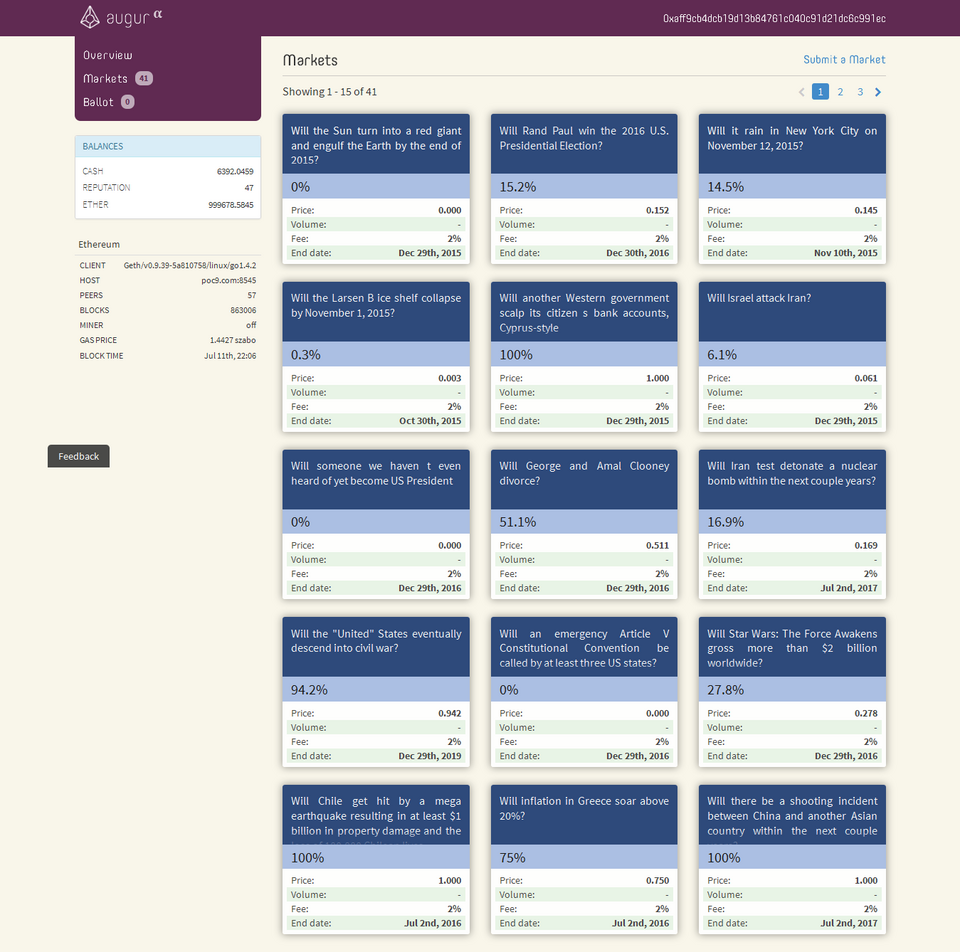
Price discrepancies between prediction market platforms create arbitrage opportunities that Kelly sizing can optimize. When Polymarket shows 60% odds but Kalshi shows 65% on the same event, the 5% price difference represents pure edge that Kelly sizing can exploit systematically. However, cross-platform arbitrage requires adjusting Kelly calculations for execution risk and capital constraints across multiple platforms. A practical approach involves allocating 50-70% of the calculated Kelly bet to the cheaper platform while maintaining a smaller hedge on the expensive platform to lock in the arbitrage profit. For example, if cross-platform analysis reveals a 3% edge with 2:1 odds, the standard Kelly bet might be 7.5% of bankroll, but splitting this as 5% on the cheap side and 2% on the expensive side reduces execution risk while preserving most of the mathematical edge. For those interested in automating this process, our guide on building latency arbitrage bots provides detailed implementation strategies.
Risk Management When Kelly Suggests Aggressive Sizing
When Kelly recommends bet sizes exceeding 5% of account balance, implement fractional Kelly (typically 1/2 to 1/4 Kelly) to balance growth potential with drawdown protection, especially important in prediction markets’ high-volatility environment. This risk management approach recognizes that while Kelly sizing maximizes long-term growth rate, the path to that growth involves significant drawdowns that many traders cannot psychologically withstand. Fractional Kelly provides a practical compromise, reducing volatility while preserving most of the mathematical edge that makes Kelly sizing attractive in the first place.
Fractional Kelly Strategies for Different Risk Tolerances
Fractional Kelly implementation varies based on individual risk tolerance and account size. Conservative traders (maximum 20% drawdown tolerance) should implement 1/4 Kelly, reducing volatility by approximately 50% while sacrificing only 25% of the expected growth rate. Moderate risk tolerance (30% maximum drawdown) justifies 1/2 Kelly, balancing growth and stability. Aggressive traders with large accounts ($100,000+) and high risk tolerance might implement 3/4 Kelly, accepting 40-50% drawdowns for maximum growth potential. The relationship between fractional Kelly and risk reduction follows a square root function—1/2 Kelly reduces volatility by approximately 30% while 1/4 Kelly reduces it by 50%, making fractional Kelly a powerful tool for customizing risk exposure without abandoning the mathematical framework entirely.
Account Size Thresholds for Full vs. Fractional Kelly Implementation
Account size significantly influences optimal Kelly implementation strategy. Accounts under $10,000 should default to 1/4 Kelly or even 1/8 Kelly due to the devastating impact of consecutive losses on small bankrolls. Medium accounts ($10,000-$50,000) can implement 1/2 Kelly while maintaining reasonable risk of ruin percentages below 5%. Large accounts ($50,000+) have the luxury of implementing 3/4 to full Kelly for high-conviction trades, as the absolute dollar impact of drawdowns becomes psychologically manageable. This size-based approach recognizes that the same percentage bet has dramatically different risk profiles depending on account scale—a 10% Kelly bet on a $5,000 account ($500) represents a completely different risk profile than the same percentage on a $100,000 account ($10,000), necessitating size-adjusted Kelly fractions to maintain consistent risk exposure across different account levels.
Correlation Risk Management Across Multiple Simultaneous Prediction Markets
Simultaneous prediction market positions often exhibit correlation that single-contract Kelly calculations ignore, creating portfolio-level risk that can lead to unexpected drawdowns. During election seasons, multiple political contracts (presidential, Senate, House) often move together, meaning Kelly-sized bets on each contract compound rather than diversify risk. A practical correlation adjustment involves calculating the portfolio-level Kelly using a correlation matrix: f* = (E × (1 – ρ))/b, where ρ represents average correlation between positions. For highly correlated markets (correlation >0.7), reduce individual position sizes by 30-50% below single-contract Kelly recommendations. This correlation-aware approach prevents the portfolio-level overexposure that occurs when traders independently apply Kelly sizing to related markets without accounting for their mathematical dependence. For more advanced risk management techniques, see our guide on binary hedges and portfolio hedging strategies.
Combining Kelly Criterion with Prediction Market Strategies
Integrate Kelly sizing with momentum trading during presidential debates (65-75% win rates) and contrarian approaches to CPI releases by adjusting probability inputs based on strategy-specific edge calculations rather than market-implied odds alone. This integration transforms Kelly from a passive sizing tool into an active component of trading strategy, where the probability inputs reflect not just market prices but the specific edge your strategy generates. Different prediction market strategies require different probability estimation methodologies, and Kelly sizing must adapt accordingly to capture the true edge rather than the market-implied probability.
Momentum Trading Kelly Adjustments During High-Volume Events
Momentum trading during high-volume events like presidential debates generates 65-75% win rates when executed properly, creating substantial edges that Kelly sizing can optimize. However, momentum strategies require dynamic Kelly adjustments as market conditions change rapidly during events. The optimal approach involves calculating Kelly sizing based on pre-event probability estimates, then reducing position sizes by 30-50% once the event begins due to increased volatility and execution risk. For example, if pre-debate analysis suggests a 70% probability (20% edge at 2:1 odds), the full Kelly bet might be 15% of bankroll, but implementing only 7-8% during the actual event accounts for the increased uncertainty and potential for rapid odds swings that can trap poorly timed positions. This event-timing adjustment preserves the mathematical edge while protecting against the execution risks inherent in momentum trading strategies. Successful momentum trading requires access to real-time data feeds that capture market movements as they happen.
Contrarian Strategy Probability Recalculation Methodology
Contrarian prediction market strategies exploit market overreactions to news events, generating edges that differ significantly from market-implied probabilities. When CPI releases trigger 10-15% odds swings that eventually revert, contrarian traders must calculate Kelly sizing based on their mean-reversion probability estimates rather than current market prices. The methodology involves: (1) estimating the overreaction magnitude (typically 5-10% for economic releases), (2) calculating the reversion probability based on historical patterns (often 60-70% for CPI events), and (3) applying Kelly sizing to this contrarian edge rather than the market-implied probability. For a CPI release showing 70% odds that your analysis suggests will revert to 60%, with 65% confidence in the reversion, the Kelly calculation uses your 65% probability rather than the market’s 70%, generating a different—often larger—optimal bet size that captures the true edge of your contrarian approach.
Market-Making Kelly Applications for Capturing Bid-Ask Spreads
Market-making in prediction markets involves capturing bid-ask spreads while providing liquidity, generating consistent edges that Kelly sizing can optimize. Unlike directional betting, market-making requires calculating Kelly sizing based on the expected value of providing liquidity rather than directional probability estimates. The market-making Kelly formula becomes: f* = (edge × trades per period – risk of adverse selection)/b, where edge equals the average captured spread minus adverse selection risk. For a market-maker capturing 1-2% spreads with 95% fill rates, the effective edge might be 0.8-1.5% per trade, suggesting Kelly bet sizes of 2-4% of bankroll per market depending on volume and adverse selection risk. This market-making application of Kelly requires continuous position adjustment as spreads widen or liquidity dries up, making it more dynamic than traditional directional Kelly sizing. For deeper insights into market-making strategies, see our comprehensive guide on effective market making for binary event contracts.
Advanced Kelly Optimization: Beyond the Basic Formula
Advanced Kelly optimization incorporates dynamic probability updating, portfolio correlation matrices, and Monte Carlo simulations to account for prediction market’s interconnected events and changing odds throughout resolution periods. This sophisticated approach recognizes that prediction markets are dynamic systems where probabilities evolve, correlations shift, and resolution uncertainty creates complex risk dynamics that basic Kelly calculations cannot capture. Advanced optimization techniques transform Kelly from a static sizing formula into a dynamic risk management framework that adapts to changing market conditions.
Dynamic Probability Updating for Changing Market Conditions
Prediction market probabilities evolve continuously as new information emerges, requiring dynamic Kelly sizing that adapts to changing edge estimates. The Bayesian updating approach recalculates Kelly bets as new information arrives: f*_t = ((b × p_t) – q_t – f)/b, where p_t and q_t represent updated probabilities at time t. For a contract showing 60% odds that receives new information shifting your probability estimate to 65%, the Kelly bet size increases from 10% to 15% of bankroll. This dynamic updating prevents the common mistake of betting based on outdated probability estimates while markets have already incorporated new information. Implementing dynamic updating requires systematic monitoring of information flows and automated position adjustment to maintain optimal sizing as your edge estimates evolve throughout the resolution period. Advanced traders can enhance their probability estimation accuracy through feature engineering techniques that identify complex patterns in prediction market data.
Portfolio-Level Kelly Optimization Across Correlated Prediction Markets
Portfolio-level Kelly optimization accounts for correlations between prediction market positions, preventing the overexposure that occurs when traders apply independent Kelly sizing to related contracts. The portfolio Kelly formula: f* = E × (1 – ρ)/b, where E represents total portfolio edge and ρ represents average correlation between positions, generates more conservative sizing than summing individual Kelly bets. For a portfolio of five election-related contracts with average 0.6 correlation, the portfolio-level Kelly might suggest 20% total exposure, while summing individual Kelly bets would recommend 35%. This correlation-aware approach prevents the portfolio-level risk concentration that occurs when traders independently optimize each position without considering their mathematical dependence. Implementing portfolio-level Kelly requires maintaining a correlation matrix and regularly updating it as market conditions and relationships between contracts evolve.
Machine Learning Enhancements for Probability Estimation Accuracy
Machine learning algorithms can enhance Kelly sizing accuracy by improving probability estimation beyond human judgment or simple statistical models. Gradient boosting models, neural networks, and ensemble methods can identify complex patterns in prediction market data that correlate with resolution outcomes, generating more accurate probability estimates that feed into Kelly calculations. A practical implementation involves training models on historical prediction market data to predict resolution outcomes, then using the model’s predicted probabilities in Kelly sizing rather than market-implied probabilities or subjective estimates. For instance, a gradient boosting model might identify that certain combinations of polling data, betting volume patterns, and social media sentiment correlate with 70% resolution accuracy versus the market’s 60% implied probability, generating a 10% edge that Kelly sizing can exploit systematically. This machine learning enhancement transforms Kelly from a formula based on estimates into an algorithmically optimized sizing strategy.
Common Kelly Criterion Pitfalls and How to Avoid Them
The biggest Kelly pitfalls in prediction markets include overestimating your edge, ignoring platform fees, and failing to account for liquidity constraints—mistakes that can turn optimal sizing into rapid account depletion. These pitfalls often compound, with traders simultaneously overestimating edge while underestimating fees and liquidity constraints, creating a perfect storm of overbetting that destroys accounts regardless of the underlying strategy’s theoretical profitability. Understanding and systematically avoiding these common mistakes is essential for successful Kelly implementation.
Edge Overestimation: The Silent Killer of Kelly Strategies
Edge overestimation represents the most insidious Kelly pitfall, as traders consistently believe their probability estimates exceed market-implied probabilities by more than they actually do. Psychological biases like confirmation bias and overconfidence lead traders to remember their correct predictions while discounting their errors, systematically overstating their true edge. A practical solution involves maintaining detailed prediction journals with pre-commitment probabilities and post-resolution analysis, calculating actual win rates rather than assumed ones. For instance, a trader who believes they have a 10% edge might discover through rigorous tracking that their actual edge is only 3-5%, requiring 50-70% smaller Kelly bets than initially calculated. This edge verification process, while time-consuming, prevents the systematic overbetting that transforms theoretically profitable strategies into account-destroying ones.
Fee Blindness: Why Ignoring Platform Costs Destroys Your Edge
Fee blindness—ignoring platform costs when calculating Kelly bet sizes—systematically erodes profitability by overstating available edge. Traders who calculate Kelly sizing based on gross returns rather than net returns after fees consistently overbet, as fees reduce effective returns by 15-30% depending on trading frequency and platform structure. Polymarket’s 2% performance fee, Kalshi’s 0.5%-2% trading fees, and emerging platforms’ wider spreads all reduce the edge available for Kelly sizing. A practical solution involves incorporating fee schedules directly into Kelly calculations using the adjusted formula: f* = ((b × p) – q – (fee × b))/b, ensuring that every bet size accounts for the platform costs that will be incurred upon execution and resolution. This fee-aware approach prevents the systematic overbetting that occurs when traders ignore the real costs of prediction market participation.
Liquidity Traps: When Optimal Kelly Bets Can’t Be Filled at Expected Prices
Liquidity traps occur when optimal Kelly bet sizes exceed available market depth, forcing traders to either accept worse prices or reduce position sizes below Kelly recommendations. This pitfall is particularly dangerous because it’s often invisible until execution, when traders discover their theoretically optimal position cannot be filled without moving the market against them. A practical solution involves liquidity verification before position entry: checking order book depth, recent trading volume, and historical fill rates to ensure the Kelly-recommended position can be executed without significant price impact. For Polymarket contracts, a liquidity threshold of 10% of daily volume prevents most price impact issues, while Kalshi’s deeper markets might support 15-20% of daily volume. This liquidity-aware approach prevents the execution failures that occur when traders ignore the practical constraints of market depth in their mathematical optimization.
Kelly Criterion Decision Tree: When to Use Full, Fractional, or No Kelly
Use full Kelly when your edge exceeds 10% and platform fees are below 1%; fractional Kelly (1/2 to 1/4) for 5-10% edges or higher fees; avoid Kelly entirely when edge is below 5% or market liquidity is insufficient for optimal bet sizing. This decision tree provides a systematic framework for Kelly implementation, recognizing that the optimal Kelly fraction varies based on edge magnitude, fee structure, and liquidity conditions. Following this decision framework prevents the common mistake of applying full Kelly indiscriminately regardless of market conditions or account characteristics.
Decision Criteria Based on Edge Percentage Thresholds
Edge percentage thresholds provide clear decision criteria for Kelly implementation strategy. Edges exceeding 10% justify full Kelly implementation, as the substantial mathematical advantage outweighs the risks of volatility and drawdowns. Edges in the 5-10% range warrant fractional Kelly (typically 1/2 to 3/4) to balance growth potential with risk management, as the smaller edge provides less cushion against estimation errors and adverse variance. Edges below 5% generally should not use Kelly sizing at all, as the small edge provides insufficient compensation for the risks involved, and the probability of estimation error exceeding the actual edge becomes unacceptably high. This edge-based decision framework ensures that Kelly sizing matches the strength of the underlying trading advantage, preventing overbetting on marginal edges while maximizing growth on substantial ones.
Liquidity Sufficiency Requirements for Different Kelly Approaches
Liquidity sufficiency requirements vary based on Kelly implementation strategy, with full Kelly requiring deeper liquidity than fractional approaches. Full Kelly implementation requires market depth of at least 20% of the recommended position size to ensure execution without significant price impact, while 1/2 Kelly can function with 10-15% depth and 1/4 Kelly with 5-10% depth. For a $10,000 Kelly-recommended position, full implementation requires $50,000+ market depth, while 1/4 Kelly only needs $5,000-$10,000. This liquidity-based decision framework prevents the execution failures that occur when traders attempt to implement mathematically optimal positions in markets too shallow to support them, ensuring that Kelly sizing remains executable regardless of market conditions.
Risk Tolerance Integration into Kelly Implementation Decisions
Risk tolerance integration ensures Kelly sizing matches individual psychological and financial constraints rather than purely mathematical optimization. Traders with low risk tolerance (maximum 20% drawdown) should implement 1/4 Kelly regardless of edge size, while moderate risk tolerance (30% maximum drawdown) justifies 1/2 Kelly for edges above 5%. High risk tolerance (40%+ maximum drawdown) might justify full Kelly for edges exceeding 10%, but only for traders with sufficient capital and psychological resilience to withstand significant drawdowns. This risk-based decision framework recognizes that mathematical optimality must be balanced with practical constraints of human psychology and financial capacity, ensuring that Kelly sizing enhances rather than destroys trading performance.
Practical Implementation Checklist for Prediction Market Kelly Sizing
📋 Essential Checklist for Prediction Market Kelly Sizing:
- ✅ Calculate edge: (your probability – market probability) × (1 – platform fees)
- ✅ Verify platform fees: Polymarket 2%, Kalshi 0.5%-2%, emerging markets 5%+ spreads
- ✅ Check liquidity: Minimum 10% of daily volume for fractional Kelly, 20% for full Kelly
- ✅ Assess correlation: Reduce sizes by 30-50% for positions with correlation >0.7
- ✅ Determine Kelly fraction: Full (10%+ edge, low fees), Fractional (5-10% edge), None (<5% edge)
- ✅ Implement position sizing: Adjust for account size and risk tolerance thresholds
- ✅ Monitor and adjust: Update probabilities as new information emerges
This systematic checklist ensures comprehensive Kelly implementation that accounts for all critical factors affecting prediction market bet sizing. Following this checklist prevents the common oversights that turn Kelly from a mathematical advantage into a practical liability, ensuring that your position sizing strategy maximizes growth while managing the unique risks of prediction market trading.
Platform Fee Adjustment Quick Reference
📊 Platform Fee Impact on Kelly Sizing:
- 🔴 Polymarket: 2% performance fee = 15-20% smaller Kelly bets vs. fee-free markets
- 🟡 Kalshi: 0.5%-2% trading fees = 5-15% smaller Kelly bets vs. fee-free markets
- 🟢 Emerging markets: 5%+ spreads = Fractional Kelly (1/2 to 1/4) required
- 🟣 Cross-platform arbitrage: Split Kelly between platforms to lock in price discrepancies
Understanding platform fee impacts allows traders to optimize capital allocation across multiple prediction markets, maximizing net returns after accounting for the substantial drag that fees impose on profitability. This fee-aware approach ensures that Kelly sizing accounts for the real costs of prediction market participation rather than theoretical returns in a frictionless environment.
Liquidity Risk Management Guidelines
⚠️ Liquidity Risk Management for Kelly Sizing:
- 📈 Minimum depth: 10% of position size for fractional Kelly, 20% for full Kelly
- ⏰ High-volume events: Double liquidity requirements during elections, debates, major announcements
- 🔄 Dynamic adjustment: Reduce sizes by 30-50% when liquidity drops below thresholds
- 💰 Position caps: Never exceed 5% of daily volume regardless of Kelly recommendation
Liquidity risk management prevents the execution failures that occur when theoretically optimal Kelly positions cannot be filled at expected prices. This liquidity-aware approach ensures that Kelly sizing remains practical and executable, preventing the frustration and losses that occur when mathematical optimization meets market reality.
The Kelly Criterion, when properly adapted for prediction markets, provides a powerful framework for transforming edge detection into optimal bet sizing. By accounting for platform fees, liquidity constraints, and correlation risks while implementing appropriate fractional sizing based on edge strength and risk tolerance, traders can maximize their long-term growth rate while managing the substantial risks inherent in prediction market trading. The systematic approach outlined in this guide—from basic formula application through advanced optimization techniques—provides a comprehensive framework for implementing Kelly sizing that separates profitable prediction market traders from those who eventually bust their accounts through systematic overbetting.