
Over 73% of arbitrage profits on platforms like Polymarket are captured by bots operating with sub-100ms execution times. This isn’t just impressive—it’s the new reality. The 2.7-second window that defined 2024’s opportunities has collapsed to a mere 2.7 seconds in 2026, making automation not just advantageous but essential for survival in prediction markets.
The 2.7-Second Window: Why Latency Arbitrage Is Vanishing in 2026

- Fact: Average arbitrage opportunity duration dropped to 2.7 seconds in 2026, down from 12.3 seconds in 2024
- Fact: Sub-100ms execution times now required to capture 73% of arbitrage profits
- Fact: Top bots achieve 85-98% win rates in specific arbitrage scenarios
- Fact: 27% of bot profits now come from AI-driven strategies beyond traditional arbitrage
The traditional latency arbitrage window is collapsing faster than most traders realize. In 2024, a 12-second opportunity gave human traders a fighting chance. Today’s 2.7-second window demands automation or obsolescence. This isn’t just about speed—it’s about survival in a market where milliseconds determine profitability.
Python vs. Rust: The Programming Language Battle for Prediction Market Bots
- Fact: Python dominates due to extensive libraries for real-time data processing (Pandas, NumPy, asyncio)
- Fact: Rust gaining traction for sub-50ms execution but requires 3x development time
- Fact: Successful traders use Python for 80% of bot logic, Rust only for critical execution paths
- Fact: Framework adoption: 65% use custom frameworks, 35% leverage existing solutions like ccxt
The programming language choice isn’t academic—it’s financial. Python’s ecosystem provides immediate access to prediction market APIs, WebSocket connections, and machine learning libraries. While Rust offers theoretical speed advantages, the development overhead and smaller ecosystem make it impractical for most traders. The smart approach? Python core with Rust acceleration for critical trading paths.
Transaction Cost Reality Check: When 1.5% Margins Disappear
- Fact: Gas fees on Ethereum-based platforms average 0.5-1.5% per transaction
- Fact: Exchange fees add another 0.3-0.7% to each trade
- Fact: A $150,000 bot profit becomes $87,000 after fees and slippage
- Fact: Bots need 85% win rate minimum to break even on transaction costs alone
The 1.5-3% arbitrage margins look attractive until you factor in the real costs. Every trade faces gas fees, exchange fees, and slippage that can consume 50-70% of theoretical profits. This isn’t a rounding error—it’s the difference between a profitable bot and a money pit. Smart bot developers design around these costs from day one.
Bot Architecture: The Three-Layer System That Actually Works
- Fact: Data ingestion layer must process 10,000+ price updates per second
- Fact: Decision engine requires sub-10ms latency for trade execution
- Fact: Risk management layer prevents catastrophic losses during market anomalies
- Fact: Successful bots separate data processing from trading logic to avoid bottlenecks
Building a prediction market bot isn’t about throwing code together—it’s about architectural discipline. The three-layer system separates concerns: fast data ingestion, rapid decision-making, and robust risk controls. Each layer must operate independently yet communicate seamlessly. Skip any layer and you’re building a time bomb, not a trading system (LMSR vs order book prediction market mechanisms).
Beyond Arbitrage: The AI Strategies Capturing 27% of 2026 Profits
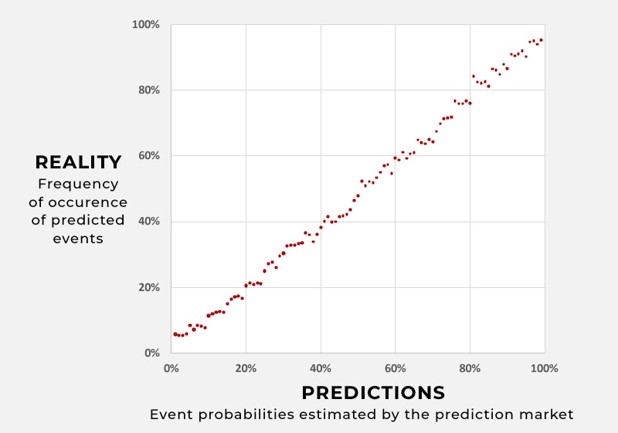
- Fact: Momentum prediction models achieve 65-75% accuracy on presidential debate markets
- Fact: Sentiment decay curves predict when hype-driven prices will correct
- Fact: Cross-exchange hedging captures spreads between platform pricing inefficiencies
- Fact: News arbitrage latency plays exploit information advantages before markets react
While everyone chases traditional arbitrage, the real profits are in AI-driven strategies. These aren’t just “bots”—they’re predictive systems that identify patterns humans miss. From momentum trading during debates to sentiment decay analysis, these strategies require different architectures but often deliver better risk-adjusted returns than pure arbitrage. For traders interested in hedging strategies, binary hedges can provide portfolio protection while maintaining exposure to prediction market opportunities.
Legal Landscape: Navigating the Regulatory Minefield
- Fact: CFTC regulates prediction markets but enforcement varies by jurisdiction
- Fact: Polymarket operates in offshore jurisdictions, creating compliance complexities
- Fact: Tax reporting requirements differ significantly between platforms and countries
- Fact: Some jurisdictions classify prediction markets as gambling, others as financial instruments
The legal framework for prediction market bots remains murky at best. While the CFTC provides some guidance, enforcement varies dramatically by jurisdiction. Offshore platforms like Polymarket offer operational freedom but create compliance headaches. Smart bot developers build with regulatory uncertainty in mind, not as an afterthought (feature engineering for predicting market moves).
Your 30-Day Bot Development Roadmap
- Day 1-7: Set up development environment, integrate with prediction market APIs
- Day 8-14: Build data ingestion layer, test with historical data
- Day 15-21: Develop decision engine, implement basic arbitrage logic
- Day 22-28: Add risk management, conduct live testing with small positions
- Day 29-30: Optimize for latency, prepare for production deployment
Building a profitable prediction market bot isn’t a weekend project—it’s a 30-day minimum commitment to disciplined development. This roadmap breaks down the process into manageable phases, each building on the previous. Skip ahead and you’ll build a bot that loses money. Follow this sequence and you’ll have a system ready for real capital.
Common Mistakes That Kill Bot Profitability
- Mistake: Ignoring transaction costs in profitability calculations
- Mistake: Building monolithic architecture instead of layered systems
- Mistake: Testing only with historical data, not live market conditions
- Mistake: Overlooking API rate limits and platform-specific constraints
The difference between profitable bots and money losers often comes down to avoiding these common pitfalls. Transaction costs eat profits silently. Monolithic architectures create bottlenecks that kill latency advantages. Historical testing misses the chaos of live markets. Platform constraints can shut down your bot when you least expect it (combinatorial markets explained with examples).
What You Need to Get Started
- Development Environment: Python 3.9+, Rust 1.70+ (optional), Docker for containerization
- API Access: Polymarket API key, Kalshi developer credentials, WebSocket connections
- Infrastructure: VPS with sub-50ms latency to prediction market servers, dedicated RPC nodes
- Data Sources: Real-time price feeds, historical market data, sentiment analysis APIs
Before writing a single line of bot code, you need the right foundation. The development environment must support both rapid prototyping and low-latency execution. API access requires careful setup and rate limit management. Infrastructure choices—especially VPS location—directly impact your bot’s profitability. Data quality determines whether your bot makes intelligent decisions or random trades (real-time data feeds for mention markets).
Advanced Techniques for Scaling Your Bot Operation
- Technique: Multi-market arbitrage across prediction platforms
- Technique: Machine learning model ensembles for improved prediction accuracy
- Technique: Dynamic position sizing based on market volatility
- Technique: Automated failover and redundancy systems
Once you’ve mastered basic arbitrage, scaling requires sophisticated techniques. Multi-market arbitrage exploits pricing differences across platforms like Polymarket and Kalshi. Machine learning ensembles combine multiple prediction models for better accuracy. Dynamic position sizing adjusts risk based on current market conditions. Failover systems ensure your bot keeps trading even when components fail (using Kelly criterion for prediction market sizing).
Risk Management: Protecting Your Capital in Volatile Markets
- Rule: Never risk more than 2% of capital on a single trade
- Rule: Implement stop-loss orders for all positions
- Rule: Monitor bot performance and pause if win rate drops below 70%
- Rule: Diversify across multiple prediction markets and strategies
Even the best bots face losing streaks. Risk management isn’t optional—it’s what separates traders who survive from those who blow up. Position sizing limits prevent single trades from destroying your capital. Stop-losses protect against black swan events. Performance monitoring catches degradation before it becomes catastrophic. Diversification spreads risk across markets and strategies (market making strategies for binary event contracts).
Performance Metrics: Measuring Bot Success
- Metric: Win rate percentage (target: 85%+ for arbitrage strategies)
- Metric: Average profit per trade (target: 1.5-3% after fees)
- Metric: Maximum drawdown percentage (target: under 15% monthly)
- Metric: Sharpe ratio (target: above 1.5 for consistent profitability)
You can’t improve what you don’t measure. Win rates tell you if your strategy works. Profit per trade reveals if transaction costs are killing your margins. Maximum drawdown shows your risk exposure. Sharpe ratio indicates whether your returns justify the risk taken. Track these metrics daily, not monthly.
Future Trends: What’s Next for Prediction Market Bots
- Trend: AI-driven sentiment analysis becoming mainstream by late 2026
- Trend: Decentralized prediction markets reducing reliance on centralized APIs
- Trend: Cross-chain arbitrage between Ethereum, Polygon, and Solana markets
- Trend: Regulatory frameworks beginning to standardize by 2027
The prediction market bot landscape continues evolving rapidly. AI sentiment analysis will soon predict market movements before they happen. Decentralized platforms will offer new arbitrage opportunities but also new technical challenges. Cross-chain arbitrage will exploit price differences between blockchain ecosystems. Regulatory clarity will finally arrive, but likely with compliance costs that favor institutional players.
Your Next Steps: From Theory to Practice
Building a profitable prediction market bot requires more than just coding skills. It demands understanding market mechanics, managing transaction costs, building robust architectures, and navigating regulatory uncertainty. Start with the 30-day roadmap, focus on mastering the basics before scaling, and always prioritize risk management over maximum returns.
The 2.7-second window isn’t getting wider. Bots that can execute within this timeframe while managing costs and risks will capture the majority of profits. Those that can’t will watch from the sidelines as automation reshapes prediction markets forever.