

By November 2025, Polymarket and Kalshi processed nearly $10 billion in monthly volume, yet traders still struggle to understand how LMSR and order book mechanisms fundamentally shape their trading outcomes. This comprehensive comparison reveals the critical trade-offs between continuous liquidity and price discovery speed that determine which mechanism delivers superior results for different trading strategies.
LMSR Guarantees Liquidity While Order Books Enable Price Discovery — Here’s the Critical Trade-off
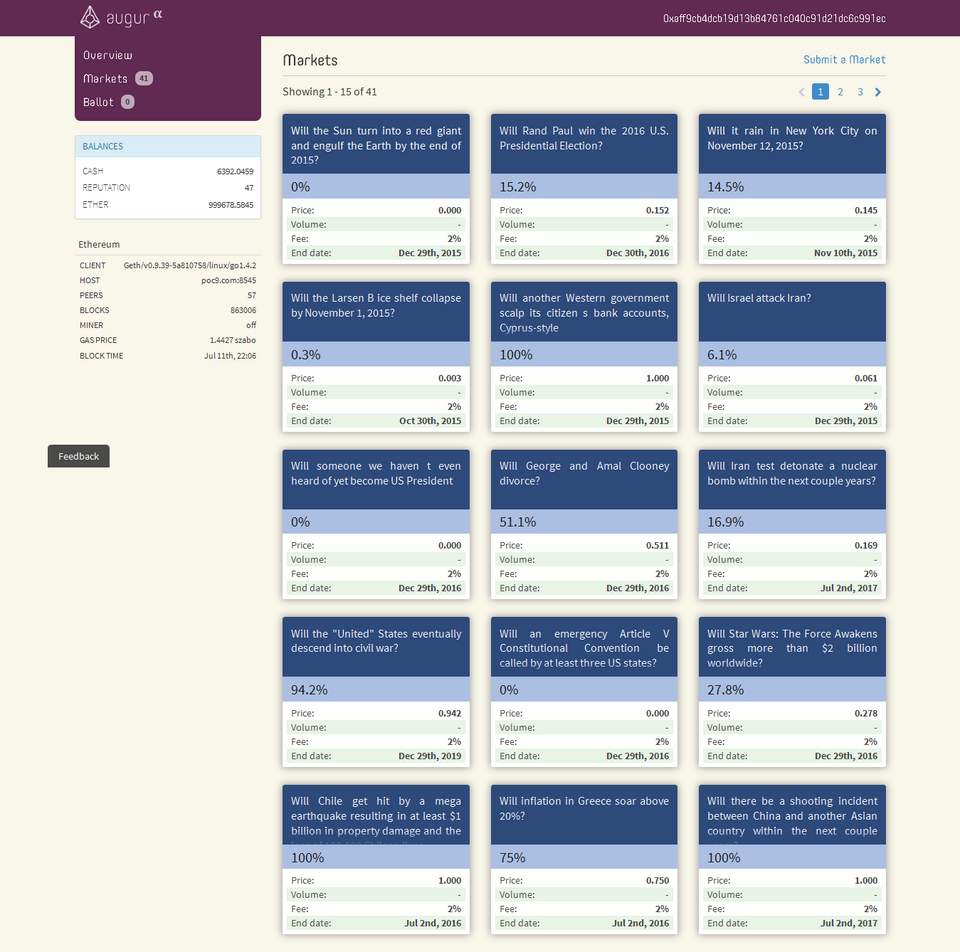
LMSR provides continuous liquidity through automated market making, while order books enable faster price discovery through trader interactions. This fundamental difference creates distinct advantages and limitations that traders must understand when selecting platforms. The trade-off between guaranteed execution and market efficiency shapes every trading decision in prediction markets.
The critical distinction lies in how each mechanism handles market depth. LMSR’s cost function C(q) = b · log(Σ e^{q_i/b}) ensures always-available trading without counterparties, eliminating the risk of failed executions during low-volume periods. Order books require active market makers but achieve tighter spreads and more accurate price signals when sufficient liquidity exists. This architectural difference means LMSR traders never face slippage from thin order books, while order book traders benefit from more efficient price discovery when market makers are active.
The Role of Bounded Risk in LMSR Price Formation
Platform exposure capped at b · log(n) worst-case loss provides predictable risk management that shapes price formation dynamics. This bounded risk creates a unique price discovery mechanism where the platform’s maximum loss is mathematically predetermined, unlike order books where platform risk depends on market maker behavior and extreme volatility events.
Delphi runs a fully on-chain LMSR implementation for ML competition prediction markets, demonstrating the mechanism’s suitability for algorithmic trading environments. The proportional fees (0.5%-2%) fund revenue pools to offset potential shortfalls, creating a sustainable economic model that balances trader costs with platform stability. This revenue structure differs fundamentally from order book platforms that rely on maker-taker fee models to incentivize market making activity.
How Price Discovery Speed Differs Between Mechanisms During Market Stress
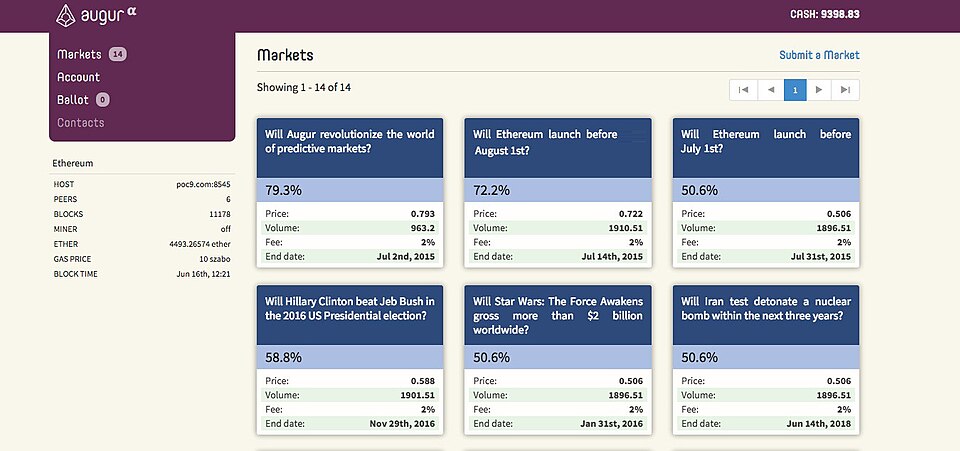
Order books typically achieve faster price discovery during normal conditions, but LMSR maintains stability during extreme volatility. This performance differential becomes critical during major news events or geopolitical developments when prediction markets experience their highest trading volumes and most dramatic price movements. Successful traders often rely on sophisticated analysis techniques, including advanced feature engineering for predicting market moves, to gain an edge in these environments.
The November 2025 market data reveals order books processed nearly $10 billion monthly volume with sophisticated LOBs that enabled faster, more accurate price discovery with tighter spreads. However, during the 2024 election cycle and subsequent geopolitical events, LMSR’s path-independent midprice prevented cascading liquidations that affected order book platforms. This stability advantage becomes particularly valuable when markets face sudden information shocks that could trigger automated liquidations in traditional order book systems. Having access to real-time data feeds is crucial for traders navigating these volatile conditions.
Path-Independent vs. Path-Dependent Price Impact
LMSR’s path-independent midprice creates predictable trading costs regardless of order size or market conditions, while order book price impact depends on current book depth and order size. This fundamental difference affects how traders approach position sizing and execution strategies across different market environments.
During the 2025 tariff debates, order books proved resilient during high volatility periods, with prices instantly reflecting market-implied probabilities. However, LMSR’s bounded price impact prevented the extreme slippage that can occur in thin order book conditions. The trade-off between immediate price discovery and execution stability remains a central consideration for traders choosing between these mechanisms.
Liquidity Desert Prediction and Prevention Strategies for Each Mechanism
LMSR naturally prevents liquidity deserts through automated market making, while order books require proactive market maker incentives. This fundamental difference in liquidity provision creates distinct operational challenges and opportunities for platform operators and traders alike. For those interested in optimizing liquidity provision, effective market making strategies for binary event contracts can provide valuable insights.
Machine learning models can predict liquidity desert periods in order book systems, allowing platforms to adjust market maker incentives dynamically. These predictive capabilities represent a significant technological investment that LMSR platforms avoid through their automated liquidity provision. The continuous liquidity of LMSR eliminates the need for counterparty matching, removing a critical point of failure in prediction market operations.
Behavioral Liquidity Analysis and Mechanism Selection
Understanding trader psychology should inform mechanism selection for different market conditions and user segments. Fear of slippage influences trader preference for LMSR’s guaranteed execution, while desire for immediate execution drives order book adoption despite potential liquidity issues.
The 2025 market evolution showed prediction markets transforming from niche platforms into high-volume financial infrastructure with annual volume surpassing $44 billion. This growth created new liquidity challenges that different mechanisms address through distinct architectural approaches. LMSR’s automated market making scales naturally with volume, while order books require increasingly sophisticated market maker incentive structures to maintain adequate liquidity across multiple markets (using Kelly criterion for prediction market sizing).
Regulatory Oversight Impact on Mechanism Efficiency and Market Structure

CFTC oversight affects order book depth and market efficiency differently than LMSR’s automated approach. The regulatory environment creates structural advantages and constraints that shape how each mechanism operates in practice.
Polymarket and Kalshi formed a de facto duopoly, capturing 90% of the market in late 2025, demonstrating how regulatory frameworks can create market concentration that affects mechanism efficiency. The CFTC’s oversight of these platforms created different compliance requirements that influenced their technological architecture and operational models. Order book platforms faced additional scrutiny around market maker behavior and potential manipulation, while LMSR platforms dealt with questions about automated price formation and bounded risk calculations.
Platform-Specific Compliance Requirements
Different regulatory frameworks create distinct operational requirements that affect how LMSR and order book mechanisms function in practice. These compliance requirements influence everything from fee structures to reporting obligations and ultimately shape the user experience on each platform.
The 2025 regulatory maturation marked a shift toward compliance for prediction market platforms, with platforms like Kalshi operating under specific CFTC designations that affected their market structure. This regulatory environment created different structural advantages for each mechanism, with order books benefiting from established financial market precedents while LMSR platforms leveraged their automated risk management capabilities to demonstrate regulatory compliance.
Platform-Specific Recommendations: When to Choose LMSR vs. Order Book
Choose LMSR for guaranteed liquidity and stable execution, order books for price discovery and tighter spreads. This fundamental recommendation depends on trading style, market conditions, and specific use cases that determine which mechanism provides superior outcomes for individual traders.
Delphi’s on-chain LMSR implementation suits algorithmic traders who prioritize execution certainty and automated risk management. The platform’s fully on-chain architecture provides transparency and auditability that appeals to technically sophisticated users. Polymarket and Kalshi’s order book systems benefit high-volume, price-sensitive traders who can navigate more complex interfaces in exchange for potentially lower fees and more efficient price discovery.
Trading Style and Market Condition Alignment
Consider trading style, market conditions, and regulatory environment when selecting platforms and mechanisms. Different trading approaches align naturally with specific mechanism characteristics, creating optimal matches between trader needs and platform architecture.
Algorithmic traders benefit from LMSR’s predictable price impact and bounded risk, which enable more precise position sizing and risk management. High-frequency traders may prefer order books when sufficient liquidity exists, as the tighter spreads can reduce trading costs for large volume strategies. Retail traders often favor LMSR’s simplicity and guaranteed execution, while sophisticated traders may navigate order book complexity to capture better prices during high-liquidity periods.
Market Condition Considerations
Different market conditions favor different mechanisms based on liquidity requirements, volatility levels, and information flow characteristics. Understanding these relationships helps traders select optimal platforms for specific market environments.
During low-liquidity periods or for illiquid markets, LMSR’s automated market making provides superior execution certainty compared to thin order books that may not fill large orders. For high-volume, liquid markets with active price discovery, order books can provide more efficient pricing and tighter spreads. The choice between mechanisms should reflect current market conditions and anticipated trading needs rather than platform preference alone.
Technical Implementation Differences and Performance Implications
The technical architecture underlying each mechanism creates distinct performance characteristics that affect trading speed, reliability, and cost efficiency. These implementation differences have practical implications for traders choosing between platforms.
LMSR’s mathematical foundation in cost function theory provides predictable performance characteristics that scale efficiently with market volume. The mechanism’s computational requirements remain relatively constant regardless of market activity levels, providing consistent execution speeds during both normal and high-volume periods. Order book implementations must handle increasingly complex matching algorithms as market depth grows, potentially affecting execution speed during peak trading periods. Traders seeking to capitalize on these timing differences might explore building latency arbitrage bots for prediction markets.
Scalability and Performance Trade-offs
Each mechanism’s scalability characteristics create different performance trade-offs that affect user experience during various market conditions. Understanding these trade-offs helps traders anticipate platform behavior during critical trading periods.
LMSR platforms maintain consistent performance characteristics regardless of trading volume, as the cost function calculations scale linearly with the number of outcomes rather than the number of trades. Order book platforms may experience performance degradation during extreme volume periods as matching algorithms process increasingly complex order books. This scalability difference becomes particularly relevant during major news events or market-moving announcements when prediction markets experience their highest trading activity.
Future Evolution and Innovation Trajectories
The future development paths for LMSR and order book mechanisms reflect different innovation priorities and technological opportunities. Understanding these trajectories helps traders anticipate platform evolution and select mechanisms aligned with long-term market trends. As prediction markets evolve, combinatorial markets are emerging as a powerful extension beyond traditional binary contracts.
LMSR innovation focuses on improving cost function efficiency, expanding bounded risk calculations, and integrating with decentralized finance protocols. The mechanism’s mathematical elegance provides a foundation for algorithmic improvements that enhance price discovery while maintaining liquidity guarantees. Order book innovation emphasizes market maker incentive optimization, matching algorithm efficiency, and integration with traditional financial market infrastructure.
Emerging Hybrid Approaches
New platform designs increasingly combine elements of both mechanisms to capture complementary advantages while mitigating individual limitations. These hybrid approaches represent the next evolution in prediction market architecture.
Some platforms experiment with LMSR-based liquidity provision for illiquid markets while maintaining order books for high-volume, liquid markets. This hybrid approach provides guaranteed liquidity where needed while enabling efficient price discovery in liquid markets. Other innovations explore dynamic mechanism selection based on market conditions, automatically switching between LMSR and order book approaches to optimize for current trading environments.
Economic Implications for Traders and Platforms
The economic models underlying each mechanism create different cost structures and revenue opportunities for traders and platform operators. These economic implications affect trading strategies, platform selection, and overall market efficiency.
LMSR platforms generate revenue through proportional fees that scale with trading volume, creating predictable cost structures for traders. The mechanism’s bounded risk calculations provide platforms with predictable exposure limits, enabling more efficient capital allocation. Order book platforms rely on maker-taker fee models that incentivize market making activity while potentially creating more complex fee structures for traders to navigate.
Revenue Model Comparison
Different revenue models create distinct economic incentives that affect platform behavior, market maker participation, and overall market efficiency. Understanding these economic dynamics helps traders evaluate platform sustainability and long-term viability.
LMSR platforms benefit from simpler revenue models that don’t require complex market maker incentive structures. The proportional fee approach provides stable revenue streams while maintaining platform neutrality in price formation. Order book platforms must balance maker-taker fee structures to attract sufficient market maker participation while generating adequate revenue, creating more complex economic dynamics that can affect trading costs and market efficiency.
Practical Implementation Guide for Traders
Selecting the optimal mechanism requires evaluating trading objectives, market conditions, and platform characteristics against individual trader needs. This practical guide helps traders make informed decisions based on their specific requirements and trading styles, including strategies like using binary contracts to hedge portfolios.
For algorithmic traders prioritizing execution certainty and risk management, LMSR platforms provide superior predictability and bounded risk characteristics. High-frequency traders seeking optimal pricing in liquid markets may prefer order books when sufficient liquidity exists. Retail traders often benefit from LMSR’s simplicity and guaranteed execution, while sophisticated traders may leverage order book complexity for better pricing in high-volume environments.
Platform Selection Criteria
Evaluate platforms based on specific trading requirements, market conditions, and mechanism characteristics to identify optimal matches for individual trading strategies. This systematic approach ensures platform selection aligns with trading objectives and market environment.
Consider trading volume requirements, preferred markets, execution speed needs, and risk tolerance when evaluating platforms. LMSR platforms excel in providing guaranteed liquidity and predictable execution costs, while order book platforms offer superior price discovery in liquid markets. The optimal choice depends on trading strategy, market conditions, and individual preferences rather than universal superiority of either mechanism.
Risk Management Considerations
Each mechanism’s risk characteristics create different implications for position sizing, portfolio management, and overall trading strategy. Understanding these risk differences enables more effective risk management across different trading approaches.
LMSR’s bounded risk provides predictable maximum exposure limits that simplify position sizing and risk management calculations. Order book risk depends on market maker behavior and liquidity conditions, requiring more dynamic risk management approaches. Traders should align their risk management strategies with the specific risk characteristics of their chosen mechanism to optimize portfolio performance and capital efficiency.
The choice between LMSR and order book mechanisms ultimately depends on individual trading objectives, market conditions, and platform characteristics. Understanding the fundamental trade-offs between guaranteed liquidity and price discovery efficiency enables traders to make informed decisions that align with their specific needs and market environment. As prediction markets continue evolving in 2026, these mechanism differences will remain central to trading strategy and platform selection decisions.