

Prediction market contracts offer sophisticated portfolio managers a unique hedging tool, with $13B in resting capital proving their institutional adoption beyond gambling applications.
Calculate Optimal Contract Sizing Using Beta Correlation
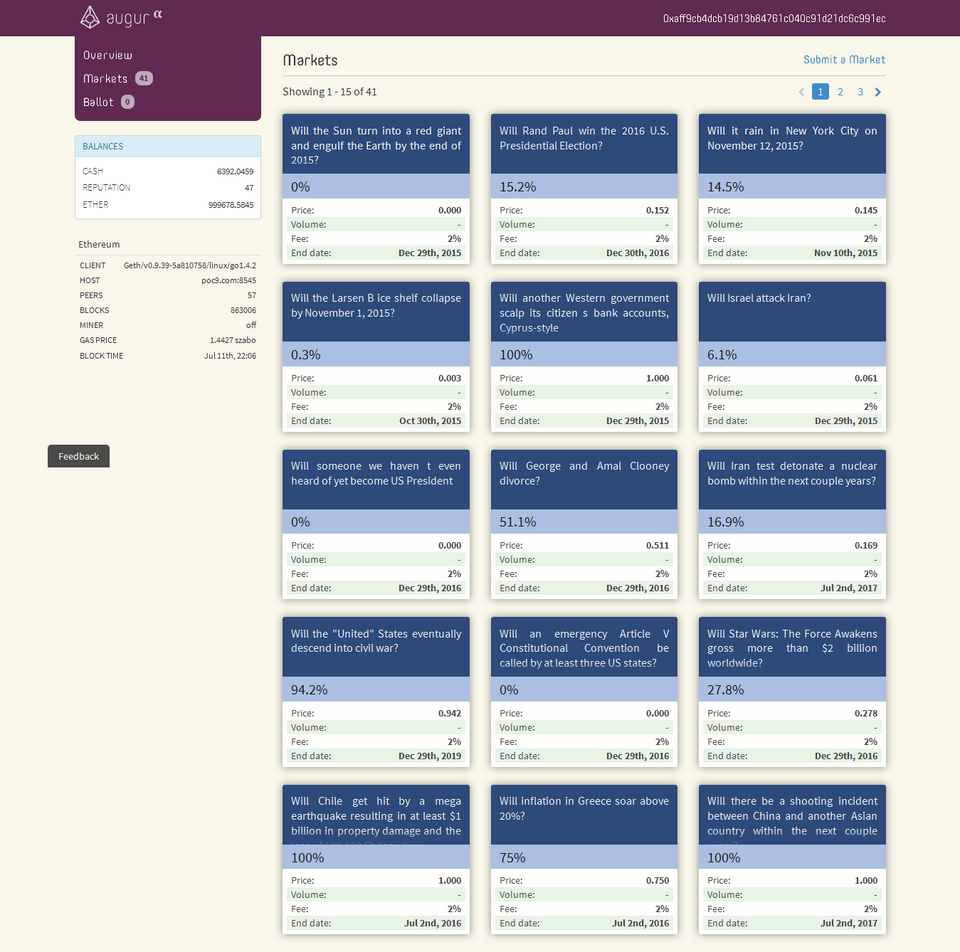
Determining the correct hedge size requires mathematical precision. The required hedge units equal (delta × asset price) divided by (beta × benchmark price), accounting for asset volatility relative to benchmark while managing correlation risk during market stress events.
Black-Scholes Adaptation for Binary Outcomes
Binary options require modified Black-Scholes formulas where cash-or-nothing call price equals e^(-rT) × N(d2), creating high-gamma risks near strike prices that demand precise sizing calculations. The delta formula becomes δ_bin = e^(-rT) × N'(d2) / (S × σ × √T), highlighting how gamma approaches infinity as time to expiration approaches zero and price nears strike.
Beta Calculation and Application
Beta measures an asset’s volatility relative to its benchmark: β = ρ × (σ_asset / σ_benchmark). This ratio determines how many benchmark units are needed to hedge one unit of the asset. For example, if an asset has beta 1.2 and the binary contract delta is 0.65, the hedge ratio becomes (0.65 × S_asset) / (1.2 × S_benchmark).
Implement Recession Probability Contracts for Equity Protection
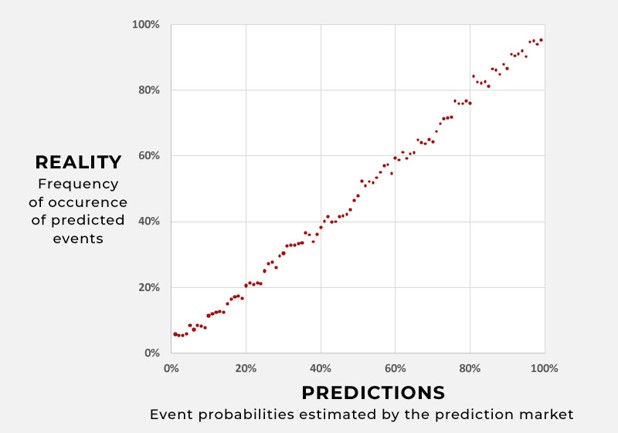
Binary recession contracts trigger directly upon economic downturn, providing point-hedging that protects against systematic risk beyond traditional diversification with maximum loss limited to premium paid.
Market Data and Timing
Prediction market growth reached $13B resting capital in 2025, quadrupling from previous levels. The New York Fed estimates 25% probability for 2026 recession, while betting markets show 35% odds. Treasury Secretary recently referenced betting market odds for recession probability, lending institutional credibility to these instruments.
Contract Selection and Execution
Binary “Yes/No” contracts on recession occurrence provide natural hedges against systematic risk. Unlike continuous price hedging, these contracts trigger directly upon recession events. The maximum loss is strictly limited to premium paid, making risk management straightforward. Contract selection should focus on platforms with CFTC regulatory oversight for reliable probability-weighted data (market making strategies for binary event contracts).
Hedge Crypto Exposure with Regulation Outcome Markets
Regulation outcome contracts hedge crypto positions by betting on specific legal decisions, like XRP SEC case results, offering protection traditional derivatives cannot provide for regulatory risk exposure.
Platform Selection and Liquidity
Polymarket offers high liquidity for crypto-specific events, while Kalshi provides CFTC-regulated reliability. Platform selection depends on event specificity and liquidity depth. For XRP-related hedging, Polymarket typically offers better liquidity for crypto-specific outcomes compared to general prediction markets (feature engineering for predicting market moves).
Application Examples and Strategy
Protection against XRP crash can be achieved by purchasing contracts paying out if specific crypto collapses. Regulatory decisions can be hedged by betting against “No” votes on favorable legislation. Policy changes affecting crypto can be protected against through adverse Fed rate decision contracts. These strategies provide targeted protection that traditional derivatives cannot match.
Execute Cross-Exchange Hedging with Simultaneous Opposite Positions
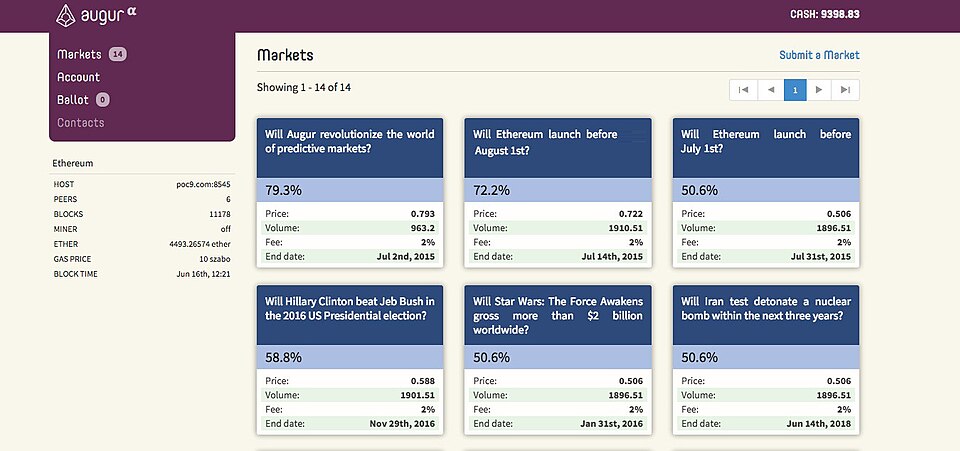
Taking opposite positions across different prediction platforms captures arbitrage while reducing risk, with exchange price correlations and transaction costs determining profitability of multi-platform hedging strategies.
Arbitrage Capture and Risk Reduction
Cross-exchange hedging simultaneously takes opposite positions on different platforms to lock in profits. The strategy relies on exchange price correlations, transaction costs, and execution timing. When platform A prices an event at 65% probability and platform B at 72%, taking opposite positions captures the spread while reducing directional risk.
Implementation Considerations
Transaction costs and taxes impact effectiveness significantly. The “Public Integrity in Financial Prediction Markets Act of 2026” addresses insider trading concerns, providing regulatory framework for institutional adoption. Exchange selection should prioritize platforms with deep liquidity and minimal price discrepancies for the same events (combinatorial markets explained with examples).
Manage Basis Risk and Contract-Asset Mismatch
Basis risk emerges when event contracts imperfectly correlate with portfolio risks, requiring careful contract selection and sizing to minimize mismatch between predicted and actual portfolio impact.
Identifying and Measuring Basis Risk
Basis risk occurs when contracts don’t perfectly align with portfolio risk exposure. This mismatch can make hedges less effective than traditional put options. The danger increases when contracts are selected based on headline events rather than underlying risk factors affecting the portfolio.
Mitigation Strategies
Careful contract selection focuses on events with strong causal relationships to portfolio performance. Sizing adjustments account for imperfect correlation by using conservative hedge ratios. Regular correlation monitoring ensures hedge effectiveness as market conditions change. Platform diversification reduces single-point failure risk.
Common Mistakes and Troubleshooting
Several pitfalls can undermine binary hedging strategies. Over-reliance on single platforms creates concentration risk. Ignoring correlation changes during market stress leads to unexpected hedge failures. Inadequate sizing calculations result in under-hedged or over-hedged positions. Basis risk underestimation causes performance drag.
Avoiding Common Errors
Never assume perfect correlation between contracts and portfolio risks. Always calculate hedge ratios using updated beta and volatility data. Monitor platform liquidity before executing large positions. Account for transaction costs and tax implications in sizing calculations. Maintain multiple platform relationships for redundancy.
What You Need
Successful binary hedging requires several key components. Access to multiple prediction platforms with CFTC regulatory oversight ensures reliable data and execution. Mathematical tools for Black-Scholes adaptation and beta calculations enable precise sizing. Real-time data feeds track probability changes and correlation shifts. Risk management systems monitor basis risk and platform exposure.
Required Tools and Resources
Platform accounts on Polymarket, Kalshi, and other regulated exchanges. Spreadsheet or software for mathematical calculations including Black-Scholes adaptation. Real-time data feeds from prediction market APIs. Risk management dashboard tracking correlation changes and basis risk. Tax planning resources for handling prediction market gains and losses.
What’s Next
For deeper exploration of prediction market mechanics, see our guide on LMSR vs. Order Book: Understanding Prediction Market Mechanism Dynamics in 2026. To optimize your bet sizing, read about Applying the Kelly Criterion in Prediction Markets for 2026. Building on binary hedging knowledge, traders can explore advanced strategies including latency arbitrage bots that capture price discrepancies across platforms.
For deeper exploration of prediction market mechanics, see our guide on LMSR vs. Order Book: Understanding Prediction Market Mechanism Dynamics in 2026. To optimize your bet sizing, read about Applying the Kelly Criterion in Prediction Markets for 2026.