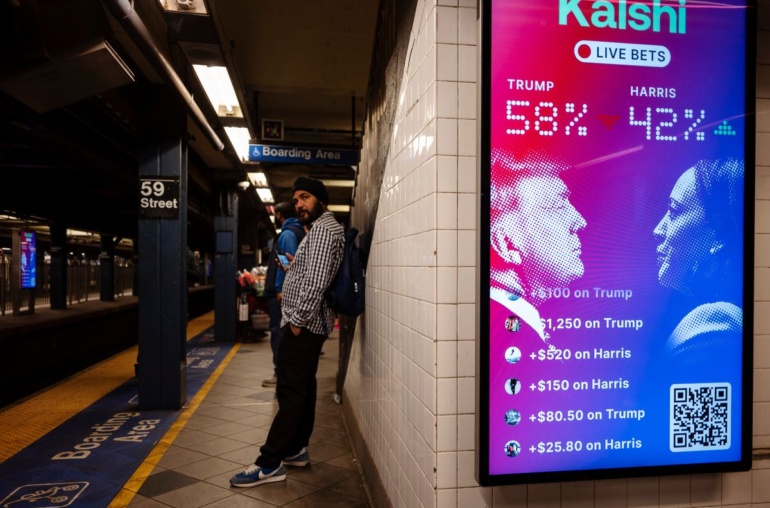
The core calculation is deceptively simple: divide the contract price by $1.00. A contract trading at $0.70 represents exactly 70% implied probability of the event occurring. This direct translation eliminates the complexity of traditional sportsbook odds, providing traders with immediate probability signals that reflect real-time market consensus on betting on sport outcomes.
The Mathematical Formula for Implied Probability
Contract Price
Implied Probability
Example
$0.70
70%
Team A to win at $0.70 = 70% chance
$0.85
85%
Over 2.5 goals at $0.85 = 85% chance
$0.45
45%
Player B to score at $0.45 = 45% chance
Why Market-Driven Prices Beat Bookmaker Odds
Pricing Mechanism
Prediction Markets
Traditional Sportsbooks
Price Determination
Participant supply/demand
House-set margins
Information Source
Decentralized consensus
Internal algorithms
Price Updates
Real-time, continuous
Pre-game only
Profit Model
Zero-sum between traders
Built-in vig
Liquidity Thresholds That Make Probabilities Reliable
Minimum Volume
Reliability Level
Use Case
$10,000+
High confidence
Major sports events
$5,000-$10,000
Moderate confidence
Mid-tier events
<$5,000
Low confidence
Niche markets
Cross-Market Arbitrage Using Implied Probability
Platform
Team A Win Odds
Implied Probability
Arbitrage Opportunity
Polymarket
$0.65
65%
–
DraftKings
+150
40%
25% gap
FanDuel
+140
42%
23% gap
Real-Time Price Updates and Information Aggregation
Practical Implementation: Building Your Trading System
Component
Tool/Platform
Purpose
Data feeds
API integrations
Real-time prices
Analysis
Python scripts
Probability calculations
Execution
Trading bots
Automated trades
Risk management
Position sizing
Capital protection
Converting Traditional Odds to Implied Probability
Understanding how to convert traditional sportsbook odds to implied probability is crucial for cross-market arbitrage. For decimal odds, the formula is simple: 1 ÷ decimal odds = implied probability. So odds of 2.50 represent a 40% implied probability (1 ÷ 2.50 = 0.40). For American odds, the calculation differs based on whether the odds are positive or negative. Positive odds use 100 ÷ (odds + 100), while negative odds use |odds| ÷ (|odds| + 100) (swimming olympic gold prediction trades).
Liquidity Indicators and Their Impact
Liquidity indicators provide crucial context for interpreting implied probabilities. Open interest shows the total number of outstanding contracts, while trading volume indicates market activity. A contract with $100,000 in open interest and $10,000 in daily volume suggests strong consensus and reliable probabilities. Conversely, low liquidity can lead to price manipulation and unreliable probability signals, making it essential to check these metrics before trading (athletics world championships markets 2026).
Cross-Platform Price Discrepancies
Price discrepancies between platforms often create arbitrage opportunities. A contract trading at $0.70 on Polymarket might be available at $0.65 on Kalshi, representing a 5% arbitrage opportunity. These discrepancies arise from differences in trader populations, platform fees, and information flow, as detailed in Comparing Odds on Traditional Sportsbooks and Kalshi: Finding the Edge. Systematic traders monitor multiple platforms simultaneously to capture these small but consistent edges (how to identify mispriced sports event contracts).
Risk Management Strategies
Effective risk management is essential when trading based on implied probabilities. Position sizing should be based on the edge size and confidence level. A 25% arbitrage opportunity might warrant a larger position than a 5% edge. Additionally, traders should diversify across multiple uncorrelated contracts and set stop-losses based on liquidity thresholds rather than arbitrary percentages, following principles from Risk Hedging for Sports Bettors on Polymarket: Portfolio Techniques.
The power of implied probability lies in its ability to transform complex betting markets into straightforward mathematical calculations. By understanding the formula, recognizing liquidity thresholds, and implementing systematic trading strategies, traders can consistently identify and exploit mispricing opportunities across platforms, including emerging markets like Cybersport League Futures on Blockchain: Trading Tournament Outcomes. The key is treating prediction markets as probability assessment tools rather than gambling venues, using quantitative methods to make informed trading decisions.