

With $50B annualized trading volume in 2026 and sports dominating 90% of prediction market activity, sports bettors need mathematical frameworks that survive 5-10 loss streaks. The 3-5-7 rule provides mathematical boundaries that ensure survival through inevitable losing streaks while maintaining profit potential in sports prediction markets.
The 3-5-7 Risk Management Framework: Your Survival Blueprint for Polymarket Sports Trading
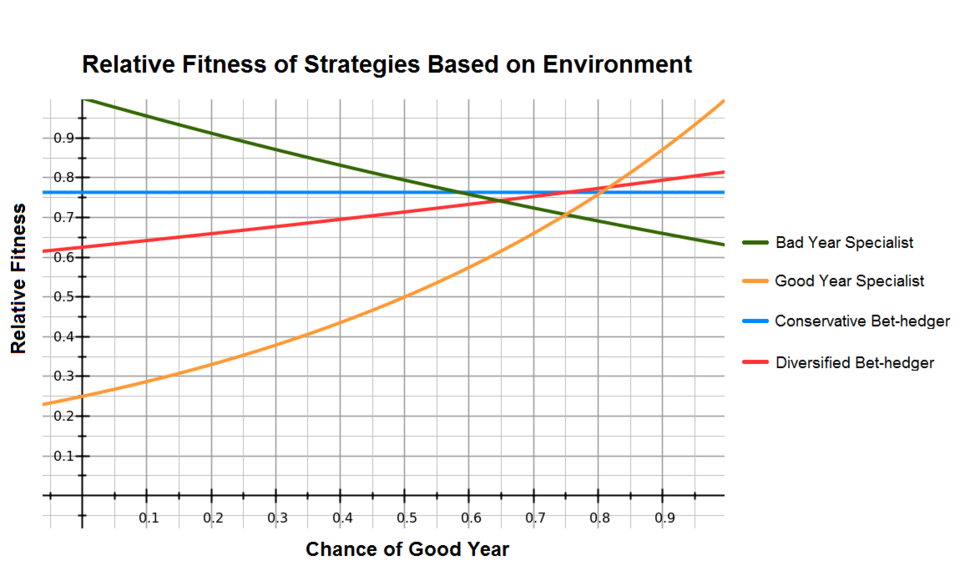
The 3-5-7 rule provides mathematical boundaries that ensure survival through inevitable losing streaks while maintaining profit potential in sports prediction markets. This framework addresses the fundamental fear of bankroll destruction that keeps casual bettors from scaling up, providing exact mathematical boundaries that separate sustainable traders from those who flame out.
The Mathematical Foundation of 3-5-7 Risk Management
The 3-5-7 framework operates on three core principles that work together to protect capital while allowing for meaningful growth. Each component serves a specific purpose in the risk management ecosystem, creating a comprehensive approach that traditional bankroll management systems lack.
3% per trade maximum prevents single-event ruin by ensuring no single loss can significantly damage your bankroll. This creates a mathematical buffer against variance, allowing traders to survive multiple consecutive losses without catastrophic consequences. For a $10,000 bankroll, this means no single bet exceeds $300, regardless of perceived edge.
5% total exposure across correlated positions limits portfolio risk by preventing overexposure to related outcomes. When betting on correlated events like a team winning and covering the spread, the total exposure across all positions cannot exceed 5% of bankroll. This prevents the common mistake of doubling down on correlated outcomes, which amplifies risk rather than diversifying it.
7% profit target ensures positive expectancy over time by establishing a minimum return threshold that makes the trading system profitable in the long run. This target accounts for transaction costs, platform fees, and the natural variance in sports outcomes, ensuring that winning trades generate enough profit to offset losing streaks.
Why Traditional Bankroll Management Fails Sports Bettors
Traditional bankroll management systems were designed for casino games and simple betting scenarios, not the complex, correlated markets found in prediction platforms like Polymarket. These outdated approaches ignore the unique characteristics of sports prediction markets and the sophisticated strategies available to modern traders.
Flat betting ignores edge magnitude and correlation by treating all bets equally regardless of their probability or relationship to other positions. A 70% probability bet on a heavily favored team gets the same stake as a 55% probability bet on a close matchup, wasting potential profit and increasing unnecessary risk.
Percentage-based systems don’t account for market liquidity or the specific mechanics of prediction markets. Traditional systems assume you can always get your desired position size at the expected price, but Polymarket’s order book dynamics and varying liquidity levels make this assumption dangerous for sports traders.
Emotional decision-making overrides mathematical discipline when traders lack clear frameworks. Without the 3-5-7 boundaries, bettors tend to increase stakes after losses (chasing) or decrease them after wins (fear), both of which destroy long-term profitability. The 3-5-7 rule provides objective criteria that eliminate emotional interference.
Kelly Criterion Position Sizing: Optimizing Edge in Sports Prediction Markets
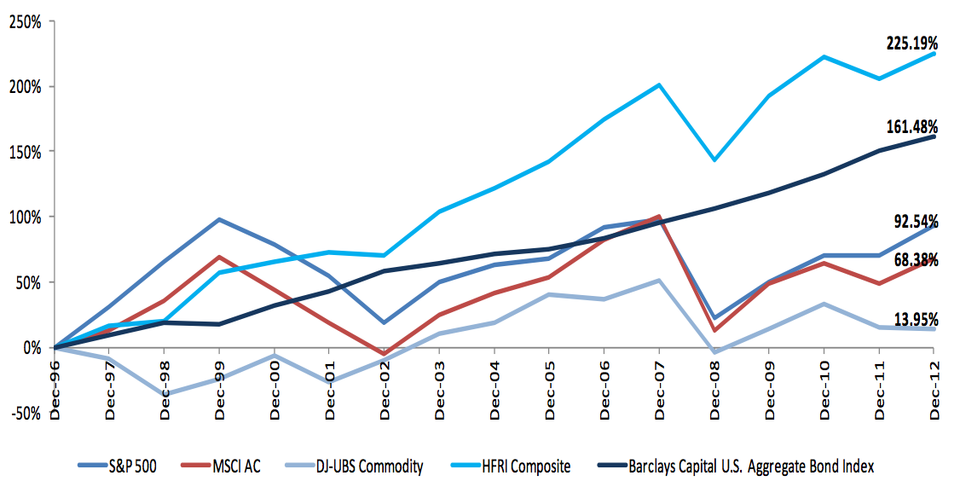
The Kelly formula calculates optimal position sizes by comparing your estimated probability against market-implied odds, maximizing long-term growth while avoiding overbetting. This mathematical approach transforms subjective betting decisions into objective calculations based on quantifiable edge — betting on sport.
Kelly Formula Application to Polymarket Sports Contracts
The Kelly Criterion provides a scientific approach to position sizing that maximizes long-term bankroll growth while minimizing the risk of ruin. The formula f* = (bp – q)/b creates a direct relationship between your perceived edge and the optimal bet size, ensuring you never overbet your advantage.
f* = (bp – q)/b where b = decimal odds – 1 represents the core calculation. For Polymarket contracts priced between 0 and 1, b equals (1/price) – 1 for Yes contracts or (1/(1-price)) – 1 for No contracts. This conversion allows direct application of the Kelly formula to prediction market pricing.
Calculate implied probability from contract price (0-1 range) by recognizing that a contract trading at 0.60 implies a 60% market probability. This market-implied probability serves as the baseline for comparison against your estimated probability, creating the foundation for edge calculation.
Compare your estimated probability to market price to determine your edge. If you believe a team has a 70% chance of winning but the contract trades at 60%, you have a 10% edge. This edge calculation feeds directly into the Kelly formula, determining your optimal position size.
Half-Kelly and Fractional Kelly Strategies for Risk Reduction
While the full Kelly Criterion maximizes long-term growth, it also creates significant short-term volatility that many sports bettors find uncomfortable. Fractional Kelly strategies provide a compromise between growth optimization and drawdown management, making the approach more practical for real-world trading (athletics world championships markets 2026).
Full Kelly maximizes growth but increases volatility by betting the mathematically optimal amount every time. This aggressive approach can lead to 50% drawdowns even with a positive edge, making it psychologically challenging for most traders to maintain discipline during losing streaks.
Half-Kelly (50% of optimal) reduces drawdowns by 50% while maintaining 75% of the growth rate. This approach provides a more comfortable risk profile while still capitalizing on your edge. For a calculated Kelly bet of 20% of bankroll, Half-Kelly would suggest a 10% position.
Quarter-Kelly for highly uncertain sports outcomes provides additional protection when dealing with unpredictable events like player injuries, weather conditions, or coaching decisions. This conservative approach ensures survival even when your probability estimates prove significantly inaccurate (understanding implied probability in sports event contracts).
Platform Mechanics: How Polymarket’s Order Book Enables Advanced Hedging

Polymarket’s order book system provides the liquidity and price discovery mechanisms necessary for sophisticated hedging strategies that Kalshi’s binary structure cannot match. Understanding these mechanics is essential for implementing advanced hedging techniques effectively.
Understanding Contract Resolution and Settlement
Polymarket’s resolution mechanics create specific timing windows and price dynamics that sophisticated traders can exploit for hedging purposes. The binary nature of outcomes combined with clear resolution criteria provides a structured environment for risk management strategies.
Binary outcomes (Yes/No) with clear resolution criteria eliminate ambiguity in contract settlement. Each contract has specific, predetermined criteria that determine the winning outcome, allowing traders to plan hedging strategies with confidence in the final resolution process.
Settlement timing affects hedging opportunity windows by creating predictable price movements as events approach resolution. Contracts typically experience increased volatility and trading volume in the final hours before resolution, providing opportunities for strategic position adjustments and hedging executions (table tennis event contracts strategies).
Fee structures impact net hedging profitability by reducing the effective return on hedging strategies. Polymarket’s fee schedule must be factored into all hedging calculations, as transaction costs can significantly impact the profitability of complex multi-leg strategies.
Liquidity Pool Dynamics and Slippage Management
Polymarket’s liquidity pools and order book depth determine the feasibility of large hedging positions without significant price impact. Understanding these dynamics is crucial for executing effective hedging strategies, particularly for traders with larger bankrolls or those managing multiple correlated positions.
Deep liquidity enables position exits without significant price impact for major sports events and popular contracts. High-volume games and tournaments typically have sufficient liquidity to allow large position adjustments without moving the market price substantially against the trader.
Volume analysis identifies optimal entry/exit points by revealing periods of high liquidity and low transaction costs. Trading during peak volume periods reduces slippage and improves execution quality, making hedging strategies more effective and profitable.
Cross-market arbitrage opportunities between Polymarket and Kalshi create additional hedging possibilities. Price discrepancies between platforms can be exploited for risk-free profits while simultaneously reducing overall portfolio exposure to individual outcomes.
Correlation Plays and Multi-Event Arbitrage: Beyond Single-Contract Hedging

Advanced sports bettors exploit correlation between related events to create hedged portfolios that profit regardless of individual outcome, reducing portfolio variance by 15-20%. This sophisticated approach moves beyond simple single-contract hedging to create more robust risk management strategies.
Identifying Correlated Sports Contracts
Correlation analysis reveals relationships between different sports contracts that can be exploited for hedging purposes. Understanding these relationships allows traders to create portfolios that are less sensitive to individual outcome variance while maintaining profit potential.
Team win + player prop combinations create natural hedging opportunities when correlated correctly. A bet on a team to win combined with a player prop bet on that team’s star player can create a hedged position that profits from different aspects of the same game outcome.
Same-game parlay opportunities on prediction markets allow for sophisticated correlation plays that traditional sportsbooks cannot offer. Multiple related outcomes within a single game can be combined to create hedged positions with specific risk-return profiles tailored to market inefficiencies.
League-wide outcomes with overlapping participant pools provide opportunities for correlation-based hedging across multiple games and teams. Playoff series outcomes, division winners, and conference champions often have overlapping participant pools that create natural hedging relationships, similar to how swimming Olympic gold prediction trades can be structured across multiple events (cybersport league futures on blockchain).
Cross-Platform Arbitrage Between Polymarket and Kalshi
Price discrepancies between Polymarket and Kalshi create risk-free profit opportunities while simultaneously reducing overall portfolio risk. This arbitrage strategy provides a unique advantage for traders with accounts on both platforms, allowing them to profit from market inefficiencies while hedging their exposure.
Price discrepancies create risk-free profit opportunities when the same contract trades at different prices on different platforms. A contract priced at 0.60 on Polymarket and 0.65 on Kalshi represents a clear arbitrage opportunity that can be exploited for guaranteed profit.
Buy Yes on cheaper platform, No on more expensive for same outcome creates a hedged position that profits regardless of the actual result. This strategy locks in the price difference as profit while eliminating exposure to the underlying event outcome, which is essential when identifying mispriced sports event contracts.
Arbitrage reduces overall portfolio risk while maintaining returns by providing a source of profit that is independent of sports outcomes. These risk-free profits can be used to offset losses from directional bets, creating a more stable overall portfolio performance.
Building Your Sports Hedging Portfolio: Implementation Checklist

Successful sports hedging requires systematic position sizing, correlation analysis, and platform selection that aligns with your risk tolerance and market expertise. This implementation checklist ensures all critical components are properly configured before placing your first hedged position.
Position Sizing Calculator and Risk Assessment
Proper position sizing requires a systematic approach that incorporates edge calculation, risk tolerance, and portfolio constraints. This calculator framework ensures consistent application of the 3-5-7 rule and Kelly Criterion across all trading decisions.
Input: bankroll size, estimated edge, market odds provides the foundation for position sizing calculations. Accurate bankroll measurement, realistic edge estimation, and current market pricing are essential inputs for determining optimal position sizes (comparing odds on traditional sportsbooks and Kalshi).
Output: optimal Kelly fraction and 3-5-7 compliant position size translates the raw inputs into actionable trading decisions. The calculator converts edge and odds into specific dollar amounts that comply with both the Kelly Criterion and the 3-5-7 risk management framework.
Risk assessment: correlation matrix and portfolio exposure limits ensures that individual position sizing aligns with overall portfolio risk constraints. This analysis prevents overexposure to correlated positions and maintains compliance with the 5% total exposure rule.
Platform Selection and Liquidity Requirements
Choosing the right platform for your hedging strategy depends on your specific trading style, bankroll size, and risk tolerance. Each platform offers unique advantages and limitations that must be considered when building a comprehensive hedging portfolio.
Polymarket for deep liquidity and order book flexibility provides the best environment for sophisticated hedging strategies. The order book system allows for precise position sizing and execution, while deep liquidity ensures minimal slippage even for larger positions.
Kalshi for simpler binary contracts and regulatory clarity offers advantages for traders who prefer straightforward execution and clear regulatory oversight. The binary contract structure simplifies hedging calculations while the regulatory framework provides additional investor protections.
Cross-platform accounts for arbitrage opportunities maximize profit potential by allowing traders to exploit price discrepancies between platforms. Maintaining accounts on both Polymarket and Kalshi provides access to the full range of hedging and arbitrage strategies available in the prediction market ecosystem.
Before placing your first hedged position on Polymarket, verify these 5 conditions to ensure your 3-5-7 framework is properly calibrated: bankroll size accurately measured, edge calculations verified, correlation analysis complete, platform liquidity confirmed, and position sizing calculated using both Kelly Criterion and 3-5-7 rules.