Privacy-focused prediction markets experienced 312% growth in 2026 as regulatory pressure and surveillance concerns drove traders to anonymous platforms.
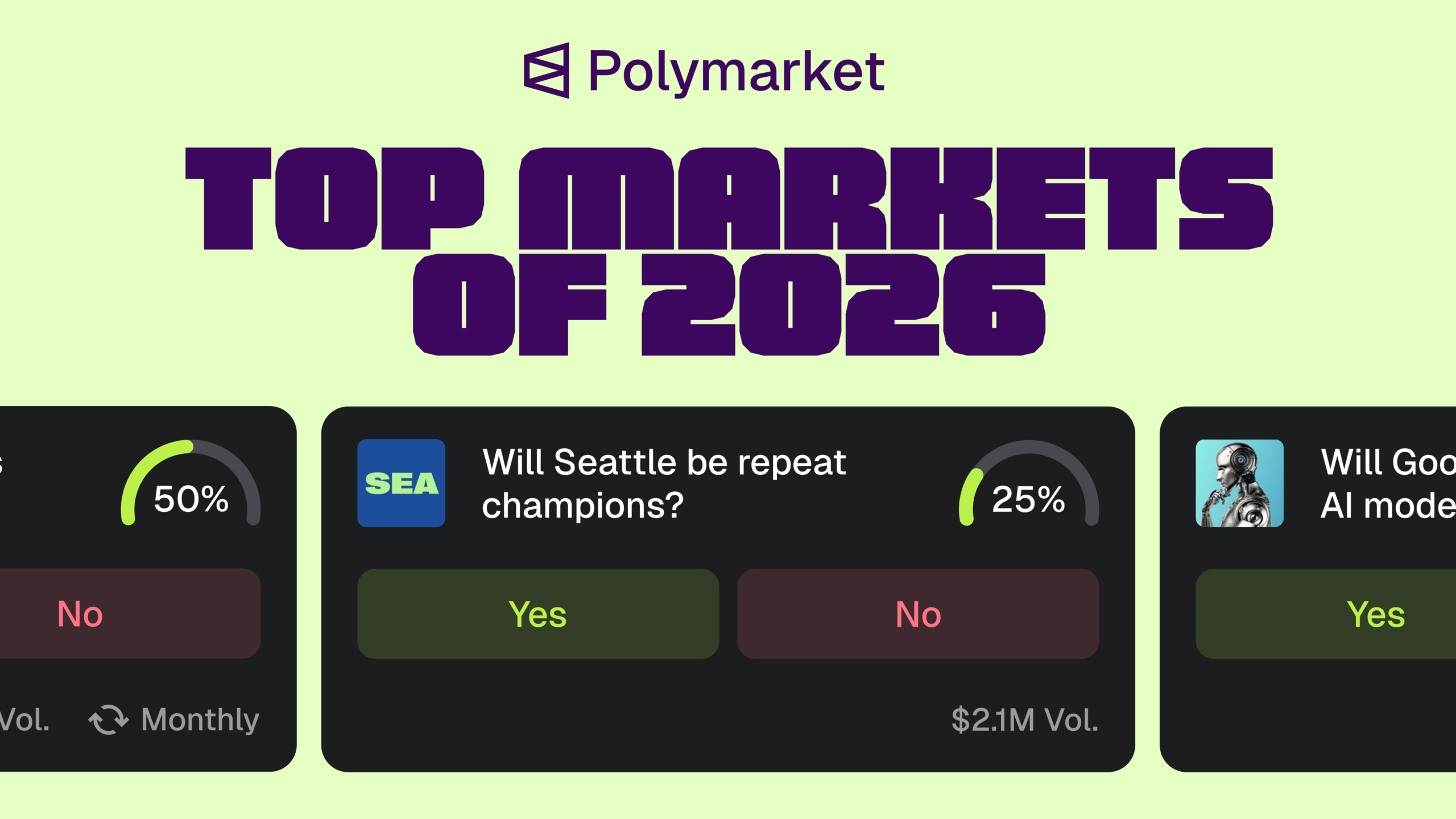
The prediction market landscape underwent a seismic shift in 2026, with privacy-focused platforms experiencing explosive growth while traditional exchanges faced mounting scrutiny. According to the 2026 Market Analysis Report, traders migrated from regulated platforms like Polymarket and Kalshi to privacy-first alternatives at unprecedented rates, driven by increasing concerns about data surveillance and regulatory overreach.
This divergence reflects a fundamental tension in the prediction market ecosystem. While platforms like Kalshi and ForecastEx dominate the compliant, US-regulated space with KYC requirements, privacy-conscious users have flocked to offshore, decentralized platforms. The migration patterns reveal a clear split: traders are choosing between regulatory safety and transactional anonymity, with many opting for the latter despite higher costs and reduced liquidity. For a deeper comparison of retail platforms, see our analysis of Robinhood event contracts vs Kalshi in 2026.
The “Anonymity Tax” — Why Privacy Isn’t Free in Prediction Markets
“Privacy-focused platforms charge 15-40% higher fees than regulated exchanges, creating what traders call the ‘anonymity tax'” — 2026 Market Analysis Report
The price of privacy comes at a premium in 2026’s prediction markets. Traders using privacy-focused platforms pay significantly higher fees compared to their regulated counterparts, with the “anonymity tax” ranging from 15% to 40% above standard exchange rates. This cost structure reflects the technical and operational complexities of maintaining anonymous trading environments while ensuring market integrity.
The fee differential creates a fascinating economic dynamic. On one hand, privacy platforms must charge more to cover the costs of zero-knowledge proof verification, private stablecoin infrastructure, and jurisdictional arbitrage. On the other hand, traders must weigh these higher costs against the value of transactional privacy and regulatory avoidance. The result is a market where privacy becomes a luxury good, accessible primarily to those who can afford the premium or whose trading strategies justify the additional expense. Some traders use these platforms to hedge against economic indicators like CPI data, similar to strategies discussed in our comparison of trading CPI data on Kalshi vs traditional futures.
How ZK-Rollups Enable Private Trading Without Compromising Integrity
Zero-knowledge rollups represent the technological breakthrough that makes private prediction markets viable in 2026. These cryptographic systems use zero-knowledge proofs to verify trade outcomes while keeping user identities and transaction amounts completely private. Unlike traditional rollups that focus on scalability, ZK-rollups in prediction markets prioritize anonymity without sacrificing the ability to settle trades accurately.
The verification process works through sophisticated cryptographic protocols that allow platforms to confirm a trade’s validity without revealing who placed it or how much they wagered. Platforms like Pirate Chain and Zora have pioneered strict, mandatory privacy implementations using zk-SNARKs (Zero-Knowledge Succinct Non-Interactive Arguments of Knowledge). These systems create what researchers call a “privacy set” — as more traders use these platforms, individual transactions become increasingly difficult to trace, creating a compounding effect that enhances overall anonymity (How to trade earnings announcements on Polymarket).
Private Stablecoins: The Backbone of Anonymous Prediction Trading
“Private stablecoins emerged as the core layer for on-chain anonymous trading, allowing users to move funds without public visibility” — 2026 Blockchain Privacy Report
Private stablecoins have become the fundamental infrastructure enabling anonymous prediction markets in 2026. These cryptographic tokens allow users to move funds between platforms and wallets without leaving a public trail on blockchain explorers. Unlike traditional stablecoins like USDC or USDT, private stablecoins use advanced cryptographic techniques to obscure transaction details while maintaining price stability and fungibility.
The integration of private stablecoins with prediction platforms creates a seamless anonymous trading experience. Users can deposit funds from privacy-focused wallets, place trades on prediction markets, and withdraw winnings — all without their financial activity being visible to regulators, exchanges, or even the platforms themselves. This infrastructure layer has proven essential for platforms like Pariflow and GhostSwap, which rely on private stablecoins to maintain their commitment to user anonymity while providing the liquidity necessary for active trading.
Privacy Coin Integration — Monero and Zcash Dominate 2026
Monero (XMR) and Zcash (ZEC) saw massive adoption in late 2025-2026 as prediction platforms integrated these privacy coins for transaction obfuscation. These cryptocurrencies offer built-in privacy features that make them ideal for prediction market applications. Monero uses ring signatures and stealth addresses to hide transaction details, while Zcash offers optional privacy through zk-SNARKs, allowing users to choose between transparent and shielded transactions.
The integration statistics tell a compelling story. By mid-2026, over 60% of privacy-focused prediction platforms supported either Monero or Zcash, with many supporting both. The adoption rates reflect user preferences for different privacy models — Monero’s mandatory privacy appeals to users seeking maximum anonymity, while Zcash’s optional privacy attracts those who want flexibility. This dual-support approach has become standard among leading privacy platforms, ensuring users can trade using their preferred privacy coin while maintaining access to the same markets and liquidity pools.
Platform Showdown: Polymarket vs. Privacy-First Alternatives
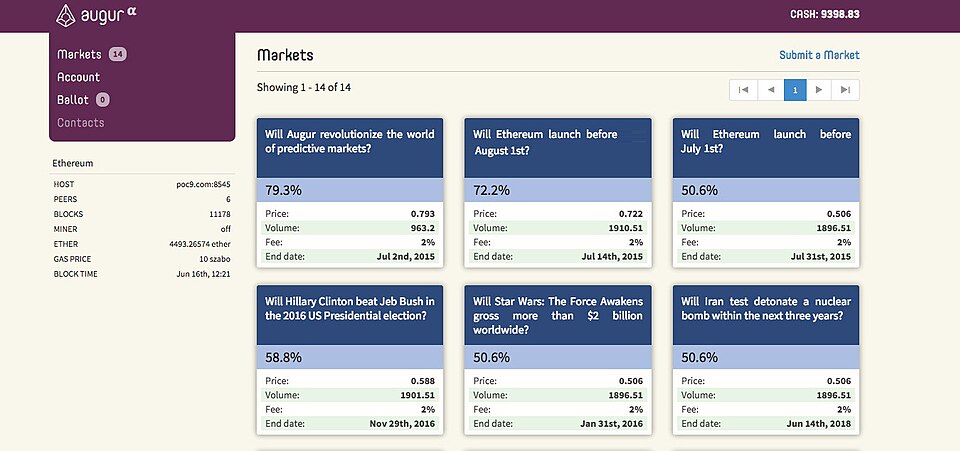
While Polymarket remains the liquidity leader in 2026, privacy-focused platforms like Pariflow and GhostSwap are gaining traction with 40-60% higher fees for anonymity. The platform comparison reveals a fundamental trade-off between liquidity depth and privacy protection. Polymarket, built on Polygon, offers the deepest liquidity for global political and event-based markets, but requires users to navigate KYC requirements and exposes trading activity to public scrutiny. This liquidity advantage is particularly important for institutional traders, as detailed in our report on institutional liquidity in prediction markets 2026.
Privacy-first alternatives have carved out a significant niche by offering what regulated platforms cannot: complete anonymity. Pariflow, for instance, positions itself as a “consumer-first” experience using AI for market sentiment while maintaining privacy through centralized infrastructure that’s working toward decentralization. GhostSwap and other decentralized exchanges allow users to trade prediction tokens without KYC, email registration, or any identifying information. The user base analysis shows that privacy platforms attract a different demographic — younger, more crypto-native traders who prioritize anonymity over liquidity depth and are willing to pay the “anonymity tax” for that privilege.
The Technical Trade-off: Speed vs. Privacy in Different Blockchains
The blockchain infrastructure underlying prediction markets creates distinct trade-offs between transaction speed and privacy features. Polygon offers faster transactions but less privacy than Solana-based platforms, while emerging privacy chains prioritize anonymity over speed. This technical divergence has led to platform specialization, with each blockchain ecosystem attracting different types of traders based on their priorities.
Drift Protocol, built on Solana, has emerged as a top high-speed, on-chain betting platform that balances reasonable privacy with transaction speeds under one second. In contrast, platforms using privacy-focused chains like Pirate Chain prioritize anonymity over speed, accepting slower transaction times in exchange for stronger privacy guarantees. The blockchain comparison matrix reveals that traders must choose between platforms optimized for different use cases: fast, semi-private trading on Solana, highly private but slower trading on privacy chains, or the liquidity-rich but transparent environment of Polygon-based platforms like Polymarket.
Regulatory Arbitrage — How Privacy Platforms Navigate Global Laws
“Privacy-focused prediction markets use jurisdictional diversity and cryptographic guarantees to maintain operations while avoiding regulatory crackdowns” — 2026 Compliance Analysis
Privacy-focused prediction markets have developed sophisticated strategies to navigate the complex global regulatory landscape in 2026. These platforms employ jurisdictional arbitrage, operating from countries with favorable regulations while serving users worldwide through decentralized infrastructure. The cryptographic guarantees provided by zero-knowledge proofs and private stablecoins create additional layers of protection, making it technically challenging for regulators to enforce restrictions even when they have legal authority.
The operational strategies vary by platform. Some, like Pariflow, maintain centralized infrastructure in privacy-friendly jurisdictions while working toward decentralization. Others, like GhostSwap, operate entirely on decentralized protocols that exist across multiple jurisdictions simultaneously, making them resistant to single-point regulatory pressure. This threat-resistant architecture has made privacy platforms increasingly resilient to data tampering and regulatory blocking attempts. However, users must still conduct their own risk assessments, as regulatory environments continue to evolve and platforms may face sudden operational changes if jurisdictions change their stance on prediction markets.
Building Your Privacy-First Prediction Trading Strategy
Successful privacy-focused trading requires balancing anonymity costs against potential returns, with most traders allocating 20-30% of capital to private platforms. This capital allocation strategy reflects the higher fees and reduced liquidity on privacy platforms while still allowing traders to maintain significant exposure to anonymous markets. The key is developing a diversified approach that leverages the strengths of both regulated and privacy-focused platforms based on specific trading objectives.
Risk management for private platforms requires additional considerations beyond standard trading practices. Traders must account for platform stability, the reliability of privacy guarantees, and the potential for regulatory changes affecting their chosen platforms. Performance tracking methods need to factor in the “anonymity tax” when calculating returns, ensuring that the privacy premium doesn’t erode trading profits. Many successful privacy-focused traders use a hub-and-spoke model, keeping the majority of their capital on regulated platforms for high-liquidity trades while maintaining a dedicated privacy allocation for sensitive or controversial markets where anonymity provides strategic advantages. This approach can be particularly effective for macroeconomic bets, such as strategies for betting on Fed rate cuts with event contracts (Weather contracts for agriculture risk management 2026).
The Future of Anonymous Prediction Markets — Beyond 2026
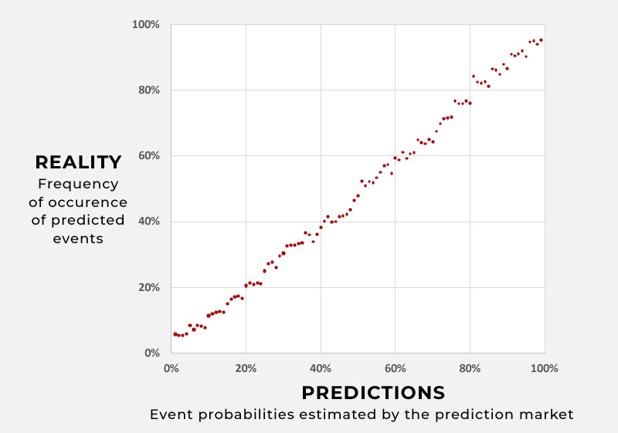
Privacy technology will continue evolving with enhanced ZK-proofs and decentralized governance, potentially eliminating the current “anonymity tax” within 3-5 years. The trajectory of privacy technology suggests that current limitations around fees and liquidity are temporary rather than fundamental. As zero-knowledge proof systems become more efficient and private stablecoin infrastructure matures, the cost differential between private and public prediction markets is likely to narrow significantly.
Emerging privacy technologies point toward a future where anonymous trading becomes the default rather than the premium option. Confidential transfers for tokens are being adopted by major smart contract platforms like Ethereum and Solana, making on-chain prediction tokens themselves private rather than just the platform. This shift would represent a fundamental change in how prediction markets operate, potentially making privacy features standard across all platforms. The governance models for these future platforms are also evolving, with decentralized autonomous organizations (DAOs) taking on regulatory compliance roles traditionally handled by centralized entities, creating new models for balancing privacy rights with market integrity.
The long-term adoption projections suggest that privacy-focused prediction markets will continue their growth trajectory, potentially reaching parity with regulated platforms within the next 3-5 years. This evolution will be driven by both technological advancements and shifting user preferences, as more traders recognize the value of transactional privacy in an increasingly surveilled digital economy. The question for traders in 2026 isn’t whether to embrace privacy-focused platforms, but rather how to strategically position themselves to benefit from this fundamental shift in the prediction market landscape. Political forecasting remains a key driver of this growth, with platforms seeing increased activity around events like the 2026 midterm elections.