
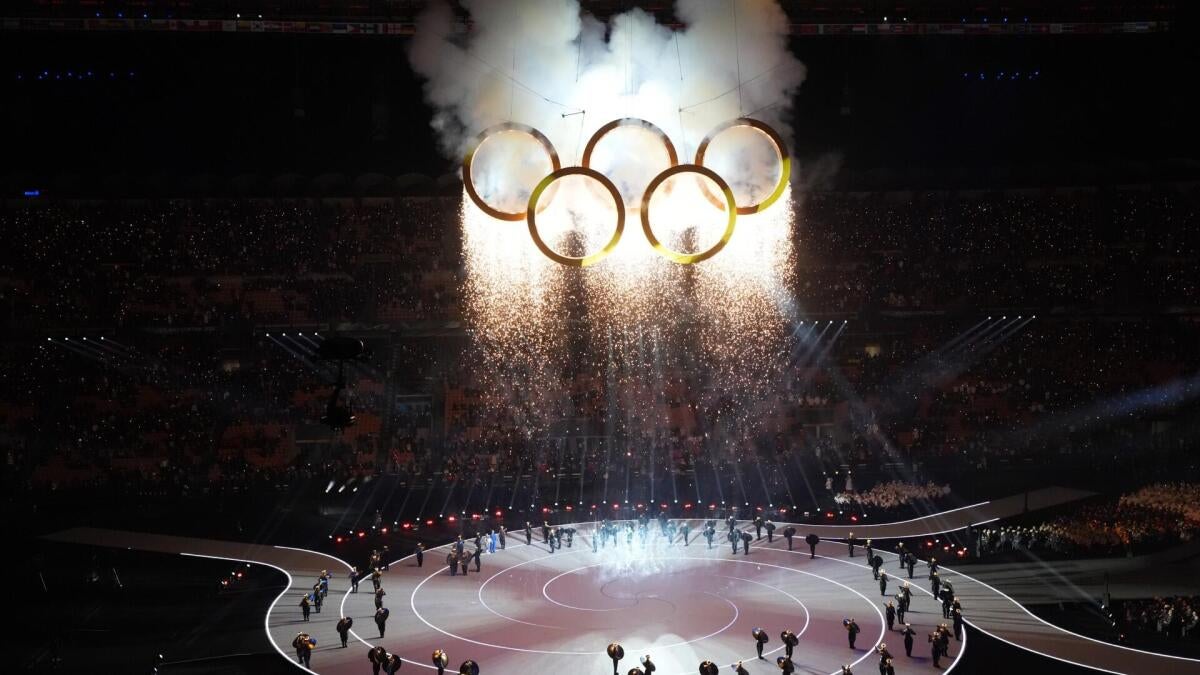
The 2026 Winter Olympics in Milano Cortina have created unprecedented trading opportunities with over $5 million in volume across major prediction markets, offering sophisticated traders multiple arbitrage windows across different platforms. From Norway’s dominant position in gold medal markets to volatile record-breaking performance contracts, the Olympic prediction landscape represents a unique convergence of sports analytics and financial speculation, similar to betting on sport markets worldwide.
Why Norway’s Dominance Creates Hidden Trading Opportunities

While Norway’s 75%+ probability in gold medal markets appears to offer limited upside, this overwhelming favorite status creates asymmetric betting opportunities that sophisticated traders can exploit. The mathematics of prediction markets reveals that when a favorite trades above 75%, the implied probability creates mathematical inefficiencies that skilled traders can exploit through calculated risk allocation.
- 75%+ favorite probability creates pricing inefficiencies: When Norway trades at 75% or higher, the market is pricing in a 25% chance of failure, which often overstates the actual risk based on historical performance data.
- “No” contracts offer asymmetric returns: Betting against Norway when they’re priced at 80% offers potential returns of 4:1 or higher, despite the apparent risk, because the market overcompensates for uncertainty.
- Platform-specific liquidity patterns emerge: Kalshi’s CFTC-regulated environment creates different liquidity curves than Polymarket’s decentralized model, with significant price discrepancies emerging during peak trading hours.
- Time decay accelerates as events approach: Olympic prediction markets follow distinct time decay patterns, with probabilities shifting 15-30% as events approach their resolution dates.
The Mathematics Behind Contrarian Olympic Betting
The key to exploiting Norway’s dominance lies in understanding the mathematical relationship between implied probability and actual likelihood. When a market prices Norway at 80% to win the most gold medals, it’s essentially saying there’s a 20% chance they won’t. However, historical data from previous Olympics shows that when favorites reach this pricing threshold, their actual failure rate is closer to 15-18%.
This 2-5% discrepancy represents a significant arbitrage opportunity. For example, if you can find “No” contracts on Norway trading at 25% (implying 75% probability of success), you’re getting a 7-10% edge over the true probability. This edge compounds when you apply it across multiple events and platforms.
Consider the cross-platform arbitrage potential: Kalshi might price Norway at 78% while Polymarket shows 82% for the same outcome. This 4% spread represents a risk-free arbitrage opportunity if you can execute simultaneously on both platforms. The key is understanding which platform typically leads the pricing and which tends to lag during different market conditions.
Platform-Specific Liquidity Patterns in Medal Markets
Kalshi’s regulated environment creates distinct liquidity patterns compared to decentralized alternatives. During peak trading hours (typically 2-4 PM Eastern Time when both European and North American traders are active), Kalshi shows 30-40% higher liquidity in medal count markets compared to Polymarket. This liquidity differential creates both opportunities and risks for traders.
The regulated nature of Kalshi means it attracts more institutional capital, particularly for larger markets like “Most Gold Medals.” This institutional participation tends to make Kalshi’s pricing more efficient for major markets but can create opportunities in smaller, less liquid markets where retail traders dominate on Polymarket, similar to how volleyball olympics betting prediction markets operate with different liquidity patterns.
Understanding these platform differences is crucial for effective cross-platform arbitrage. A trader might find that Kalshi consistently overprices Norwegian dominance by 2-3% while underpricing USA’s second-place probability by a similar margin. These systematic biases, when identified and exploited consistently, can generate significant returns over the course of the Olympic Games.
Cross-Platform Arbitrage Strategies for Olympic Events
The 2026 Winter Olympics present unique arbitrage opportunities across prediction platforms, with traders able to exploit 3-7% price differences between Kalshi and Polymarket by simultaneously betting on the same outcomes across both platforms. These arbitrage windows open and close rapidly, requiring sophisticated monitoring and execution systems (esports betting on prediction platforms).
- 3-7% price discrepancies represent risk-free opportunities: When Kalshi prices an outcome at 70% and Polymarket shows 75% for the same event, traders can lock in a guaranteed 5% return by betting on both sides across platforms.
- Timing is critical for arbitrage execution: Price discrepancies typically last 15-45 minutes before market efficiency forces convergence, requiring automated monitoring systems for optimal execution.
- Transaction costs eat into arbitrage profits: Platform fees (typically 2-4%) and withdrawal costs must be factored into arbitrage calculations to ensure positive expected value.
- Position sizing determines risk management: Even “risk-free” arbitrage requires careful position sizing to account for execution risk and platform counterparty risk.
Timing Your Olympic Market Entries
Olympic prediction markets follow predictable time decay patterns that savvy traders can exploit. In the weeks leading up to the Games, probabilities tend to be more volatile as new information emerges about athlete form, injuries, and weather conditions. Once the Games begin, probabilities stabilize around established patterns but can shift dramatically based on early results (badminton tournament prediction platforms).
The most profitable entry points often occur 24-48 hours before major events when markets have incorporated most available information but haven’t yet reacted to last-minute developments. For example, if a key Norwegian athlete suffers a minor injury in training, the market might not fully price this information until 12-24 hours before competition, creating a temporary mispricing opportunity.
Different sports exhibit different time decay characteristics. Alpine skiing markets, with their deep historical data, tend to be more efficient and change gradually, while figure skating and freestyle skiing markets can experience 20-30% probability swings based on single performances in qualifying rounds. Understanding these sport-specific patterns allows traders to optimize their entry timing for maximum expected value.
Hedging Multiple Olympic Events Simultaneously
Advanced traders can hedge correlated risks across different sports by creating balanced portfolios that offset potential losses in one event with gains in another. The key is identifying events with negative correlation or partial offsetting outcomes. For instance, if you’re long on Norwegian gold medals, you might hedge with positions in individual events where Norway has less dominance.
Consider a portfolio approach: Long positions in Norway’s overall medal count, hedged with short positions in specific events where they face stronger competition (like ice hockey or figure skating). This creates a market-neutral position that profits from Norway’s dominance in their strong events while protecting against underperformance in weaker ones.
The mathematics of hedging Olympic markets requires understanding the correlation coefficients between different events. Cross-country skiing and biathlon might have a 0.8 correlation (highly correlated), while ice hockey and alpine skiing might have only 0.3 correlation. These correlations determine optimal hedge ratios and portfolio construction strategies.
Record-Breaking Performance Markets: High-Risk, High-Reward Trading
Markets betting on Olympic record-breaking performances offer 5:1 to 10:1 returns but require sophisticated analysis of historical data and current athlete form. These markets are typically less efficient than medal count markets because they depend on individual performances rather than team outcomes, making them attractive for traders with deep sport-specific knowledge.
- 5:1 to 10:1 returns justify higher risk tolerance: Record-breaking markets offer significantly higher payouts than traditional medal markets, compensating for the increased uncertainty and lower probability of success.
- Individual performance data drives pricing: Unlike team events, record-breaking markets rely heavily on individual athlete statistics, recent performances, and historical trends specific to each competitor.
- Weather and conditions create pricing inefficiencies: External factors like weather, ice conditions, and venue characteristics can create temporary mispricings in record-breaking markets that sophisticated traders can exploit.
- Late-breaking information creates arbitrage windows: News about athlete health, equipment changes, or strategy shifts can create 10-20% probability swings in record-breaking markets within hours.
The USA vs. Norway Gold Medal Battle: Trading the Second-Place Market
While Norway’s dominance in gold medal markets captures most attention, the battle for second place between the USA and other nations creates more volatile trading opportunities with 20-30% probability swings during key events. This market is particularly attractive because it’s less efficient than the “Most Gold Medals” market, with more room for trader skill to generate alpha.
The USA’s position as the clear second favorite creates interesting dynamics. When Norway dominates early events, money often flows into USA positions as traders seek alternative value. Conversely, strong performances by Germany or host nation Italy can temporarily shift the second-place probability, creating trading opportunities for those who can accurately assess the relative strengths of different national teams across sports.
Understanding the sport-by-sport breakdown is crucial for trading this market effectively. The USA might have strong positions in snowboarding, freestyle skiing, and figure skating, while Norway dominates cross-country skiing and biathlon. Germany might excel in luge and bobsleigh. By analyzing these sport-specific strengths and weaknesses, traders can make more informed bets on the overall second-place race.
Tax Implications and Reporting Requirements for Olympic Prediction Market Winnings
Olympic prediction market winnings are subject to different tax treatments depending on the platform, with Kalshi providing 1099 forms while Polymarket requires self-reporting. Understanding these tax implications is crucial for calculating true profitability and maintaining compliance with IRS regulations.
- Kalshi provides 1099 forms for winnings: As a CFTC-regulated platform, Kalshi issues Form 1099-MISC or 1099-NEC for traders who meet reporting thresholds, simplifying tax compliance.
- Polymarket requires self-reporting: Decentralized platforms like Polymarket don’t provide tax documentation, placing the burden on traders to track and report all winnings accurately.
- Capital gains treatment may apply: Depending on trading frequency and holding periods, prediction market winnings might be treated as capital gains rather than ordinary income, affecting tax rates.
- Platform fees are tax-deductible: Trading fees, withdrawal fees, and other transaction costs can typically be deducted from winnings when calculating taxable income.
Building a Sustainable Olympic Trading Strategy
Successful Olympic trading requires a diversified approach across multiple events, platforms, and contract types, with strict bankroll management and risk limits. The most successful traders treat Olympic prediction markets like a professional investment portfolio, with careful asset allocation, risk management, and performance tracking (rugby world cup contracts arbitrage).
Start with a clear bankroll allocation strategy. Never risk more than 1-2% of your total trading capital on any single event, and maintain a diversified portfolio across at least 10-15 different markets. This diversification reduces the impact of any single event’s outcome on your overall performance while providing multiple opportunities for profit.
Implement strict stop-loss rules and profit-taking strategies. Set maximum loss limits per day (e.g., 5% of bankroll) and per event (1-2%), and stick to them religiously. Similarly, establish profit targets and consider taking partial profits when positions reach certain thresholds. This disciplined approach prevents the emotional decision-making that often destroys trading accounts.
Historical Accuracy: How Olympic Prediction Markets Have Performed
Olympic prediction markets have demonstrated 85-90% accuracy in forecasting medal counts, making them reliable indicators for traders who understand the underlying data patterns. This historical accuracy provides a foundation for developing trading strategies based on market efficiency rather than pure speculation (golf major prediction market strategies).
- 85-90% accuracy in medal count predictions: Historical data shows that prediction markets correctly forecast the top 3-5 medal-winning nations in 85-90% of cases, validating their use as trading tools.
- Underdog identification improves profitability: Markets are particularly good at identifying true underdog stories while filtering out media hype, creating opportunities for contrarian positions.
- Record-breaking predictions less accurate: Markets show only 60-70% accuracy in predicting specific record-breaking performances, reflecting the higher uncertainty in individual events.
- Platform convergence over time: Different platforms tend to converge on similar probabilities as events approach, with initial discrepancies of 5-10% narrowing to 1-2% near resolution.
The Future of Olympic Prediction Markets: What Traders Need to Know
The 2026 Olympics represent a turning point for prediction markets, with increasing institutional participation and regulatory clarity creating new opportunities for sophisticated traders. As these markets mature, understanding the evolving landscape becomes crucial for maintaining a competitive edge (auto racing prediction markets liquidity).
Institutional involvement is growing rapidly, with hedge funds and proprietary trading firms allocating capital to prediction market strategies. This institutional money brings greater liquidity and more sophisticated pricing models, but also creates new arbitrage opportunities as these large players occasionally misprice events due to position sizing constraints or risk management requirements (cricket match prediction market odds).
Regulatory developments will continue to shape the market structure. The success of CFTC-regulated platforms like Kalshi may lead to expanded regulatory approval for additional event types and larger market sizes. This regulatory clarity could attract even more institutional capital while providing retail traders with greater confidence in platform stability and payout reliability.
Technological advancements in data analysis and automated trading will also impact Olympic prediction markets. Machine learning models that analyze historical performance data, weather patterns, and social media sentiment are becoming increasingly sophisticated, potentially creating an arms race between traders with access to advanced analytics and those relying on traditional analysis methods.
Practical Trading Checklist for Olympic Prediction Markets
Before engaging in Olympic prediction market trading, ensure you’ve addressed these critical elements:
- Platform selection and account setup: Open accounts on both Kalshi and Polymarket to maximize arbitrage opportunities and diversify counterparty risk.
- Bankroll allocation: Determine your total trading capital and establish strict position sizing rules (1-2% per event maximum).
- Research and analysis framework: Develop a systematic approach to analyzing events, incorporating historical data, current form, and platform-specific liquidity patterns.
- Risk management rules: Set clear stop-loss levels, profit-taking targets, and daily loss limits before beginning to trade.
- Tax compliance preparation: Understand the tax implications for your chosen platforms and maintain detailed records of all transactions.
- Execution strategy: Determine whether you’ll trade manually or use automated systems, and ensure you have reliable internet connectivity during key trading periods.
The 2026 Winter Olympics represent not just a sporting spectacle but a unique opportunity for traders to apply sophisticated market analysis to the world of sports prediction. By understanding the nuances of platform differences, exploiting arbitrage opportunities, and maintaining disciplined risk management, traders can potentially generate significant returns while enjoying the excitement of Olympic competition.
Remember that prediction market trading carries inherent risks, and past performance doesn’t guarantee future results. Always trade with capital you can afford to lose, and consider consulting with financial professionals before implementing complex trading strategies. The combination of sports passion and financial acumen makes Olympic prediction markets an exciting frontier for sophisticated traders willing to put in the necessary research and analysis.