

NASCAR prediction markets command 3-4x more liquidity than Formula 1 and IndyCar events, with the Autotrader 400 on Kalshi exceeding $3 million in volume while F1 and IndyCar typically see only 25-33% of that depth. This liquidity gap creates distinct trading opportunities across racing series, with oval tracks generating higher volume due to their broader appeal and more predictable outcomes.
NASCAR Markets Command 3-4x More Liquidity Than F1 and IndyCar Events

According to 2026 data, NASCAR prediction markets on Kalshi routinely exceed $3 million in volume for single races like the Autotrader 400, while Formula 1 and IndyCar events typically see 25-33% of that liquidity.
The liquidity disparity between racing series reflects fundamental differences in audience size and betting behavior. NASCAR’s oval track format attracts a more mainstream American audience, creating deeper markets with tighter bid-ask spreads. During the 2026 season, high-volume NASCAR events exhibit spreads as thin as 1-2 cents, while comparable F1 markets often show 3-5 cent spreads for the same contract types.
Oval tracks generate higher trading volume due to their more predictable nature and longer race durations. Unlike road courses where strategy and weather play larger roles, oval racing follows more established patterns that traders can analyze. This predictability attracts both retail and institutional traders, creating a virtuous cycle of increased liquidity and tighter spreads.
Why Oval Tracks Generate Higher Trading Volume
The oval track format creates more consistent racing conditions and fewer variables for traders to consider. With fewer turns and more straightforward strategies, the outcome probabilities become more stable, encouraging larger position sizes. Market makers can more confidently provide liquidity when they understand the underlying dynamics better.
Additionally, NASCAR’s broader television audience translates directly into prediction market participation. The sport’s accessibility to casual fans creates a larger pool of potential traders, while F1’s more technical nature limits its appeal to hardcore racing enthusiasts and technical analysts.
Impact on Bid-Ask Spreads and Slippage
Tighter spreads in NASCAR markets mean traders can enter and exit positions with minimal slippage. For example, a $10,000 position in a NASCAR winner market might incur only $20-50 in slippage costs, while the same position in an F1 market could cost $100-200 due to wider spreads. This cost differential significantly impacts trading strategy and position sizing decisions.
The spread differences also affect arbitrage opportunities. When NASCAR markets show 1-cent spreads while F1 markets show 3-cent spreads for similar probability ranges, arbitrage traders can exploit these inefficiencies more effectively in NASCAR markets.
CFTC Regulation Creates Legal Trading Access Across All 50 States

Unlike sports betting, platforms like Kalshi operate under CFTC oversight, making auto racing prediction markets legally accessible to traders in every U.S. state as of 2026.
The Commodity Futures Trading Commission’s regulatory framework provides a significant advantage over traditional sports betting. While sports betting remains restricted in many states, CFTC-regulated prediction markets operate nationwide, creating a larger and more diverse participant pool. This regulatory clarity has been a key driver of liquidity growth in 2026, with platforms like Kalshi offering betting on sport in all 50 states.
CFTC oversight ensures market integrity through standardized contract specifications, transparent pricing mechanisms, and robust dispute resolution processes. Unlike offshore betting sites, these platforms must maintain strict compliance with federal regulations, providing traders with greater confidence in market fairness and contract settlement.
Regulatory Framework Differences
Prediction markets operate as commodity futures contracts under CFTC jurisdiction, while sports betting falls under state gaming regulations. This distinction allows prediction platforms to accept traders from states where sports betting remains prohibited. The regulatory framework also requires platforms to maintain sufficient capital reserves and implement anti-manipulation safeguards.
The CFTC’s approach focuses on market efficiency and price discovery rather than gambling concerns. This regulatory philosophy has enabled platforms to offer more sophisticated contract types and higher betting limits than traditional sportsbooks can provide.
State-by-State Accessibility Comparison
While sports betting has expanded to over 30 states, it remains prohibited in states like Utah, Hawaii, and Texas. Prediction markets, however, operate legally in all 50 states, giving them access to a significantly larger potential trader base. This nationwide accessibility has been crucial for building the liquidity levels seen in 2026.
The regulatory advantage becomes particularly important for large-stake traders who need access to deep markets. States with restrictive gambling laws often limit betting amounts, while CFTC-regulated platforms can accommodate institutional-sized positions without artificial caps.
Implications for Market Depth and Participant Diversity
The broader accessibility has attracted a more diverse participant base, including institutional investors, quantitative traders, and international participants. This diversity creates more efficient price discovery and reduces the impact of any single group’s trading behavior on market prices.
Institutional participation has grown significantly in 2026, with firms like Tradeweb expanding access to prediction market liquidity. This institutional involvement provides additional market depth and stability, particularly during volatile market conditions (badminton tournament prediction platforms).
How Real-Time Probability Updates Create Arbitrage Windows
Prediction markets update probabilities in real-time based on new information, creating dynamic arbitrage opportunities. For instance, when qualifying results show a driver’s unexpected speed advantage, the market can instantly adjust their win probability from 25% to 42%, creating immediate trading opportunities for those who can process information faster (golf major prediction market strategies).
The speed of information pricing creates a competitive advantage for traders with superior data feeds and analytical capabilities. Practice times, weather forecasts, and technical developments all flow into market prices within seconds, allowing sophisticated traders to capitalize on information advantages.
Speed of Information Pricing (Practice Times, Qualifying)
During race weekends, prediction markets become increasingly efficient as more information becomes available. Friday practice sessions provide initial pricing signals, which are refined through Saturday qualifying and final practice. By race day, the markets typically reflect the most accurate probability assessments available.
This information flow creates predictable liquidity patterns. Markets are typically thinnest on Thursday and Friday, then gradually build liquidity through Saturday before peaking on race day. Traders who understand these patterns can optimize their entry and exit timing for maximum efficiency.
Cross-Platform Arbitrage Opportunities
Different platforms may price the same driver’s win probability differently based on their user bases and liquidity levels. A driver might show 35% probability on Kalshi while Polymarket prices them at 38% for the same contract. These discrepancies create arbitrage opportunities for traders who can quickly execute across multiple platforms (rugby world cup contracts arbitrage).
The arbitrage opportunities are particularly pronounced for longshot drivers or in less liquid markets. While top drivers maintain tight spreads across platforms, drivers with 5-10% win probabilities often show significant pricing discrepancies between exchanges.
Top Drivers Maintain Tighter Spreads — Kyle Larson and Shane Van Gisbergen Lead
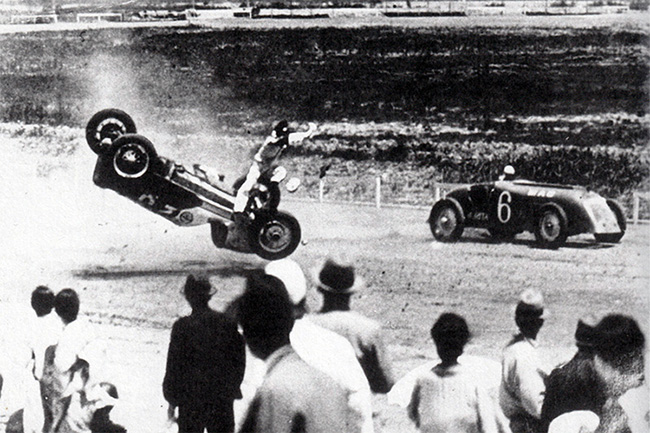
Elite drivers like Kyle Larson and Shane Van Gisbergen consistently maintain the tightest bid-ask spreads in NASCAR markets, allowing for higher volume trading without significant slippage.
Market depth correlates strongly with driver popularity and recent performance. Top drivers command significantly more liquidity than mid-pack competitors, creating a hierarchy of trading opportunities. Kyle Larson, Shane Van Gisbergen, and other championship contenders typically see 5-10x more trading volume than drivers outside the top 15 in standings.
This liquidity concentration affects trading strategy. While top drivers offer lower risk due to tighter spreads, their contracts also tend to be more efficiently priced, reducing potential returns. Mid-tier drivers may offer better value but come with higher transaction costs due to wider spreads.
Liquidity Analysis by Driver Popularity
The relationship between driver popularity and market liquidity follows a power law distribution. The top 5 drivers in any series typically command 50-60% of total race liquidity, while drivers ranked 11-20 might only see 15-20% of total volume. This concentration creates both opportunities and risks for traders.
Popularity-driven liquidity also varies by contract type. While race-winner markets show the strongest correlation with driver popularity, other contract types like top-3 finishes or head-to-head matchups may distribute liquidity more evenly across the field.
Spread Comparison Between Top-Tier and Mid-Pack Drivers
Top-tier drivers typically maintain spreads of 1-2 cents for win contracts, while mid-pack drivers might show spreads of 5-10 cents or wider. This spread differential significantly impacts trading costs and strategy selection. For a $10,000 position, the difference in slippage costs between a top driver and a mid-pack driver can exceed $100.
The spread differences also affect position sizing. Traders can comfortably take larger positions in top-driver markets without worrying about moving the price, while positions in mid-pack driver markets must be sized more conservatively to avoid excessive slippage.
Trading Volume Thresholds for Different Driver Markets
Each driver market has a volume threshold beyond which slippage costs become prohibitive. For top drivers, positions up to $50,000-100,000 can typically be executed with minimal impact. For mid-pack drivers, the threshold might be $5,000-10,000, while longshot drivers might only support $1,000 positions without significant price movement.
Understanding these thresholds is crucial for position sizing and risk management. Exceeding the volume threshold can turn a profitable trade idea into a losing proposition due to excessive transaction costs.
Longshot Markets Suffer From 3-5x Lower Liquidity
Markets for drivers with 5-10% win probabilities suffer from significantly lower liquidity, often seeing 70-80% less trading volume than top contenders. This liquidity decay creates a challenging environment for traders interested in longshot opportunities, as the potential for outsized returns must be weighed against the difficulty of entering and exiting positions efficiently.
The liquidity challenges in longshot markets are compounded by higher volatility. With fewer market participants, these contracts can experience larger price swings based on limited trading activity, creating both opportunities and risks for sophisticated traders.
Risk-Reward Analysis for Longshot Trading
Longshot markets offer the potential for high returns but come with elevated transaction costs and execution risks. A driver priced at 5% might offer a 20x payout, but the wide spreads and low liquidity mean traders must be extremely confident in their edge to overcome the additional costs.
The risk-reward calculation becomes even more complex when considering the difficulty of hedging longshot positions. With limited liquidity, traders may find it impossible to partially hedge their exposure, forcing them to accept the full risk of their positions.
Platform-Specific Differences in Supporting Thin Markets
Different platforms have varying approaches to supporting low-liquidity markets. Some platforms actively market-make in all listed contracts, providing baseline liquidity even for longshots. Others only support markets with sufficient natural liquidity, potentially excluding some trading opportunities.
Understanding these platform differences is crucial for traders seeking to exploit longshot opportunities. A contract that might be illiquid on one platform could have reasonable liquidity on another, depending on their market-making policies and user base.
Weekend Liquidity Patterns: Qualifying vs. Race Day Volume
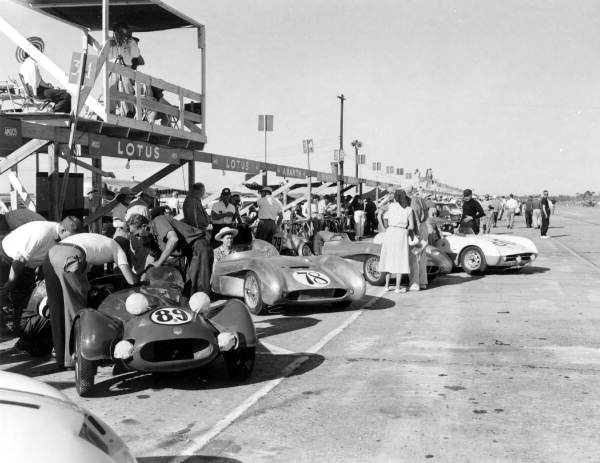
Auto racing prediction markets typically see 60-70% of total weekend liquidity concentrated on race day, with qualifying day accounting for only 15-20% of total volume.
The temporal distribution of liquidity creates specific trading windows that sophisticated traders can exploit. Understanding when markets are most liquid helps optimize entry and exit timing, while also identifying periods when prices might be less efficient due to lower trading activity.
Race day concentration of liquidity reflects the culmination of all available information and the highest level of trader engagement. However, this concentration also means that prices on race day are typically more efficient, potentially reducing opportunities for value-based trading strategies.
Daily Volume Breakdown Across Race Weekends
Thursday and Friday typically see the lowest liquidity as markets are still forming and limited information is available. Saturday qualifying sessions provide the first significant liquidity spike, but still only capture 20-25% of total weekend volume. Sunday race day dominates with 60-70% of total liquidity, while Monday morning settlement accounts for the remaining 5-10%.
This volume pattern creates a predictable trading calendar. Early-week traders must accept wider spreads and potentially less efficient pricing, while race-day traders benefit from tighter spreads but face more competitive pricing.
Strategic Timing for Entering/Exiting Positions
The optimal timing for position entry depends on trading strategy and risk tolerance. Value traders might prefer to enter positions early in the week when prices might be less efficient, while momentum traders might wait for race-day liquidity to execute larger positions with minimal slippage.
Exit timing is equally important. Holding positions through race day provides maximum liquidity for exits but also exposes traders to race-day volatility. Some traders prefer to exit positions before the race begins, sacrificing some liquidity for reduced event risk.
How Weather Delays Impact Liquidity Distribution
Weather delays can significantly disrupt normal liquidity patterns, often concentrating trading activity into shorter time windows. When races are delayed, traders may rush to adjust positions during the delay period, creating temporary liquidity spikes that can be exploited by quick-acting traders.
Rain delays also affect information flow and market efficiency. With practice and qualifying potentially disrupted, markets may rely more heavily on historical data and less on current form, potentially creating pricing inefficiencies that savvy traders can exploit.
Beyond Winner Markets: Top-3 and Driver Matchup Liquidity Analysis
While race-winner contracts dominate volume, top-3 finish and driver-vs-driver matchup markets collectively represent 40% of total auto racing prediction market liquidity in 2026.
The diversity of contract types provides multiple avenues for trading strategies and risk management. While winner markets capture the most attention, the substantial liquidity in alternative markets creates opportunities for sophisticated trading approaches that might not be available in more efficient winner markets.
Understanding the liquidity distribution across contract types helps traders select the most appropriate instruments for their strategies. Some traders might find better value in top-3 markets where pricing might be less efficient, while others might prefer the binary nature of winner contracts.
Liquidity Distribution Across Contract Types
Winner markets typically capture 50-55% of total race liquidity, reflecting their simplicity and popularity. Top-3 finish markets account for 20-25% of liquidity, while head-to-head matchups capture another 15-20%. The remaining liquidity is distributed across more specialized markets like podium finishes, fastest lap, and qualifying positions (cricket match prediction market odds).
This distribution varies by series and race type. NASCAR events tend to have more evenly distributed liquidity across contract types, while F1 markets are more concentrated in winner and podium finish contracts.
Arbitrage Opportunities Between Related Markets
The relationship between different contract types creates arbitrage opportunities. For example, if a driver is heavily backed to win, their top-3 probability should adjust accordingly. Discrepancies between these related markets can create risk-free profit opportunities for traders who can quickly identify and exploit them.
These arbitrage relationships become more complex when considering multiple platforms. A driver might be overpriced to win on one platform while their top-3 probability is underpriced on another, creating cross-platform arbitrage opportunities.
How Matchup Markets Offer Superior Risk-Adjusted Returns
Driver matchup markets often provide better risk-adjusted returns than winner markets because they eliminate some of the uncertainty inherent in full-field betting. By focusing on two drivers, these markets reduce the impact of external factors like crashes or mechanical failures that might affect the entire field.
The reduced uncertainty in matchup markets also means they might be less efficiently priced than winner markets, where sophisticated traders have more opportunities to exploit information advantages. This inefficiency can create value opportunities for traders with strong driver comparison skills.
Cross-Sport Liquidity Comparison With Horse Racing Markets
Auto racing prediction markets share several characteristics with horse racing markets, including the importance of form analysis, track conditions, and the binary nature of win/lose outcomes. However, auto racing markets typically show higher liquidity concentration in winner contracts, while horse racing markets have more evenly distributed liquidity across exotic bet types. This similarity extends to other sports as well, with esports betting on prediction platforms following similar liquidity patterns for games like League of Legends and CS2 (volleyball olympics betting prediction markets).
The settlement speed advantage for auto racing markets is significant. While horse racing markets might take days to settle due to photo finishes and objections, auto racing markets typically settle within minutes of the race conclusion, providing faster capital turnover for active traders.
Settlement Speed Advantages for Auto Racing
The immediate settlement of auto racing markets provides several advantages over horse racing. Traders can quickly redeploy capital into new opportunities, reducing opportunity costs and improving capital efficiency. The faster settlement also reduces counterparty risk and eliminates the uncertainty associated with post-race inquiries and disqualifications.
The settlement speed advantage becomes particularly important for traders employing short-term strategies or those who need to meet specific capital requirements. The ability to quickly realize profits or losses allows for more dynamic portfolio management.
Fee Structure Differences Affecting Market Depth
Fee structures vary significantly between platforms and can impact market depth and trading strategies. Some platforms charge flat fees per trade, while others use percentage-based fees or tiered structures based on trading volume. These fee differences can affect the profitability of certain trading strategies, particularly those involving frequent position adjustments.
Understanding fee structures is crucial for accurate profit calculation and strategy selection. A strategy that appears profitable on paper might become unprofitable once trading fees are accounted for, particularly in low-margin arbitrage opportunities.
Practical Trading Strategies for Auto Racing Prediction Markets

Success in auto racing prediction markets requires understanding both the racing dynamics and the market microstructure. The most successful traders combine deep knowledge of the sport with sophisticated trading techniques that account for liquidity patterns, fee structures, and platform-specific characteristics (Olympic events prediction markets 2026).
Liquidity-based strategies focus on exploiting the predictable patterns in market depth throughout race weekends. Traders who understand when and where liquidity concentrates can optimize their execution timing to minimize costs and maximize returns.
Liquidity-Based Entry and Exit Timing
The most effective liquidity-based strategy involves timing entries during periods of lower liquidity but higher potential inefficiency, then exiting during peak liquidity periods. For example, entering positions on Thursday or Friday when spreads are wider but prices might be less efficient, then exiting on race day when spreads tighten but prices are more accurate.
This approach requires balancing the trade-off between potential pricing inefficiency and transaction costs. Early-week entries might offer better prices but come with higher execution costs, while race-day entries benefit from tighter spreads but face more competitive pricing.
Driver-Specific Position Sizing
Position sizing should be adjusted based on driver-specific liquidity characteristics. Top drivers can support larger positions with minimal slippage, while mid-pack and longshot drivers require more conservative sizing to avoid excessive transaction costs. A general rule is to limit positions to 1-2% of the average daily trading volume for the specific driver market.
This sizing approach helps preserve capital efficiency while minimizing the market impact of large trades. It also provides a natural risk management framework that adjusts automatically based on market conditions.
Cross-Platform Liquidity Arbitrage
The most sophisticated traders actively monitor multiple platforms for pricing discrepancies and liquidity differences. By maintaining accounts on several exchanges and using automated monitoring tools, traders can quickly identify and exploit arbitrage opportunities as they arise.
This strategy requires significant capital allocation and sophisticated execution capabilities, as arbitrage opportunities often exist for only brief periods before being eliminated by other traders. However, for those with the necessary infrastructure, cross-platform arbitrage can provide consistent, low-risk returns.
Weekend Pattern Exploitation
The predictable liquidity patterns throughout race weekends create opportunities for pattern-based trading strategies. Traders who understand that liquidity builds gradually through the weekend can position themselves ahead of major liquidity events, potentially capturing value before prices fully adjust to new information.
These patterns also help with risk management. Traders can reduce exposure during periods of thin liquidity when spreads are wider and price discovery is less efficient, then increase exposure during peak liquidity periods when transaction costs are minimized.
Future Outlook for Auto Racing Prediction Markets
The auto racing prediction market sector is maturing rapidly in 2026, with increasing institutional participation and technological sophistication driving continued liquidity growth. Several trends suggest this maturation will continue, potentially making auto racing markets one of the most liquid and efficient prediction market sectors.
Institutional interest is growing as traditional financial firms recognize the potential of prediction markets as an alternative asset class. This institutional involvement brings additional capital, sophisticated trading strategies, and technological infrastructure that further enhances market efficiency and liquidity.
Institutional Market Making Growth
Institutional market makers are increasingly active in auto racing prediction markets, providing consistent liquidity across all contract types and price levels. This institutional involvement helps reduce volatility and ensures that even less popular markets maintain basic liquidity levels, making them accessible to retail traders.
The growth of institutional market making also improves price discovery and market efficiency. Professional market makers have access to sophisticated pricing models and real-time data feeds that help ensure contracts are accurately priced relative to their true probabilities.
Technological Infrastructure Improvements
Platform technology continues to improve, with faster trade execution, better mobile interfaces, and more sophisticated analytical tools becoming standard. These improvements make prediction markets more accessible to retail traders while also enabling more sophisticated trading strategies for institutional participants.
The technological improvements also extend to data availability and analysis tools. Traders now have access to real-time odds comparisons, historical performance data, and predictive analytics that were unavailable just a few years ago, leveling the playing field between retail and institutional traders.
Regulatory Evolution and Market Expansion
As prediction markets continue to demonstrate their value for price discovery and risk management, regulatory frameworks are likely to evolve to accommodate their growth. This evolution could include expanded contract types, higher position limits, and potentially even integration with traditional financial markets.
The regulatory clarity provided by CFTC oversight has been crucial for market development, and further regulatory refinement could unlock additional growth opportunities. This could include expanded access for international traders or the development of new contract types that better serve specific trading strategies.
Key Takeaways for Auto Racing Prediction Market Traders
Auto racing prediction markets offer unique trading opportunities due to their combination of sporting excitement and financial market efficiency. Understanding the liquidity patterns, regulatory framework, and trading strategies specific to this market can provide significant advantages for traders willing to invest the time to master these markets.
The most important insight is that liquidity varies dramatically across drivers, contract types, and time periods. Successful traders adapt their strategies to these variations rather than applying one-size-fits-all approaches. Whether focusing on NASCAR’s high-liquidity markets or seeking value in F1’s more specialized contracts, understanding the underlying liquidity dynamics is crucial for trading success.
The future looks bright for auto racing prediction markets as technological improvements, institutional participation, and regulatory clarity continue to drive market maturation. Traders who develop expertise now will be well-positioned to capitalize on the continued growth and efficiency improvements in this exciting market sector.