
Key Accuracy Metrics Across Different Prediction Methods
Prediction markets achieve 91% accuracy with Brier scores of 0.0604, while traditional polls show systematically biased results with lower calibration. Polymarket platform demonstrates 73% overall accuracy with Brier score 0.187, though performance varies significantly by market category. Sports markets achieve 69% accuracy, crypto markets reach 64% accuracy, and political binary outcomes hit 81% accuracy rates.
2024 Election Validation Results
Polymarket and other platforms accurately called the 2024 election outcome before traditional media, with market predictions tracking within 3% of final vote shares. The markets demonstrated superior information processing capabilities during the election cycle, outperforming polling aggregators that exhibited systematic biases. This validation confirms prediction markets’ effectiveness as leading indicators for major political events, though comparing retail vs institutional prediction market platforms 2026 reveals important differences in how these platforms operate.
Structural Advantages of Prediction Markets Over Traditional Polling
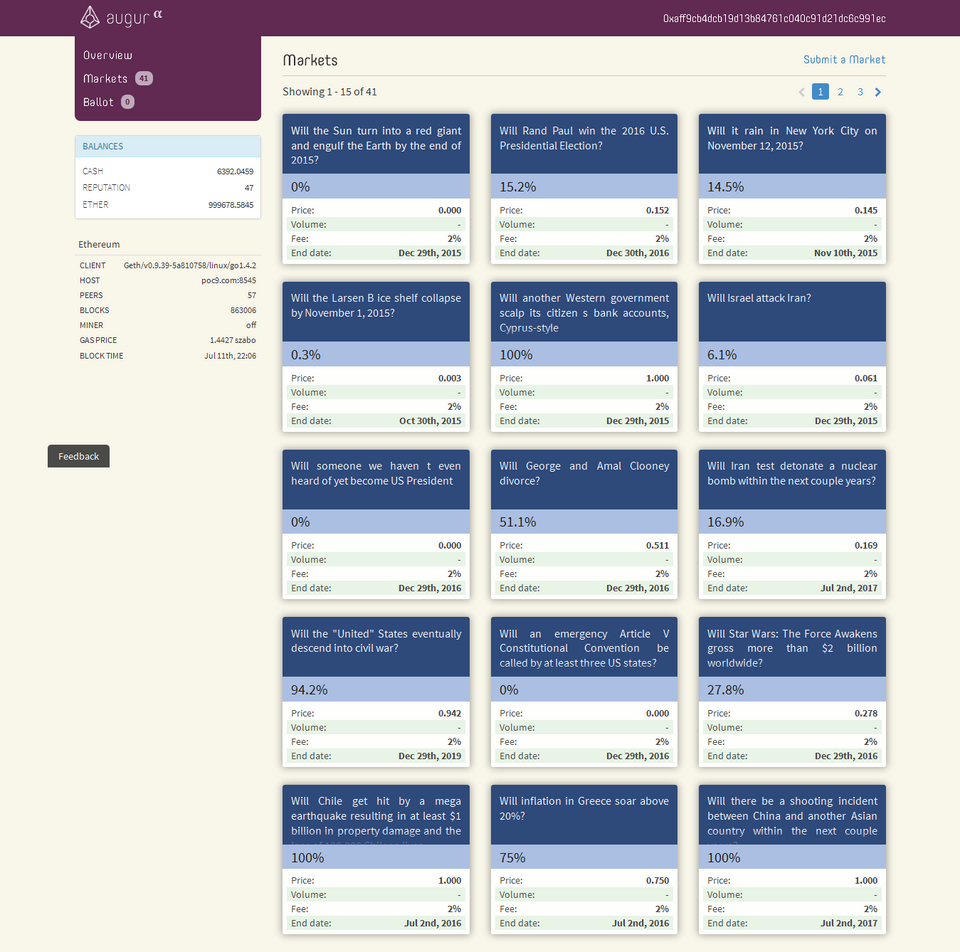
Prediction markets offer real-time updating, skin-in-the-game incentives, and superior information aggregation compared to static poll snapshots. These structural advantages create fundamental differences in how information is processed and reflected in forecasts. The continuous nature of markets allows for dynamic adjustment as new information emerges.
Real-Time Updating vs Static Poll Snapshots
Continuous market adjustments capture evolving information dynamics, while traditional polls provide only momentary snapshots of voter sentiment. Markets update instantaneously as new information becomes available, reflecting the collective wisdom of participants who react to breaking news, economic data, and political developments. Traditional polls, by contrast, capture a single point in time that quickly becomes outdated.
Skin in the Game Creates Stronger Accuracy Incentives
Capital at risk motivates participants to research thoroughly and update beliefs based on new information, unlike anonymous poll respondents. When individuals have financial stakes in outcomes, they invest time in gathering information, analyzing data, and making informed decisions. This economic incentive structure drives more rigorous analysis than voluntary survey participation.
Information Aggregation Superiority
Markets better capture “who will win” rather than “who will you vote for,” aggregating diverse information sources more effectively. Prediction markets synthesize information from multiple channels including polling data, economic indicators, political analysis, and grassroots intelligence. This comprehensive aggregation produces more accurate forecasts than any single data source could provide.
Category-Specific Performance Analysis: Political vs Sports vs Crypto Markets

Different market categories show varying accuracy levels, with political binary outcomes achieving the highest success rates at 81%. The performance differences reflect the nature of information available, market liquidity, and participant expertise in each category. Understanding these variations helps identify optimal use cases for prediction markets.
Political Markets Performance (441 Resolved Outcomes)
Binary political outcomes achieve 81% accuracy, while multi-candidate races reach 74% and policy predictions hit 67% accuracy. The high accuracy of binary political markets reflects clear resolution criteria and abundant information about electoral dynamics. Multi-candidate races show lower accuracy due to increased complexity and uncertainty in forecasting.
Sports Markets Performance (1,203 Resolved Outcomes)
Game outcomes show 69% accuracy, championship futures reach 71%, while player prop bets lag at 58% accuracy. Sports markets benefit from extensive statistical analysis and real-time performance data, though individual player performance remains difficult to predict accurately. For those interested in trading these markets, how to trade major sports league outcome markets 2026 guide provides detailed strategies.
Crypto Markets Performance Analysis
Cryptocurrency prediction markets demonstrate 64% accuracy, reflecting higher volatility and uncertainty in this emerging asset class. The lower accuracy rates in crypto markets stem from regulatory uncertainty, technological complexity, and the influence of speculative behavior. However, crypto markets still outperform traditional financial forecasting methods for this asset class. Those interested in regulatory outcomes can explore how to trade crypto regulation outcome markets 2026 guide for specific strategies.
Liquidity Effects: How Market Volume Impacts Prediction Accuracy
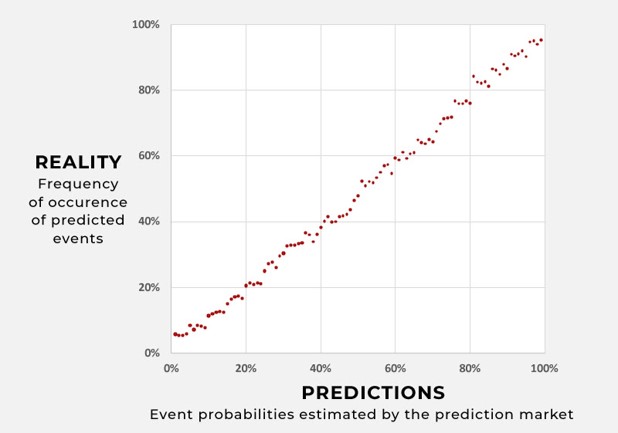
Market liquidity correlates strongly with accuracy, with high-volume markets achieving significantly better forecasting performance. The relationship between liquidity and accuracy reveals important thresholds for reliable prediction market operation. Understanding these liquidity dynamics helps identify when markets can be trusted as forecasting tools.
High-Volume Markets vs Low-Volume Markets Accuracy Comparison
Markets over $100K volume achieve 84% accuracy versus 61% for markets under $10K, demonstrating clear liquidity-accuracy correlation. The substantial difference in accuracy rates highlights the importance of sufficient market depth for reliable forecasting. Low-volume markets suffer from manipulation risk and insufficient price discovery mechanisms. Understanding analyzing the impact of high-frequency trading on prediction odds 2026 can help traders navigate these liquidity dynamics.
Optimal Liquidity Thresholds for Reliable Predictions
Markets need minimum liquidity thresholds to function effectively as forecasting tools, with $100K representing a critical accuracy inflection point. Below this threshold, markets become vulnerable to manipulation and price distortions. The $100K level appears to provide sufficient depth for efficient price discovery and resistance to individual trader influence.
Systematic Biases in Prediction Markets: Favorite-Longshot and Recency Effects
Prediction markets exhibit behavioral biases similar to traditional betting markets, including favorite-longshot distortions and recency bias overcorrection. These systematic biases affect market accuracy and create opportunities for informed traders who understand these patterns. Recognizing these biases is essential for interpreting market predictions accurately.
Favorite-Longshot Bias Analysis (14% Actual vs 10% Implied)
Markets systematically overestimate underdog probabilities and underestimate favorite likelihoods, mirroring traditional sports betting distortions. The favorite-longshot bias causes markets to price low-probability events too generously and high-probability events too conservatively. This systematic error reflects psychological biases in how participants evaluate risk and reward.
Recency Bias and 72-Hour Overcorrection Patterns
Markets tend to overreact to recent events within 72-hour windows, creating temporary distortions that correct over longer timeframes. The recency bias causes markets to overweight recent developments while underweighting longer-term trends and fundamentals. This pattern creates short-term trading opportunities for participants who understand the correction dynamics.
Oracle Risks and Resolution Disputes Affecting 3.4% of Markets
Settlement disputes and oracle reliability issues impact a small but significant percentage of prediction markets, affecting overall accuracy metrics. Oracle risks represent a unique challenge for prediction markets that traditional polling methods do not face. Understanding these risks helps participants evaluate market reliability and potential settlement issues.
Common Resolution Dispute Scenarios
Oracle disagreements typically arise from ambiguous event definitions, timing disputes, or conflicting information sources during resolution. Resolution disputes often occur when event outcomes are unclear, timing is disputed, or multiple credible sources provide conflicting information. These disputes can delay settlements and create uncertainty for market participants.
Impact of Resolution Disputes on Market Credibility
While affecting only 3.4% of markets, resolution disputes can significantly damage platform credibility and user trust. Even infrequent resolution disputes can undermine confidence in prediction markets as reliable forecasting tools. Platforms must maintain transparent and consistent resolution processes to preserve market integrity.
2026 Economic Shocks and Political Crises Impact on Market Performance
Recent market volatility tested prediction markets’ resilience, with Brier scores averaging 0.09 during economic and political turbulence. The 2026 economic shocks and political crises provided a real-world stress test for prediction markets’ forecasting capabilities. Markets demonstrated their ability to process complex information during periods of significant uncertainty.
Market Performance During Recent Economic Volatility
Prediction markets maintained forecasting accuracy during 2026 economic shocks, processing complex information while traditional polls struggled with systematic biases. The markets successfully navigated economic uncertainty, geopolitical tensions, and market volatility while maintaining their forecasting accuracy. This performance demonstrates prediction markets’ resilience during periods of significant economic stress.
Political Crisis Response and Accuracy Maintenance
Markets demonstrated superior crisis response capabilities, adjusting predictions rapidly while traditional polling methods showed significant lag and bias. During political crises, prediction markets quickly incorporated new information and adjusted forecasts accordingly. Traditional polling methods, constrained by longer collection cycles, struggled to keep pace with rapidly evolving situations. For those interested in conflict-related markets, how to trade global conflict resolution prediction markets 2026 offers specialized guidance.
Future Outlook: Prediction Markets as Leading Indicators for 2026 Elections
Prediction markets are positioned to become increasingly important forecasting tools for major political events and economic indicators. Growing institutional adoption and technological improvements are expanding prediction markets’ role in forecasting. The continued evolution of these markets promises even greater accuracy and reliability in the future.
Emerging Trends in Prediction Market Adoption
Growing institutional adoption and regulatory clarity are expanding prediction markets’ role in political and economic forecasting. Institutional investors are increasingly recognizing prediction markets as valuable forecasting tools, while regulatory developments are providing clearer frameworks for market operation. These trends suggest continued growth and maturation of the prediction market ecosystem.
Technological Improvements Enhancing Accuracy
Blockchain integration, improved oracle systems, and enhanced liquidity mechanisms are driving accuracy improvements across prediction platforms. Technological advances are addressing key limitations in prediction markets, including oracle reliability, settlement efficiency, and liquidity provision. These improvements promise to further enhance prediction markets’ forecasting capabilities. As technology evolves, how to trade AI development milestone markets 2026 guide represents another frontier for prediction market applications.
Prediction markets have demonstrated their superiority as forecasting tools through empirical validation and structural advantages. With 91% accuracy rates, real-time updating capabilities, and superior information aggregation, prediction markets offer significant advantages over traditional polling methods. While challenges remain, including systematic biases and oracle risks, the continued evolution of prediction markets promises even greater forecasting accuracy in the future. Additionally, using prediction markets for insurance risk hedging 2026 guide explores innovative applications beyond traditional forecasting.