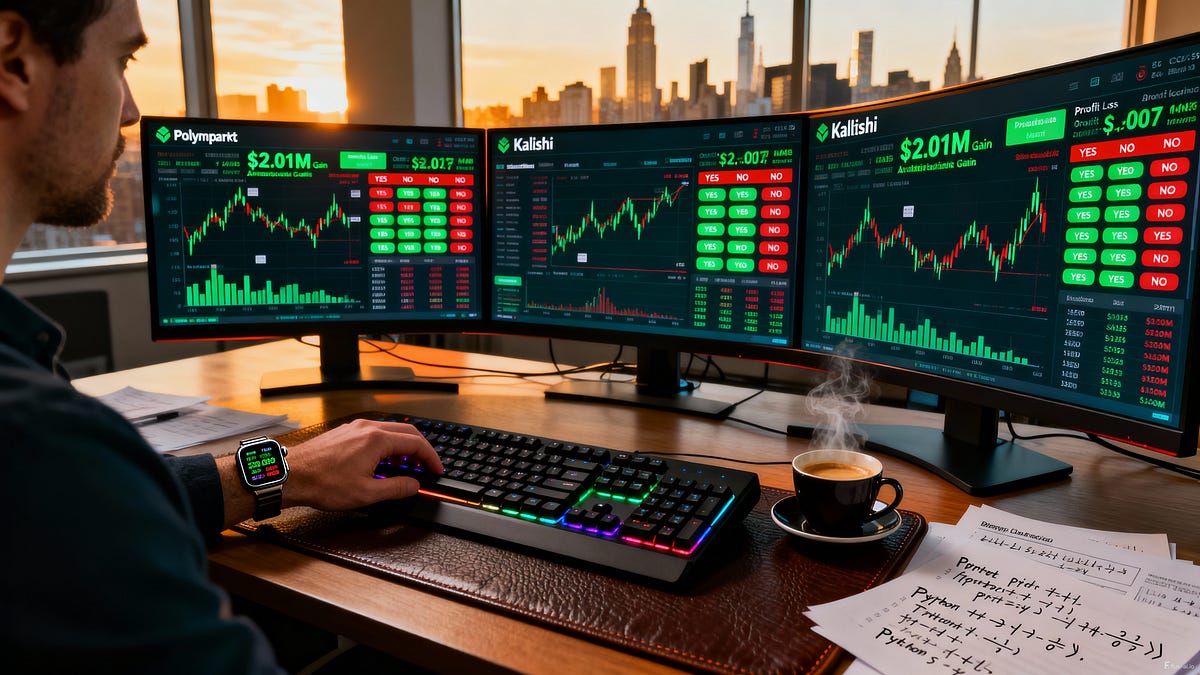
Over $40 million in arbitrage profits extracted from Polymarket alone between April 2024 and April 2025, yet 75% of opportunities disappear within one hour. This stark reality reveals why building a custom prediction market arbitrage scanner isn’t just for tech enthusiasts—it’s becoming essential for serious traders who want to capture fleeting price discrepancies across platforms like Polymarket and Kalshi.
Building Your Prediction Market Arbitrage Scanner: Core Architecture
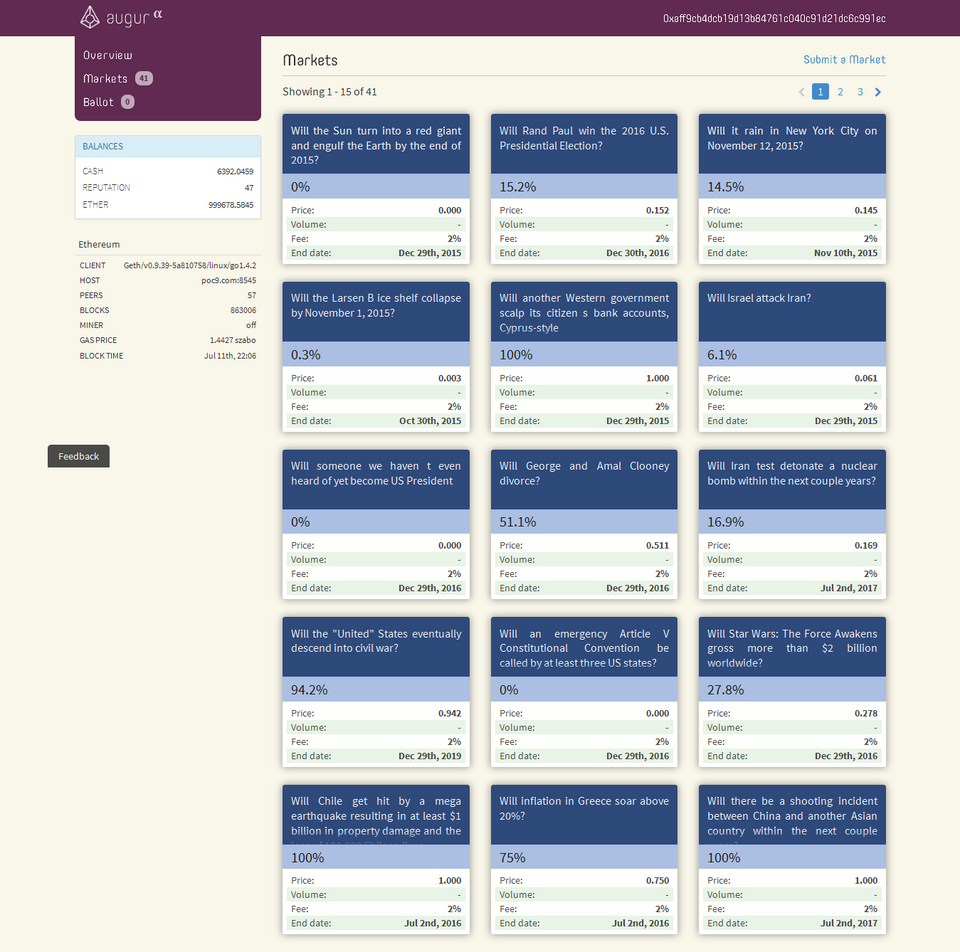
A functional prediction market arbitrage scanner requires WebSocket feeds to monitor 100+ markets simultaneously, with sub-5-second order placement and atomic timeout protection to prevent slippage. The core architecture consists of three interconnected components: real-time data pipelines that process market prices across platforms, an order execution engine that handles cross-platform trades atomically, and a risk management layer that protects against leg risk and resolution disputes.
Real-Time Data Pipeline Design
Real-time data access through WebSocket feeds is non-negotiable—your scanner must process price changes across 100+ markets with sub-second latency to capture fleeting arbitrage opportunities. The pipeline architecture should prioritize market data normalization, converting different platform formats into a unified schema that enables direct price comparison. Implement a dual-queue system where one thread pulls all active events from each platform’s API, while another thread filters for price anomalies using threshold-based detection algorithms.
The data normalization layer must handle the fundamental difference between Polymarket’s continuous liquidity pool model and Kalshi’s discrete contract structure. This requires mapping equivalent events across platforms using fuzzy string matching algorithms that can identify when “Will Candidate X win the election?” on Polymarket corresponds to “Candidate X to win” on Kalshi. Without this alignment, your scanner will miss cross-platform arbitrage opportunities entirely, though binary hedges can provide alternative portfolio protection strategies.
Order Execution Engine Architecture
Sub-5-second order placement with atomic timeout protection is essential—without it, you’ll face “leg risk” where one side of your arbitrage trade fails to execute. The execution engine must implement atomic transaction handling where both legs of an arbitrage trade are submitted simultaneously, with a timeout mechanism that cancels the second leg if the first doesn’t confirm within 2-3 seconds. This prevents the scenario where you successfully buy the undervalued contract but fail to sell the overvalued one, turning theoretical profit into real loss. For those looking to scale beyond manual arbitrage, building latency arbitrage bots for prediction markets in 2026 represents the next evolution in automated trading systems.
The execution layer should also incorporate slippage prevention algorithms that monitor price movements during order submission. When you detect a $0.05 arbitrage opportunity between Polymarket and Kalshi, the actual execution price might deteriorate by the time both orders complete. Implement price bands that automatically adjust order sizes or cancel trades if the expected profit margin falls below your minimum threshold, typically 1-2% of the trade value to account for transaction costs.
Handling API Rate Limits and Platform Constraints
API rate limits are your first operational bottleneck—implement exponential backoff and request batching to maintain consistent data flow without triggering platform restrictions. Different platforms have different API constraints: Polymarket uses WebSocket feeds while Kalshi relies on REST endpoints, requiring separate integration strategies for each. Your scanner must adapt to these differences while maintaining a unified interface for arbitrage detection.
Rate Limit Management Strategies
Handle API rate limits by implementing exponential backoff with jitter, monitoring response headers for rate limit information, and maintaining separate request queues for different market endpoints. When Polymarket returns a 429 status code, your backoff algorithm should wait 1 second initially, then double the wait time with each subsequent failure up to a maximum of 30 seconds, adding random jitter between 0-1 seconds to prevent synchronized retry storms across multiple scanners.
Monitor rate limit headers like X-RateLimit-Remaining and X-RateLimit-Reset to proactively adjust your request frequency before hitting limits. For platforms with strict rate limits like Kalshi’s REST API, implement request batching where you combine multiple market queries into single API calls. This reduces the total number of requests while maintaining comprehensive market coverage across all active prediction markets.
Cross-Platform API Integration
Different platforms have different API constraints—Polymarket uses WebSocket feeds while Kalshi relies on REST endpoints, requiring separate integration strategies for each. Your integration layer should abstract these differences behind a unified interface that presents all markets in a consistent format. For WebSocket connections, implement automatic reconnection logic with exponential backoff, as network interruptions are common when maintaining 100+ simultaneous connections.
The authentication management system must handle different credential types: Polymarket requires Ethereum wallet signatures for trading, while Kalshi uses OAuth tokens. Store these credentials securely using environment variables or encrypted configuration files, never hardcoding them in your source code. Implement token refresh mechanisms that automatically renew expired credentials without interrupting your scanner’s operation, as expired tokens are a common cause of missed arbitrage opportunities.
Risk Management for Cross-Platform Arbitrage
Not “free” money—risks include non-atomic execution where one leg fails, capital allocation issues, and differing resolution sources between platforms that can turn theoretical profits into real losses. Effective risk management requires a multi-layered approach: prevent leg risk through atomic execution, manage capital allocation across multiple platforms, and verify resolution sources to protect against platform-specific disputes.
Leg Risk Prevention Mechanisms
Prevent leg risk by implementing atomic order execution with timeout protection—if one side of your arbitrage trade doesn’t confirm within 2-3 seconds, cancel the other side immediately. The timeout mechanism should be configurable based on market volatility: use shorter timeouts (1-2 seconds) during high volatility periods when prices move rapidly, and longer timeouts (3-4 seconds) during stable periods when network latency is more predictable.
Implement fallback procedures for when atomic execution fails. If your scanner detects that one leg of a trade has been filled but the other is stuck, automatically hedge the position in a third market or use limit orders to minimize potential losses. This might mean placing a market order on the second leg at a slightly worse price rather than letting the arbitrage opportunity expire entirely, accepting a reduced profit rather than risking a complete loss.
Capital Allocation and Position Sizing
Allocate $10K-$50K per condition to balance profit potential against capital efficiency—too little and transaction costs eat your profits, too much and you risk significant drawdowns. Your capital allocation strategy should consider each platform’s liquidity depth: allocate more capital to markets with higher trading volumes where your orders are less likely to move prices significantly, and less to illiquid markets where large orders could face substantial slippage. Understanding effective market making strategies for binary event contracts can help optimize your capital deployment across different market conditions.
Implement portfolio diversification across multiple prediction markets and platforms to reduce concentration risk. Don’t allocate more than 20% of your total capital to any single market or platform, as platform-specific issues like temporary trading halts or resolution disputes could impact your entire position. Use a dynamic allocation model that adjusts based on recent performance: increase allocation to markets showing consistent arbitrage opportunities while reducing exposure to markets with frequent execution failures (combinatorial markets explained with examples).
Market Resolution and Dispute Handling
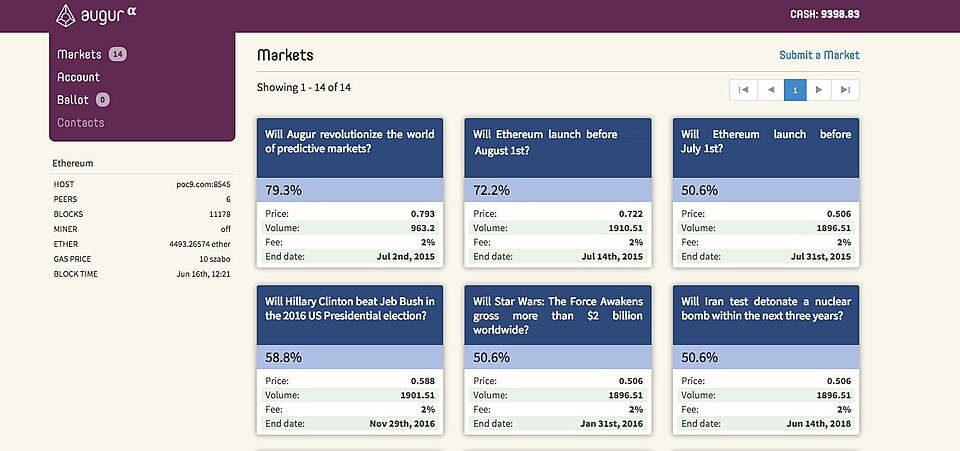
Differing resolution sources between platforms create real risk—implement oracle verification and cross-platform outcome comparison to protect against resolution manipulation or platform-specific disputes. When Polymarket and Kalshi disagree on a market outcome, your arbitrage position may be at risk of partial or complete loss, regardless of the theoretical profit calculation.
Oracle Verification Systems
Build oracle verification by integrating multiple resolution sources and implementing outcome validation checks—don’t rely on a single platform’s resolution when your arbitrage depends on accurate outcomes. Monitor official sources like election results, sports league announcements, or certified data providers, comparing these against each platform’s declared resolution. When discrepancies arise, your scanner should flag the position for manual review rather than automatically settling based on one platform’s outcome.
Implement a weighted resolution system that considers the credibility of different oracle sources. For political markets, official government sources might carry more weight than social media predictions. For sports markets, league-certified results should override user-reported scores. Your verification system should maintain a historical accuracy database for each oracle source, adjusting weights based on past performance to improve resolution reliability over time.
Cross-Platform Outcome Comparison
Monitor outcomes across platforms in real-time and flag discrepancies immediately—when Polymarket and Kalshi disagree on a resolution, your arbitrage position may be at risk. Implement automated comparison algorithms that check resolution outcomes within minutes of official announcements, triggering alerts when differences exceed acceptable thresholds. This allows you to take protective action before platform-specific settlements are finalized.
Your comparison system should account for timing differences in resolution announcements. Polymarket might resolve a market within minutes of an official result, while Kalshi could take hours for manual verification. Build in time buffers that prevent false discrepancy alerts during normal resolution delays, but maintain strict monitoring for cases where resolution times deviate significantly from historical patterns, which could indicate potential manipulation or technical issues.
Cost Analysis and Profitability Calculations
While $40 million in arbitrage profits were extracted from Polymarket alone, operational costs including WebSocket subscription fees, cloud infrastructure, and transaction costs can significantly reduce net profitability. A comprehensive cost analysis must account for infrastructure expenses, transaction fees across multiple platforms, and the opportunity cost of capital tied up in arbitrage positions.
Infrastructure Cost Breakdown
Running a prediction market arbitrage scanner costs $200-$500 monthly for cloud infrastructure, plus $50-$200 for premium data feeds and WebSocket subscriptions. Cloud hosting on platforms like AWS or Google Cloud requires multiple compute instances for data processing, a database for market state tracking, and load balancers for high availability. Add $100-$300 monthly for managed database services that can handle the high write throughput of real-time market data.
Data feed costs vary significantly between platforms. Polymarket’s WebSocket feeds are free but rate-limited, while premium data providers charge $50-$150 monthly for higher-frequency updates and historical data access. Kalshi’s REST API is free but requires more sophisticated rate limiting to avoid hitting their stricter limits. Factor in monitoring and alerting services like DataDog or New Relic, which add another $50-$100 monthly for comprehensive system health tracking.
Transaction Cost Analysis
Transaction costs including gas fees on Polygon ($0.01-$0.05 per trade), platform commissions (0.1%-0.5%), and withdrawal fees can consume 15%-30% of your theoretical arbitrage profits. Polygon gas fees are relatively low but can spike during network congestion, potentially erasing thin arbitrage margins. Implement gas price monitoring that delays trades during high-fee periods, waiting for network conditions to improve before executing positions.
Platform-specific fees vary: Polymarket charges 0% trading fees but has withdrawal fees based on network congestion, while Kalshi charges 0.3%-0.5% per trade with free withdrawals. Your cost analysis must account for these differences when calculating net profitability. For a $1,000 arbitrage trade with 0.2% platform fees and $0.02 gas costs, transaction fees alone consume $2.20, requiring at least a 0.22% price discrepancy to break even before accounting for infrastructure costs.
Testing and Backtesting Your Arbitrage Scanner
No competitor provides guidance on testing—implement paper trading with simulated capital before risking real funds, using historical data to validate your scanner’s performance across different market conditions. A robust testing framework should include paper trading environments that mirror live market conditions, historical data backtesting to identify algorithmic weaknesses, and simulation testing that accounts for network latency and API failures.
Paper Trading Implementation
Set up paper trading accounts on both Polymarket and Kalshi, mirror real-time market data, and track performance metrics for 2-4 weeks before deploying with real capital. Your paper trading system should simulate the complete trading lifecycle: market data ingestion, arbitrage detection, order submission, and position tracking. Use virtual wallets with realistic capital constraints that mirror your intended deployment capital to identify scaling issues before they impact real funds.
Implement performance tracking that goes beyond simple profit/loss calculations. Monitor execution success rates (percentage of detected arbitrage opportunities that result in filled trades), average slippage (difference between detected and actual execution prices), and system uptime during market volatility. These metrics reveal whether your scanner’s theoretical profitability translates to real-world performance, accounting for factors like network latency and platform-specific quirks that don’t appear in historical data analysis.
Historical Data Backtesting
Backtest your scanner using historical market data from the past 6-12 months, focusing on periods of high volatility and low liquidity to identify potential weaknesses in your arbitrage detection algorithms. Source historical data from platform APIs, data providers, or blockchain archives for Polymarket’s on-chain transactions. Ensure your backtesting framework accounts for the difference between historical and current market conditions, particularly regarding liquidity depth and participant behavior.
Implement walk-forward optimization where you train your detection algorithms on older data (e.g., months 1-6) and test on newer data (months 7-12) to prevent overfitting to specific market conditions. This approach reveals whether your scanner can adapt to changing market dynamics or if it’s merely optimized for historical patterns that may not repeat. Include transaction cost modeling in your backtests to ensure theoretical profits survive real-world fee structures.
Legal and Regulatory Compliance Framework
Navigate the complex legal landscape by understanding CFTC regulations for prediction markets, platform-specific terms of service, and tax reporting requirements for arbitrage profits across different jurisdictions. The regulatory environment for prediction markets remains uncertain, with different rules applying to platforms like Polymarket (operating on blockchain) versus Kalshi (CFTC-regulated exchange) (using Kelly criterion for prediction market sizing).
Jurisdictional Compliance Requirements
US-based traders must comply with CFTC regulations for prediction markets, while international users face varying restrictions—verify your jurisdiction’s requirements before implementing any arbitrage strategy. The CFTC has classified certain prediction markets as commodity interests, requiring registration for market makers and imposing reporting requirements for significant positions. International traders must navigate their local gambling laws, as some jurisdictions classify prediction markets as betting activities subject to different regulatory frameworks.
Implement geographic restrictions in your scanner to prevent accidental trading from prohibited jurisdictions. Use IP geolocation and user verification to ensure compliance with platform-specific geographic restrictions—Polymarket restricts access from certain countries entirely, while Kalshi limits specific market types based on user location. Maintain detailed transaction records including timestamps, market identifiers, and resolution outcomes to satisfy potential regulatory inquiries or tax reporting requirements.
Platform Terms and Service Compliance
Review each platform’s terms of service regarding automated trading—Polymarket allows API usage for personal trading but prohibits certain high-frequency strategies, while Kalshi has different restrictions. Your scanner must operate within these boundaries to avoid account suspension or fund seizure. Implement rate limiting that stays well below platform thresholds, as aggressive trading that approaches rate limits may trigger manual review even if technically within allowed parameters.
Maintain transparent communication with platform operators about your automated trading activities. Some platforms offer dedicated API access or higher rate limits for legitimate trading bots that follow their guidelines. Document your compliance efforts including rate limit adherence, geographic restrictions, and resolution verification to demonstrate good faith operation should any disputes arise regarding your automated trading activities.
Advanced Optimization Techniques
As markets mature, opportunities are increasingly captured by bots—implement machine learning models to predict price movements and adaptive algorithms that learn from past arbitrage patterns. The competitive landscape for prediction market arbitrage is evolving rapidly, with sophisticated traders deploying AI-driven systems that can identify complex, non-obvious arbitrage connections between related but not identical markets.
Machine Learning Integration
Integrate machine learning models trained on historical price data to predict arbitrage opportunities before they fully materialize, giving your scanner a competitive edge over reactive systems. Use time series forecasting models like LSTM networks to predict short-term price movements based on order book dynamics, trading volume patterns, and external data sources like news sentiment. These predictive models can identify when a market is likely to become mispriced before the actual price discrepancy appears, allowing your scanner to position itself advantageously. Advanced feature engineering for predicting market moves can significantly enhance your model’s accuracy in identifying profitable opportunities (LMSR vs order book prediction market mechanisms).
Implement anomaly detection algorithms that identify unusual trading patterns indicative of upcoming arbitrage opportunities. When you detect abnormal order flow or sudden changes in liquidity depth, your scanner can increase monitoring frequency for affected markets and prepare execution strategies in advance. Combine multiple data sources including social media sentiment, traditional market indicators, and platform-specific metrics to build comprehensive predictive models that outperform simple price comparison algorithms.
Adaptive Algorithm Development
Develop adaptive algorithms that adjust their parameters based on market conditions—what works during high volatility may fail during low liquidity periods, requiring dynamic optimization. Implement reinforcement learning models that continuously optimize your scanner’s parameters based on execution success rates, profit margins, and capital efficiency. These adaptive systems can automatically adjust detection thresholds, timeout durations, and position sizing based on real-time market feedback.
Create market condition classifiers that categorize current trading environments into distinct regimes: high volatility with deep liquidity, low volatility with shallow liquidity, trending markets, and mean-reverting markets. Each regime requires different algorithmic parameters for optimal performance. Your adaptive system should continuously evaluate which regime best describes current conditions and adjust its strategy accordingly, switching between aggressive arbitrage detection during volatile periods and conservative monitoring during stable periods.
Deployment and Production Monitoring
Deploy your scanner to production with comprehensive monitoring—track execution success rates, profit/loss metrics, and system health indicators to ensure continuous operation and rapid issue detection. Production deployment requires careful planning around infrastructure redundancy, security measures, and monitoring systems that can alert you to problems before they impact your trading performance.
Production Environment Setup
Deploy to cloud infrastructure with geographic redundancy, implement security measures including API key rotation and encrypted storage, and maintain separate environments for development, staging, and production. Use containerization with Docker and orchestration with Kubernetes to ensure consistent deployment across environments and enable rapid scaling during high-volume trading periods. Implement blue-green deployment strategies that allow zero-downtime updates to your scanner’s codebase.
Security measures should include encrypted API key storage using services like AWS Secrets Manager or HashiCorp Vault, regular key rotation schedules, and network segmentation that isolates your trading infrastructure from other systems. Implement comprehensive logging that captures all trading decisions, API responses, and error conditions for audit purposes and debugging. Store logs in centralized logging systems with appropriate retention policies to balance operational needs with data protection requirements.
Monitoring and Alerting Systems
Implement comprehensive monitoring with real-time dashboards showing execution success rates, profit/loss metrics, and system health indicators—set up automated alerts for anomalies like failed executions or unusual market conditions. Your monitoring system should track key performance indicators including arbitrage detection rate (opportunities found per hour), execution success rate (percentage of opportunities resulting in filled trades), average profit per trade, and total capital efficiency.
Create tiered alerting systems that prioritize issues based on their impact on trading performance. Critical alerts for system failures or significant profit deviations should trigger immediate notifications via SMS and phone calls, while informational alerts about minor performance degradations can use email or Slack notifications. Implement automated recovery procedures for common issues like API connection failures or rate limit exceedances, reducing the need for manual intervention during routine operational problems.