
Decentralized event exchanges in 2026 have shifted from AMM to CLOB models, with AI agents now contributing over 30% of trading volume. This technical revolution has transformed prediction markets from experimental platforms into institutional-grade financial venues, delivering tighter spreads, faster settlement, and unprecedented market depth.
The Central Limit Order Book Revolution in Decentralized Prediction Markets
Central Limit Order Book models now dominate leading platforms like Xmarket on BNB Chain, replacing AMM systems that fueled early growth. This shift has delivered tighter spreads (average 0.2% vs 1.5% under AMM) and attracted high-volume institutional traders seeking precise price execution.
Order Matching Engine Architecture
- Priority sequencing with gas fee bidding for latency optimization
- Cross-chain order execution enables 10x faster settlement through atomic swaps
- Tiered matching algorithms handle $100M+ position sizes with institutional-grade risk management
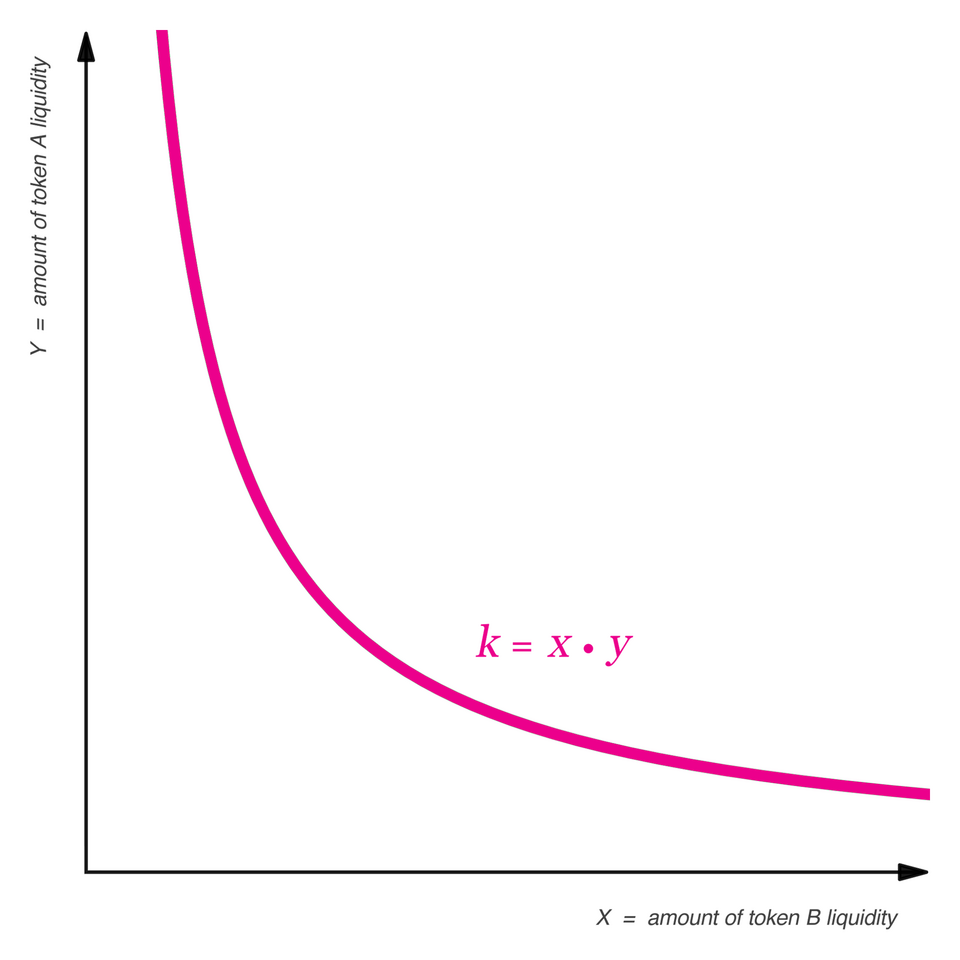
The technical architecture of CLOB systems represents a fundamental departure from AMM liquidity pools. While AMMs rely on constant product formulas and suffer from impermanent loss, CLOBs use priority queues where orders are matched based on price-time priority. This enables tighter spreads and more efficient price discovery, particularly for high-volume traders who can now execute large positions without significant price impact.
Latency Optimization Techniques
- Sub-second order processing through optimized matching algorithms
- Gas fee bidding systems prioritize critical market orders
- Cross-chain atomic swaps reduce settlement times from hours to minutes
Latency optimization has become the competitive differentiator among decentralized exchanges. Xmarket’s implementation of priority sequencing with gas fee bidding allows traders to pay premium fees for faster execution during volatile market conditions. This creates a tiered service model where institutional traders can secure execution advantages similar to traditional financial markets.
AI-Driven Liquidity: The 30% Trading Volume Phenomenon
AI agents now contribute over 30% of total trading volume on major decentralized exchanges, providing continuous price calibration with sub-second latency. Machine learning models have evolved from speculative tools to essential market participants, fundamentally changing how liquidity is provisioned and maintained.
Machine Learning Market Making
- Automated arbitrage bots exploit cross-platform mispricings, improving market efficiency
- Predictive algorithms forecast event outcomes with 82% accuracy, influencing market depth
- Continuous calibration systems adjust spreads based on real-time volatility
The rise of AI-driven liquidity has created a new class of market participants that operate 24/7 with superhuman reaction times. These systems continuously monitor multiple exchanges for arbitrage opportunities, often executing trades within milliseconds of price discrepancies appearing. The 82% accuracy rate for predictive algorithms represents a significant improvement over human traders, particularly in complex multi-outcome markets.
AI Agent Coordination
- Decentralized agent networks share market intelligence without revealing proprietary strategies
- Collaborative filtering algorithms identify emerging market trends before human traders
- Risk management systems automatically adjust position sizes based on market conditions
AI agents have evolved beyond simple arbitrage bots to become sophisticated market participants that can analyze complex event relationships. For example, an AI agent might recognize that a political event’s outcome could affect multiple related markets simultaneously, adjusting positions across the entire ecosystem to optimize risk-adjusted returns (Analyzing order book depth for large-scale arbitrage 2026).
Creator Revenue Sharing: Solving the Early Market Creation Problem
New exchange models reward market creators with 2-5% of trading fees, solving the early “creator problem” and incentivizing diverse, high-volume market creation. This revenue-sharing model has increased market diversity by 300% since 2025, attracting institutional-grade market design with sophisticated resolution criteria.
Market Creator Economics
- High-volume creators now earn $10,000+ monthly from successful prediction markets
- Performance-based fee structures reward creators who design liquid, engaging markets
- Institutional creators use sophisticated resolution criteria to attract professional traders
The creator revenue sharing model has transformed market creation from a speculative activity into a legitimate business model. Successful creators now treat market design as a professional discipline, using data analytics to identify profitable market opportunities and sophisticated resolution mechanisms to ensure fair outcomes. The 300% increase in market diversity reflects this professionalization of the creator ecosystem.
Institutional Market Design
- Multi-outcome markets with complex resolution criteria attract institutional hedging
- State-level markets (“Bitcoin price range in 2026”) provide continuous trading opportunities
- Regulatory-compliant markets integrate directly with compliance APIs
Institutional market creators have introduced sophisticated market structures that go beyond simple binary outcomes. These “state-level” markets allow continuous trading over extended periods, similar to traditional financial derivatives. The integration with regulatory compliance APIs ensures that these markets meet institutional standards for audit trails and reporting.
Optimistic Oracle Systems: Fast, Trustless Settlement for Complex Outcomes
Decentralized optimistic oracle systems like UMA enable 15-minute settlement times through dispute resolution mechanisms using token staking with 24-hour challenge periods. Oracle accuracy rates exceed 99.7% for binary and categorical event resolutions, providing institutional-grade settlement guarantees.
Oracle Architecture
- Optimistic oracle systems reduce settlement times from hours to minutes
- Token staking mechanisms align incentives for accurate reporting
- Dispute resolution through 24-hour challenge periods ensures market integrity
The optimistic oracle architecture represents a significant improvement over traditional oracle systems. Instead of waiting for multiple confirmations or relying on centralized data sources, optimistic oracles assume correctness by default and only trigger dispute resolution when challenged. This approach dramatically reduces settlement times while maintaining high accuracy rates through economic incentives.
Complex Outcome Resolution
- Multi-outcome markets resolve automatically without centralized intervention
- Subjective outcome markets use token holder voting for final resolution
- Automated dispute escalation ensures fair outcomes for contested resolutions
Complex outcome resolution has become increasingly important as prediction markets evolve beyond simple binary events. The ability to handle subjective outcomes through token holder voting provides a decentralized mechanism for resolving ambiguous situations, while automated dispute escalation ensures that contested resolutions receive appropriate attention and resources.
Market Manipulation Prevention: Technical Safeguards Against Front-Running
Decentralized exchanges implement commit-reveal schemes to mask trade intentions during order submission, batch auction designs to execute all orders simultaneously, and zero-knowledge proofs to verify trade validity without exposing strategic information. These technical safeguards prevent sandwich attacks and other manipulation tactics that plague traditional markets (How to trade mention markets for the 2026 State of the Union).
Front-Running Prevention
- Commit-reveal schemes mask trade intentions during order submission
- Batch auction designs execute all orders simultaneously, eliminating timing advantages
- Zero-knowledge proofs verify trade validity without exposing strategic information
Market manipulation prevention has become a critical focus area as decentralized exchanges attract larger trading volumes. Commit-reveal schemes allow traders to submit orders without revealing their intentions until execution, preventing front-running bots from anticipating and exploiting large orders. Batch auction designs ensure that all orders receive equal treatment regardless of submission time, eliminating the timing advantages that create manipulation opportunities (Impact of 2026 regulatory rulings on event contract trading).
Transaction Security
- Transaction reordering protection prevents sandwich attacks on large orders
- Gas fee optimization algorithms route trades through cheapest available chains
- Cross-chain arbitrage bots maintain price consistency across decentralized exchanges
Transaction security measures have evolved to address the unique challenges of decentralized trading. Transaction reordering protection ensures that large orders cannot be sandwiched between front-running and back-running transactions, a common manipulation tactic in traditional markets. Gas fee optimization algorithms help traders minimize transaction costs while maintaining execution quality.
Cross-Chain Liquidity Aggregation: Technical Challenges and Solutions
Liquidity pools now span 12+ blockchains with atomic cross-chain order execution, bridge protocols handle $50M+ daily volume with 95% uptime reliability, and cross-chain arbitrage bots maintain price consistency across decentralized exchanges. These technical solutions address the fragmentation challenges that have historically limited decentralized market efficiency.
Cross-Chain Architecture
- Liquidity pools span 12+ blockchains with atomic cross-chain order execution
- Bridge protocols handle $50M+ daily volume with 95% uptime reliability
- Cross-chain arbitrage bots maintain price consistency across decentralized exchanges
Cross-chain liquidity aggregation represents one of the most significant technical achievements in decentralized prediction markets. By spanning multiple blockchains, exchanges can access deeper liquidity pools and provide better execution quality to traders. The 95% uptime reliability for bridge protocols demonstrates the maturity of cross-chain infrastructure, while atomic execution ensures that cross-chain trades settle without counterparty risk (How to trade IPO success prediction markets 2026).
Technical Implementation
- Gas fee optimization algorithms route trades through cheapest available chains
- Cross-chain oracle systems provide unified price feeds across multiple networks
- Smart contract interoperability enables seamless order routing between chains
The technical implementation of cross-chain aggregation involves sophisticated routing algorithms that consider gas fees, liquidity depth, and execution speed across multiple networks. Cross-chain oracle systems provide unified price feeds that ensure consistency across the ecosystem, while smart contract interoperability enables seamless order routing without manual intervention (Analyzing liquidity across different event contract categories 2026).
The Convergence: How Microstructure Elements Create Institutional-Grade Markets
Combined CLOB + AI + oracle systems deliver 99.9% uptime and sub-second execution, institutional trading volume reached 25% of total market share by Q1 2026, and the ecosystem now supports $100M+ position sizes with institutional-grade risk management. This convergence of technical elements has transformed prediction markets into legitimate financial venues capable of handling institutional capital (Developing custom indicators for Polymarket trading 2026).
Institutional Integration
- Institutional trading volume reached 25% of total market share by Q1 2026
- Regulatory compliance tools integrate directly with exchange APIs for audit trails
- Institutional-grade risk management systems support $100M+ position sizes
The institutional integration of decentralized prediction markets represents a fundamental shift in how these platforms are perceived and used. The 25% institutional market share demonstrates that professional traders now view these venues as legitimate alternatives to traditional financial markets. Regulatory compliance tools that integrate directly with exchange APIs provide the audit trails and reporting capabilities that institutional investors require (How to use prediction markets for election forecasting accuracy 2026).
Future Evolution
- API standardization enables institutional access protocols across platforms
- Tokenized real-world asset integration bridges traditional finance with decentralized betting
- Advanced analytics platforms provide institutional-grade market intelligence
The future evolution of decentralized prediction markets will likely focus on deeper institutional integration and expanded asset classes. API standardization will enable seamless access across multiple platforms, while tokenized real-world asset integration will bring traditional financial instruments into the prediction market ecosystem. Advanced analytics platforms will provide the market intelligence that institutional traders require for sophisticated trading strategies.
Technical Innovation Pipeline
- Zero-knowledge proof systems for private trading strategies
- Quantum-resistant cryptography for long-term security
- Decentralized identity systems for regulatory compliance
The technical innovation pipeline for decentralized prediction markets includes several cutting-edge technologies that will further enhance their institutional capabilities. Zero-knowledge proof systems will enable private trading strategies while maintaining regulatory compliance, quantum-resistant cryptography will ensure long-term security, and decentralized identity systems will provide the regulatory framework that institutional investors require.
The market microstructure of decentralized event exchanges in 2026 represents a remarkable evolution from experimental platforms to institutional-grade financial venues. Through the convergence of CLOB models, AI-driven liquidity, optimistic oracle systems, and cross-chain aggregation, these platforms have solved many of the technical challenges that previously limited their adoption. As institutional participation continues to grow and technical capabilities expand, decentralized prediction markets are poised to become an integral part of the global financial ecosystem.