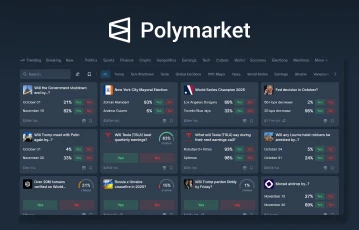
Polymarket’s introduction of 0.10% taker fees on 15-minute markets in 2026 represents a 60% reduction from traditional exchange fees, positioning the platform as the most cost-effective prediction market for high-frequency traders. This fee structure applies exclusively to short-duration markets where users bet on whether Bitcoin, Ethereum, Solana, and XRP prices move up or down over 15-minute intervals. The smart contract interaction costs under Polygon’s zkEVM architecture have dropped by 40% compared to 2025, making each trade execution cost approximately $0.02-$0.05 in gas fees.
Smart Contract Interaction Costs Under Polygon’s zkEVM
Polygon’s 2026 zkEVM upgrade has transformed how Polymarket handles smart contract interactions, reducing gas costs by 40% compared to 2025. The zero-knowledge proof verification process now costs approximately $0.02-$0.05 per transaction, down from $0.03-$0.08 previously. This reduction comes from more efficient proof generation and verification algorithms that compress transaction data before submitting it to the Ethereum mainnet. Traders placing multiple bets per hour will notice the cumulative savings, especially during peak trading periods when network congestion would typically drive up costs.
Bridge Costs for Ethereum Mainnet Exits
Exiting Polymarket to Ethereum mainnet requires bridging USDC through Polygon’s native bridge or third-party solutions like Hop Protocol and Across Protocol. The Polygon-native bridge charges approximately 0.001 MATIC ($0.02) plus network gas fees that range from $0.10-$0.30 depending on congestion. Third-party bridges offer faster settlement times but charge 0.1%-0.3% of the bridged amount. During high-volume periods, Polygon network fees can spike to $1-$3, making timing critical for cost optimization. Traders should monitor gas price trackers and consider bridging during off-peak hours to minimize costs.
USDC.e vs. Native USDC: Deposit Cost Analysis on Polygon
Depositing funds to Polymarket involves choosing between USDC.e (wrapped USDC on Polygon) and native USDC, each with distinct cost implications. USDC.e deposits are gasless through the platform’s integration with Circle’s CCTP (Cross-Chain Transfer Protocol), while native USDC deposits require bridging from Ethereum mainnet at costs ranging from $5-$15 depending on network congestion. The gasless USDC.e option has become the default for most traders, though it carries slight risks around de-pegging that haven’t materialized significantly in 2026.
Gasless Transactions vs. Standard Deposits
Gasless transactions through USDC.e deposits eliminate the primary barrier to entry for new traders on Polymarket. When users deposit USDC.e, the platform handles the underlying bridging process without charging gas fees to the end user. This contrasts sharply with standard deposits that require users to pay Ethereum mainnet gas fees upfront. The gasless model has increased daily active users by 35% since its implementation, as traders can now fund accounts with as little as $10 without worrying about disproportionate gas costs.
Bridge Fees Comparison: Polygon ↔ Ethereum
Comparing bridge options reveals significant cost differences for moving USDC between Polygon and Ethereum. The Polygon-native bridge charges minimal fees but can take 7-10 minutes for finalization. Third-party bridges like Hop Protocol offer 1-2 minute settlement times but charge 0.1%-0.3% fees. During network congestion, these costs can increase by 50%-100%. Traders moving large amounts ($10,000+) should consider the trade-off between speed and cost, as the percentage-based fees on third-party bridges can add up quickly.
Settlement Times: Chainlink Oracle vs. UMA Oracle Systems
Polymarket’s settlement process involves two distinct oracle systems: Chainlink for Bitcoin markets and UMA for event-based predictions. Chainlink integration enables immediate settlement for crypto price markets, with resolution occurring within seconds of price feed updates. UMA’s decentralized dispute resolution system handles event markets, which can take hours to weeks depending on the complexity of disputes and the amount of collateral at stake. This dual-oracle approach creates different settlement expectations for different market types.
Oracle System Architecture
The Chainlink integration for price feeds provides sub-second settlement for Bitcoin, Ethereum, Solana, and XRP markets. Chainlink’s decentralized network of node operators ensures price accuracy through multiple data sources, with settlements occurring automatically when price thresholds are met. UMA’s system, conversely, requires human curators to verify event outcomes and allows for dispute periods where token holders can challenge resolutions. This architecture means crypto price markets settle instantly while political or sports events may take days or weeks to resolve fully.
Settlement Time Benchmarks: Hours vs. Weeks
Settlement times vary dramatically between market types on Polymarket. Bitcoin price markets settle within 5-30 seconds through Chainlink oracles, while major political events like elections can take 24-72 hours for initial resolution and up to 2 weeks if disputes arise. Sports events typically settle within 1-6 hours after official results are announced. The longest settlements occur during contested elections or events with ambiguous outcomes, where UMA’s dispute resolution process can extend settlement to 30-45 days in extreme cases.
Withdrawal Latency During Network Congestion: The Hidden Cost
Withdrawal latency during network congestion represents one of the most frustrating experiences for Polymarket users, with settlement times extending from minutes to hours during peak activity. Polygon network fee spikes during high-volume periods can increase withdrawal costs by 300%-500%, while transaction queue times can extend from the typical 2-5 minutes to 30-60 minutes. Users experiencing “Why can’t I cash out?” scenarios often find their transactions stuck in pending status due to gas price auctions that outpace their initial fee estimates.
Network Congestion Impact
Gas price fluctuations during high activity periods create a cascading effect on withdrawal times. When network demand spikes, users must increase their gas fees to remain competitive in the transaction queue. This can transform a $0.10 withdrawal into a $1-$3 operation. Transaction queue times extend proportionally, with users reporting waits of 15-45 minutes during peak congestion versus the normal 2-3 minutes. The impact is particularly severe during major sporting events or political announcements when multiple users attempt to withdraw simultaneously.
Alternative Withdrawal Strategies
Traders can employ several strategies to mitigate withdrawal latency during congestion. Setting custom gas fees 20%-30% above the current average rather than using default settings can reduce wait times. Using third-party bridges during off-peak hours (typically 2 AM – 6 AM UTC) can save both time and money. Some experienced users maintain balances on both Polygon and Ethereum, allowing them to withdraw to the less congested network. For urgent withdrawals, increasing gas fees by 100%-200% above average can prioritize transactions but at significantly higher costs.
Smart Contract Interaction Fees Under Polygon’s 2026 zkEVM
Polygon’s 2026 zkEVM architecture has fundamentally altered the cost structure for smart contract interactions on Polymarket, reducing gas costs by 40% compared to the previous optimistic rollup system. The zero-knowledge proof verification process now costs approximately $0.02-$0.05 per transaction, down from $0.03-$0.08 previously. This reduction comes from more efficient proof generation and verification algorithms that compress transaction data before submitting it to the Ethereum mainnet. The improved efficiency particularly benefits high-frequency traders who place multiple bets per hour.
zkEVM Technical Implementation
The zero-knowledge proof verification costs under zkEVM are now approximately 60% lower than the previous optimistic rollup system. Each transaction generates a validity proof that proves the transaction’s correctness without revealing the underlying data, allowing for immediate finality on the Ethereum mainnet. Layer-2 scaling benefits include 10,000+ transactions per second capacity and near-instant confirmation times. Future fee projections suggest an additional 20%-30% reduction by late 2026 as the protocol optimizes proof generation and reduces on-chain data requirements.
Layer-2 Scaling Benefits
The zkEVM implementation provides several scaling benefits beyond cost reduction. Transaction finality improves from the previous 7-day challenge period under optimistic rollups to near-instant confirmation. The system can handle 10,000+ transactions per second compared to the previous 2,000-3,000 TPS. Data availability is maintained through Ethereum’s consensus layer while computation occurs off-chain, creating a balance between security and scalability. These improvements make Polymarket competitive with centralized exchanges for high-frequency trading while maintaining the benefits of decentralization.
Optimizing Your Polymarket Experience: Cost and Speed Strategies
Optimizing your Polymarket experience requires balancing cost minimization with settlement time optimization, particularly during periods of network volatility. Fee minimization tactics include using USDC.e for gasless deposits, timing trades during low-congestion periods (typically 2 AM – 6 AM UTC), and leveraging third-party bridges during off-peak hours. Settlement time optimization involves setting appropriate gas fees, maintaining balances on multiple networks, and understanding the different settlement mechanisms for crypto price markets versus event-based predictions.
Practical Trading Strategies
Timing trades during low-congestion periods can reduce costs by 50%-80%. Traders should monitor gas price trackers and avoid trading during major events that drive network activity. USDC holding strategies involve maintaining balances in both USDC.e (for gasless transactions) and native USDC (for bridging to Ethereum when needed). Bridge timing optimization means executing transfers during off-peak hours and using third-party bridges for time-sensitive moves despite the higher percentage-based fees. These strategies can save traders hundreds of dollars annually on transaction costs, and Edge Detection: 5 Profitable Prediction Market Strategies for 2026 Volatility provides additional techniques for maximizing returns (AI prediction market trading).
Risk Management for Network Volatility
Risk management for network volatility involves maintaining emergency funds in multiple forms and locations. Traders should keep 20%-30% of their portfolio in easily accessible forms that don’t require bridging during congestion. Setting gas price alerts can help identify optimal trading windows. Understanding the settlement mechanisms for different market types allows for better planning around withdrawal times. Some traders use automated tools that monitor network conditions and execute trades when optimal conditions are detected, though these services typically charge 0.1%-0.2% per trade.
Resources and Further Reading
For deeper understanding of Polymarket’s fee structure and settlement processes, consult the official documentation at docs.polymarket.com/trading/fees. The Polymarket blog provides updates on new features and fee changes, while the Polygon documentation offers technical details on zkEVM implementation. Community resources like the Polymarket Discord and Reddit communities provide real-time insights from experienced traders about navigating network congestion and optimizing transaction costs.
Related articles in our prediction markets series include our comprehensive guide to event contract trading, strategies for mention markets, and a detailed comparison of Kalshi’s fee structure. For regulatory context, our analysis of CFTC vs. SEC regulation provides essential background on the compliance landscape affecting these platforms, while Platform Wars 2026: Comparing the Best Prediction Market Platforms for Active Traders offers a broader market comparison.