
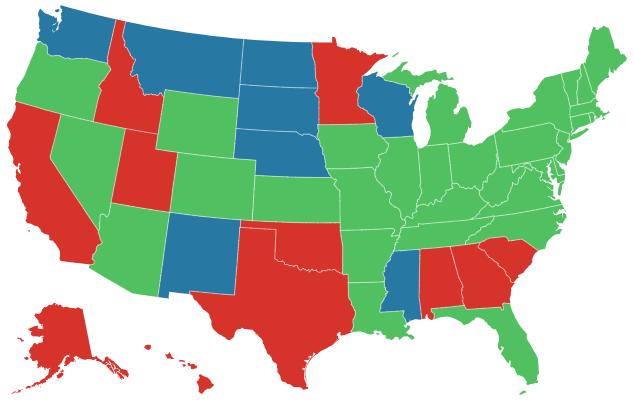
As of 2026, sports prediction betting operates under a complex federal-state regulatory framework that creates a unique landscape across the United States. While 31-40 states have legalized traditional sports betting, federally regulated prediction markets like Kalshi and Polymarket bypass state bans to operate in all 50 states, offering sports, financial, and election event contracts. These platforms are challenging traditional sportsbook dominance by acting as CFTC-regulated exchanges, often facing cease-and-desist orders from states.
Which US States Allow Sports Prediction Betting in 2026
Prediction markets operate in all 50 states through federal CFTC oversight, while traditional sports betting faces varying state-level restrictions. As of January 2026, 31 states plus Washington, D.C. and Puerto Rico have legalized mobile and online sports betting, but prediction markets use commodity futures classification to bypass state gambling restrictions entirely. This creates a regulatory paradox where platforms like Kalshi and Polymarket can legally serve users in states that explicitly ban sports betting.
The Legal Battle Between Federal and State Authority
The jurisdictional conflict centers on whether CFTC’s authority over derivatives overrides state gambling laws. States including Illinois, Maryland, Montana, Nevada, New Jersey, and Ohio have issued cease-and-desist orders against platforms like Kalshi, arguing these markets constitute unauthorized gambling. The Supreme Court may eventually decide this federal-state power struggle, with billions in potential tax revenue hanging in the balance.
How Federal CFTC Oversight Creates 50-State Access

The Commodity Futures Trading Commission classifies prediction markets as financial derivatives rather than gambling, creating a legal pathway for nationwide operation. This regulatory framework, established through 2022 CFTC approval of Kalshi’s event contracts, allows platforms to structure sports bets as “financial contracts” on event outcomes. Unlike traditional sportsbooks that pay state gaming taxes, prediction markets operate under federal capital gains tax treatment, often resulting in 0% tax rates for long-term positions (beginner guide to trading MLB on Kalshi).
Security Measures Protecting Prediction Market Funds
CFTC regulation requires specific financial protections that exceed traditional sportsbook safeguards. Prediction market platforms must maintain FDIC-insured bank partnerships, segregated accounts, and multi-signature wallets to protect user funds. Kalshi’s partnership with FDIC-insured banks provides deposit insurance up to $250,000 per user, while Polymarket’s multi-signature wallet system requires multiple approvals for large withdrawals, creating additional security layers absent from conventional betting platforms (crypto wallet setup for Polymarket sports).
States That Have Banned Prediction Markets Despite Legal Sports Betting
Some states with legal sports betting still ban prediction markets due to tax revenue concerns and regulatory control issues. New Jersey exemplifies this dual approach, allowing traditional sportsbooks while targeting prediction platforms that operate outside state tax structures. The Garden State collects up to 51% gaming tax from traditional operators but cannot tax federally-regulated prediction markets, creating a competitive disadvantage for licensed operators (hedging soccer draws with no shares).
Tax Implications: Prediction Markets vs Traditional Sportsbooks
The tax disparity between prediction markets and traditional sportsbooks creates structural advantages for sophisticated traders. Traditional betting states like New York collect high taxes (e.g., 51% of revenue), while prediction markets operating via federal regulations often pay no local tax. Users report prediction market winnings as capital gains rather than gambling income, potentially qualifying for lower tax rates and different reporting requirements. This tax arbitrage opportunity drives significant volume to platforms like Kalshi and Polymarket, making tax implications of sports event contract winnings an important consideration for traders.
Top Prediction Market Platforms Operating in All 50 States

Key platforms include Kalshi, Polymarket, Fanatics Markets, and DraftKings Predictions, each offering unique features and accessibility for betting on sport through federally regulated channels. Kalshi took $1 billion in action during the 2026 Super Bowl, demonstrating massive market acceptance despite regulatory challenges. Polymarket specializes in crypto-based trading with blockchain transparency, while Fanatics Markets and DraftKings Predictions leverage existing sportsbook customer bases to cross-sell prediction products. These platforms compete on liquidity, user experience, and event coverage breadth (API access for prediction market sports data).
What Happens If Federal Oversight Changes
The potential revocation of CFTC approval would create immediate disruption for prediction market users across all 50 states. Platforms would need to either cease operations or restructure as state-licensed entities, potentially limiting access to only states with favorable gambling laws. User funds might face temporary freezes during transition periods, though most platforms maintain contingency plans including offshore operations and cryptocurrency alternatives to protect customer assets during regulatory shifts.
Using Prediction Markets to Hedge Traditional Sports Bets
Sophisticated bettors use prediction markets to hedge traditional sports bets, exploiting different tax treatment and market structure for arbitrage opportunities. While 90% of prediction market volume involves sports betting, many users employ these platforms to offset losses from conventional sportsbooks. The binary nature of prediction markets (Yes/No outcomes) provides clean hedging opportunities unavailable in traditional point-spread betting, allowing traders to lock in profits regardless of game outcomes. NBA traders particularly value community signals for NBA prediction market trading to inform their hedging strategies.
Future of Sports Prediction Betting Regulation
Industry consolidation and regulatory clarity are expected by 2027 as the current legal grey area becomes unsustainable for long-term growth. The 2026 midterm election betting volumes and geographic arbitrage trends suggest increasing mainstream acceptance of prediction markets. However, traditional sportsbook operators continue lobbying for stricter regulations, arguing that federally-regulated platforms create unfair competition by avoiding state tax obligations while offering similar products. The growing volume spikes in esports event prediction markets indicate expanding market segments beyond traditional sports.
For traders seeking to navigate this evolving landscape, understanding the regulatory distinctions between federal and state oversight is crucial. While traditional sports betting remains geographically fragmented, prediction markets offer nationwide access through federal regulatory frameworks. The tax advantages, security measures, and hedging opportunities make these platforms increasingly attractive despite ongoing legal challenges. As the industry matures, expect continued innovation in platform features and regulatory responses to balance innovation with consumer protection.