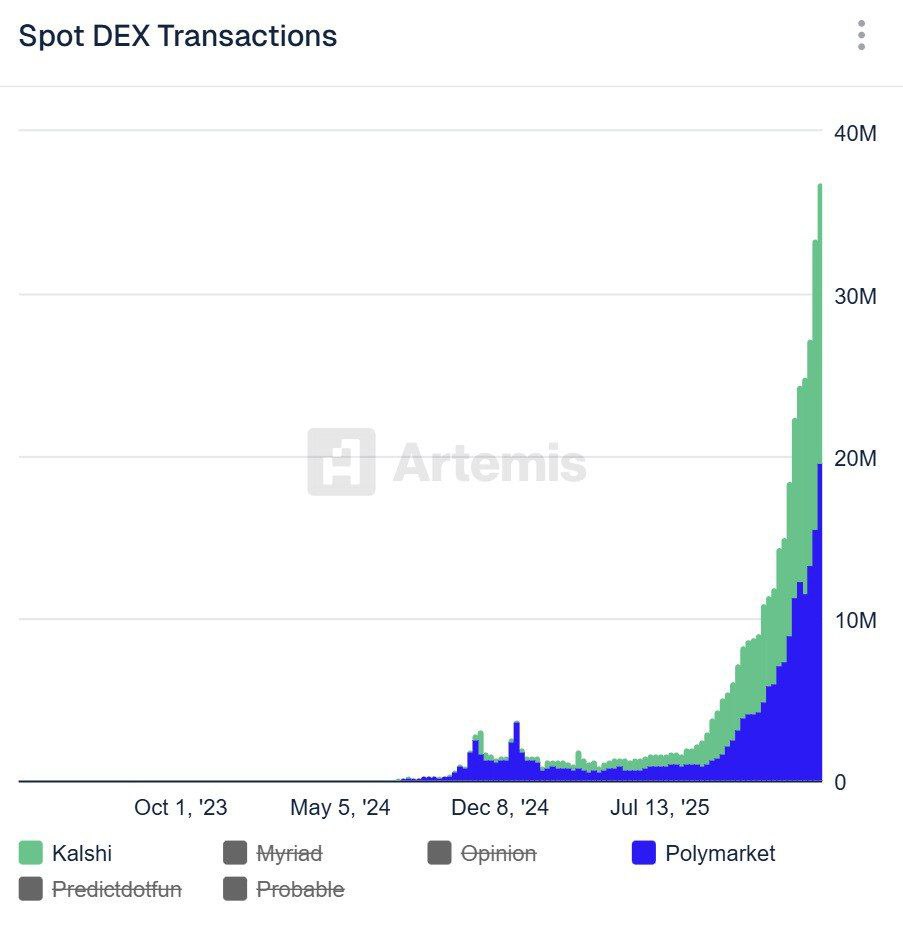
I’ve watched decentralized exchange activity climb steadily over the years, but last week’s 38.1 million transactions marked a true breakout. That figure covers spot DEXes over seven days, and prediction markets accounted for more than half the action. Event trading has shifted from sidelines to center stage in crypto.
Key Takeaways
- Weekly DEX transactions hit a record 38.1 million, driven largely by prediction markets.
- Polymarket led activity, slightly ahead of Kalshi.
- Volumes have surged more than 130x since 2024.
- POLY token and major airdrop officially confirmed.
- A dedicated blockchain launch is increasingly expected.
Polymarket clocked 19.6 million transactions by mid-February 2026, just topping Kalshi’s 17.4 million. From my trades, this rivalry sharpens odds and liquidity in ways smaller platforms can’t match. New users often overlook how these spikes tie to real-world events, mistaking hype for sustainable flow.
Why Transactions Exploded This Week
Total DEX volume hit that 38.1 million peak thanks to combined forces from top prediction markets. What many miss is how on-chain settlement during peak hours strains networks—gas fees can spike 5x if you’re not batching trades. Event-driven bets now dominate, far beyond niche plays.
Volumes ballooned over 130 times from early 2024, crossing $13 billion as markets expanded to sports, policy shifts, and global happenings. November 2025 alone brought nearly $10 billion in turnover, the sector’s best month then. Traders who chased elections learned the hard way: diversify categories early to avoid post-event slumps.
Institutional Backing Changes the Game
Big money followed the crowds. Polymarket landed Intercontinental Exchange support at a $9 billion valuation in late 2025. Kalshi raised $1 billion in Series E, pushing its value to $11 billion. These rounds aren’t just cash; they fund compliance teams that smooth U.S. operations.
Polymarket bought QCEX, a CFTC-regulated derivatives spot, to return to the U.S. in November 2025. That move unlocked federal compliance without rebuilding from scratch—a tip for anyone eyeing regulated plays. Kalshi linked with Robinhood, reaching 27 million accounts, blending retail ease with pro tools.
Polymarket’s X partnership boosted visibility, funneling social buzz into trades. Insiders know: monitor partnership announcements for short-term volume pops, but exit before dilution hits.
User Habits Reveal Platform Edges
Kalshi draws quick flips with high turnover, suiting day traders who thrive on volatility. Polymarket holders lean toward longer contracts, building deeper open interest. This nuance trips beginners—they pile into short-term bets, ignoring how hold strategies capture arb opportunities across expiries.
Polymarket confirmed its POLY token and a major airdrop to spread control. Expect 5% to 10% of supply for users, potentially worth $750 million per analysts. Track volume, repeat bets across events, and multi-category activity for eligibility; snapshots reward consistency over one-off whales.
Airdrop Pitfalls to Dodge
Common error: assuming high-volume alone qualifies. Platforms weigh engagement depth—repeated small trades often beat sporadic big ones. Set alerts for snapshot rumors; I’ve seen eligible users miss out by swapping wallets mid-cycle.
Blockchain Ambitions on Horizon
Filings hint at Polymarket’s own chain, maybe Layer 2 or full Layer 1, to cut fees and speed settlements amid $4.9 billion in early 2026 trades. Why? Current chains bottleneck during events; a custom setup could slash latency by 80%. But building one risks centralization if governance lags.
State hurdles persist in places like Nevada and Massachusetts, viewing these as gambling. Federal wins and allies help, though. Prediction markets blend info markets with finance—challenge the gamble label; they aggregate crowd wisdom better than polls, pricing in nuances polls miss.
This mix of records, funding, tokens, and tech points to prediction markets as crypto’s hot battleground. From trenches, the real edge comes from timing events, managing fees, and eyeing incentives like airdrops.