
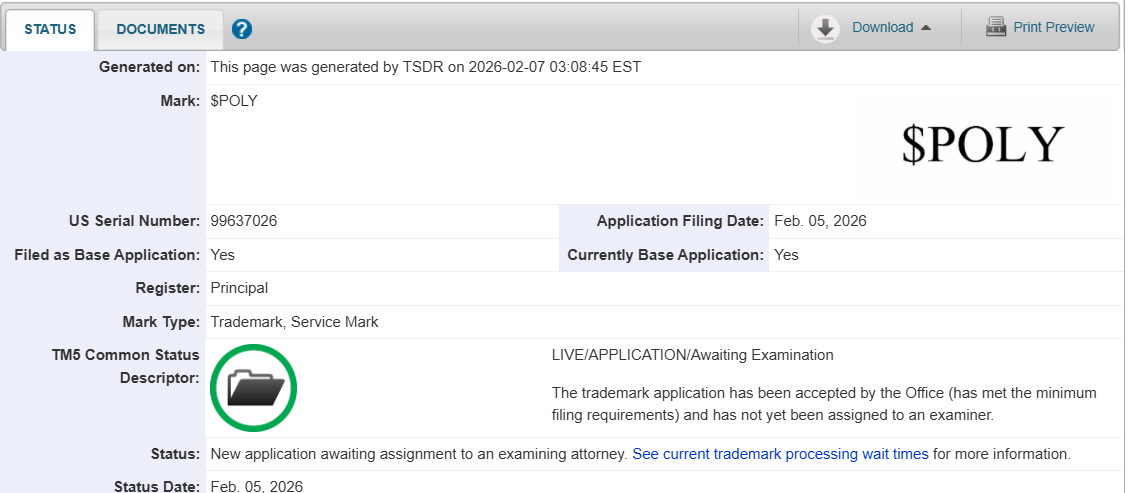
The landscape of prediction markets is shifting once again, and this time, the movement is coming from one of the most prominent names in the space. Polymarket, a platform that has faced its share of regulatory hurdles including a ban in Hungary, has taken a concrete step toward launching a native token. The company recently filed trademark applications for “POLY” and “$POLY” with the United States Patent and Trademark Office. This is not merely a branding exercise; it represents a tangible move toward a long-anticipated token launch, even as the broader prediction market sector grapples with increasing regulatory scrutiny.
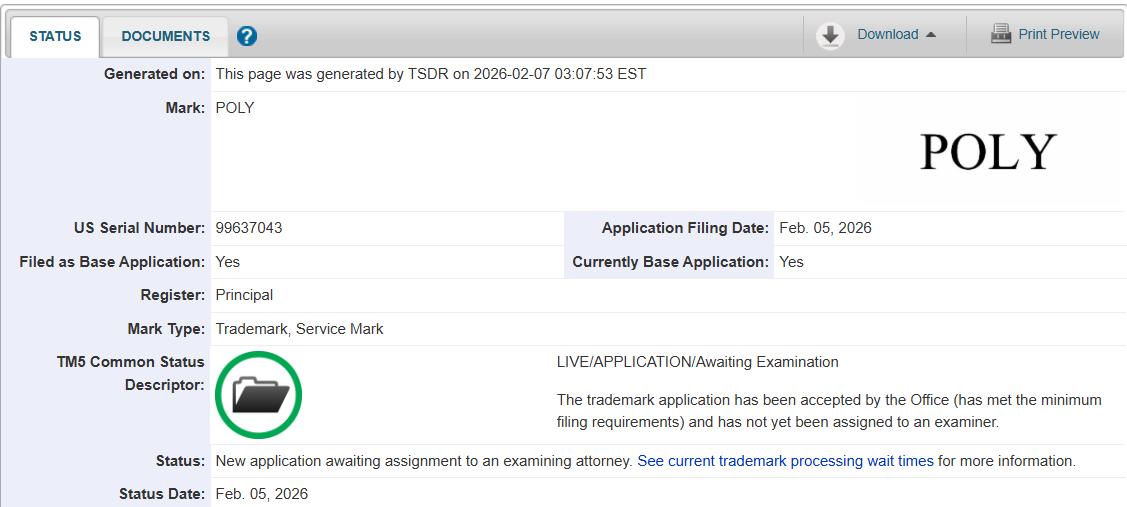
The filings were submitted by Blockratize Inc., the parent company behind Polymarket, on February 5th. The scope of the trademark applications is broad, covering services related to cryptocurrency services, financial trading platforms, and blockchain-based payment systems. It is a strategic move that hints at a much larger ecosystem than just a simple utility token.
Both applications describe services that involve the provision of digital currency or digital tokens to members of an online community
Regulatory Headwinds and Strategic Timing
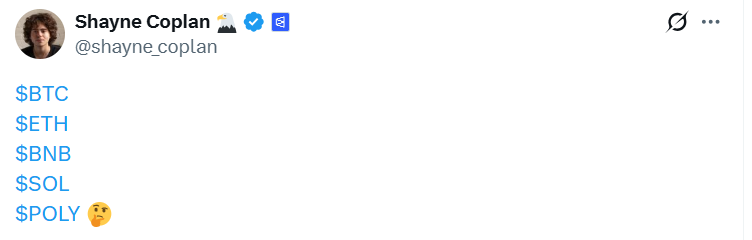
The trademark filings mark the first official step in Polymarket’s token issuance plans. However, insiders know that legal groundwork often precedes technical execution. Matthew Modabber, the marketing director, confirmed plans for the POLY token and an airdrop as far back as October of last year. At the time, he emphasized that the token would have genuine utility, though the specific mechanics remained vague. CEO Shayne Coplan also hinted at the token’s existence when he posted the “POLY” ticker alongside Bitcoin, Ethereum, Solana, and BNB.
From a practitioner’s standpoint, the timing of these filings is interesting. It suggests that Polymarket is preparing the legal scaffolding for a token launch, but the actual execution might be delayed. On the prediction platform Myriad, users currently estimate only a 28% probability that the token will launch before May. This low confidence reflects the reality that trademarks are necessary but not sufficient for a successful launch in this regulatory climate.
The company received a crucial green light from the CFTC (Commodity Futures Trading Commission) in November to operate in the United States. This came nearly four years after Polymarket paid a $1.4 million fine and withdrew from the US market. However, this federal approval does not seem to be enough to clear the path completely. The platform is now facing state-level legal challenges that complicate the picture significantly.
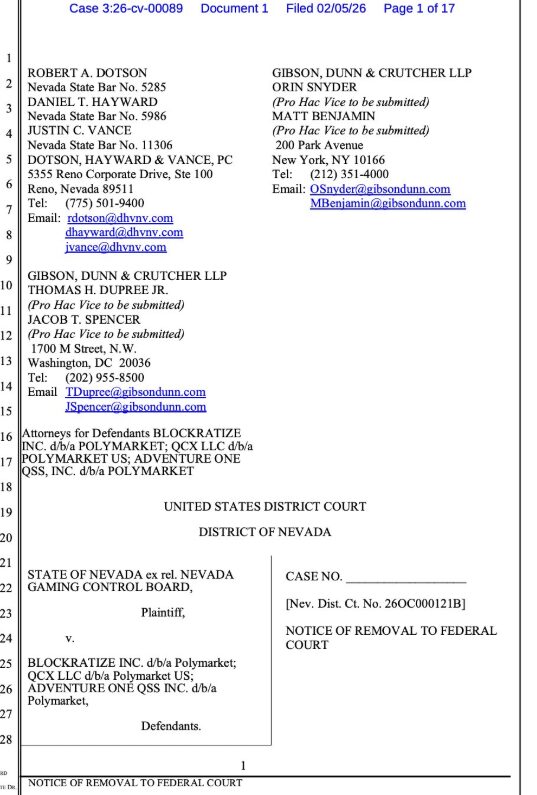
For example, a court in Nevada recently issued a temporary injunction preventing Polymarket from offering event-based contracts within the state. The court argued that the platform’s activities likely violate Nevada’s gambling laws. Polymarket has since appealed the case to a federal court, arguing that state regulations conflict with federal jurisdiction. The outcome of this legal battle remains undecided, but it highlights a common mistake in the industry: assuming federal approval automatically overrides state-specific prohibitions.
Insider Perspectives on Token Utility
There is a nuance here that often gets missed in general reporting. When Modabber spoke of “real utility” for the POLY token, he was likely addressing the criticism that many prediction market tokens are purely speculative. In my experience analyzing these platforms, a token needs to do more than just trade; it needs to facilitate the market itself. Whether that means staking to resolve disputes, paying for transaction fees, or voting on platform governance, the token must be essential to the user experience.
The trademark descriptions mentioning “portfolio management” and “financial exchange platforms” suggest that Polymarket might be expanding beyond simple event contracts. They could be building a comprehensive financial suite where the POLY token acts as the native asset. This is a significant evolution from a simple prediction market to a broader decentralized finance (DeFi) platform.
However, there is a risk in overextending too quickly. We have seen other platforms struggle when they try to do everything at once. The regulatory scrutiny increases exponentially when you move from being a niche prediction market to a full-fledged financial exchange. The Nevada case is a prime example of how regulators view these activities through the lens of existing gambling and securities laws.
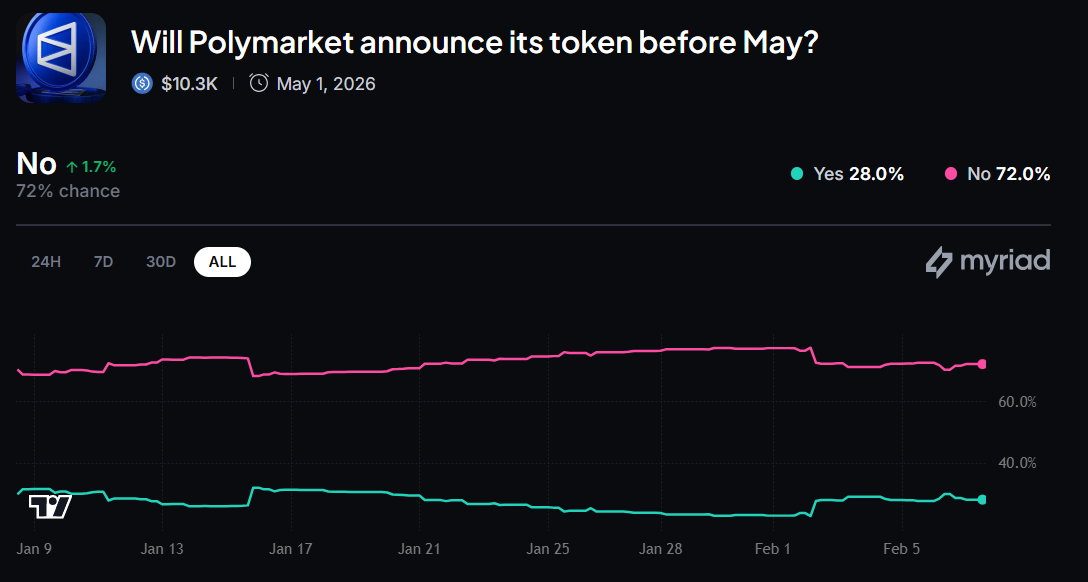
It is also worth noting the silence from the company regarding the specific mechanics of the token. In the crypto space, a lack of detailed technical documentation often leads to speculation. While the trademarks protect the brand, they do not reveal the tokenomics. Practitioners look for whitepapers or detailed blog posts that explain supply, distribution, and governance. The absence of these details is likely why the market prediction on Myriad is so low.
The journey for Polymarket has been turbulent. After exiting the US market and paying a hefty fine, the CFTC approval was a major comeback. But as the Nevada case shows, the regulatory landscape is fragmented. A platform might be compliant at the federal level but still run afoul of state laws. This fragmentation is a hurdle that every prediction market must navigate, and it is one that Polymarket is currently facing head-on.
Ultimately, the trademark filings for “POLY” and “$POLY” are a strong signal of intent. They indicate that the company is serious about decentralization and community ownership. However, the road from a trademark filing to a live, tradable token is long and fraught with legal challenges. The community’s skepticism, reflected in the 28% probability estimate, is a reminder that in the world of prediction markets, even the most anticipated launches can be derailed by regulatory realities.
As we watch this unfold, the key takeaway is that the regulatory environment for prediction markets is not monolithic. It is a patchwork of federal and state laws that require careful navigation. Polymarket is making the right moves on paper, but the practical execution will depend on how they handle the legal battles in states like Nevada. The launch of the POLY token is closer than it was a year ago, but it is not yet a certainty.