The year 2026 began with a glimmer of hope for digital assets, as many anticipated a robust first quarter. However, the reality has been a stark contrast, with Bitcoin and other cryptocurrencies delivering a rather lackluster performance. In a peculiar turn of events, those who placed wagers on the resurrection of Jesus Christ on the prediction market platform Polymarket have, to date, seen superior returns compared to Bitcoin, which has shed 20% of its value this year.
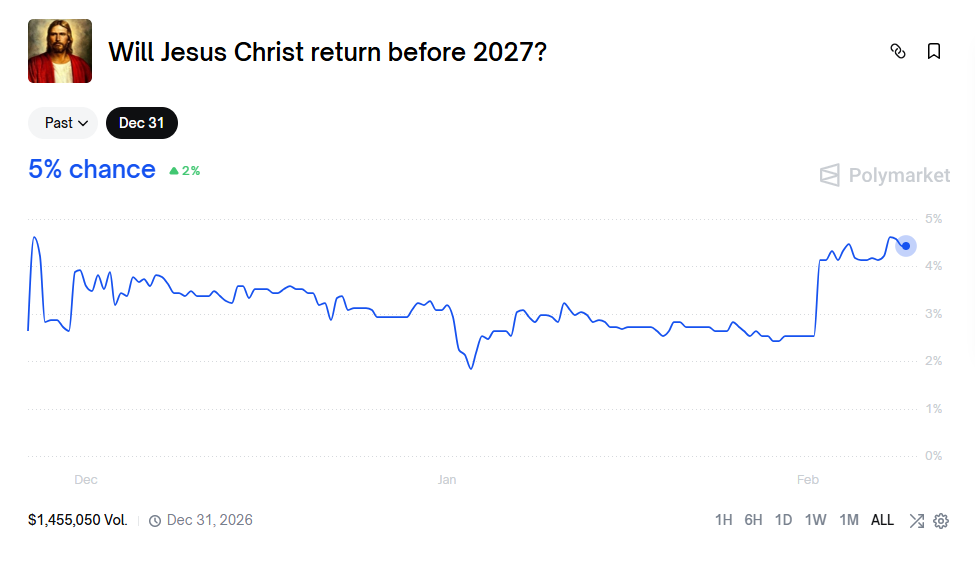
This unusual scenario on Polymarket, a blockchain-based prediction market, has captured significant attention. Nearly half a billion Hungarian Forints (approximately 1.5 million USD) have been staked on the proposition that Jesus will return before December 31, 2026. The weekend saw the probability of this extraordinary event climb to a surprising 5%. This article delves into the dynamics behind such an improbable market and its implications for understanding broader market sentiment.
The Polymarket Phenomenon: Betting on the Improbable
Polymarket, a platform known for its diverse range of prediction markets spanning economic decisions, sports, and elections, has recently hosted a particularly unconventional poll. It allows individuals to bet on the occurrence of future events. While access to Polymarket is restricted in some regions, including Hungary, users employing a VPN can still participate. The current odds for Jesus Christ’s resurrection before 2027 stand at 4.5%, reflecting a considerable sum placed on this outcome. One notable participant, Wise-Mecca, holds half a million shares, significantly influencing these odds.
The probability of this event remained relatively stable for an extended period, but a notable 1.8% increase in January pushed its likelihood higher. This surge meant that anyone who had placed a bet on this surreal event would have realized a better return than an investment in Bitcoin, which has seen its price drop by over 20% this year. This comparison underscores a fascinating aspect of prediction markets: their ability to quantify even the most improbable beliefs.
From a practical standpoint, the poll currently offers roughly 25 times the initial stake if Jesus were to indeed resurrect this year. While the relatively thin liquidity in such niche markets can lead to exaggerated price swings from even modest purchases, it’s clear that some participants perceive this as a genuine opportunity for substantial gains, however unlikely the event itself may seem.
Market Drivers and the Crypto Landscape in 2026
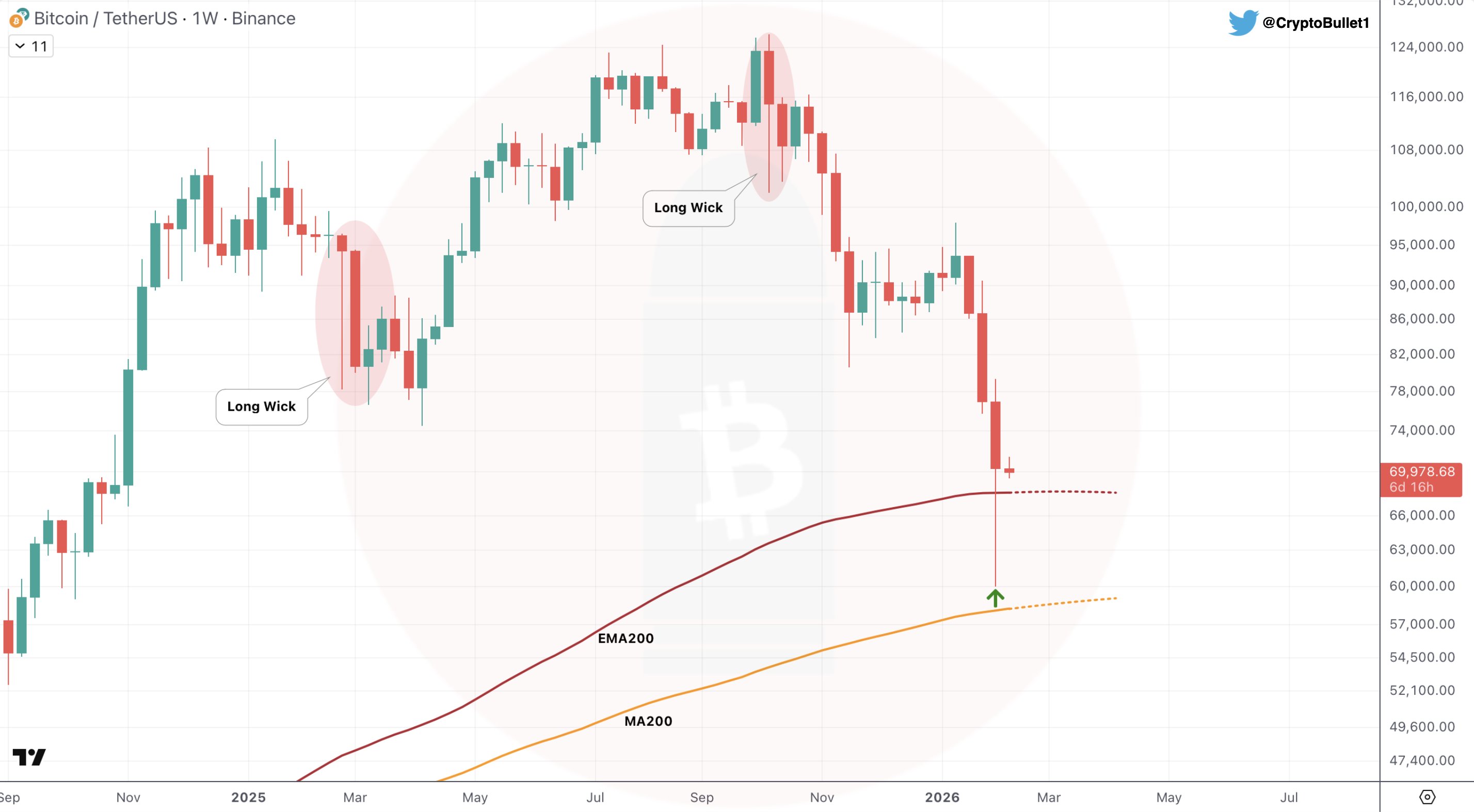
Examining the broader market, the weekly chart for Bitcoin reveals a significant development: the price broke below the 200-week exponential moving average this year, a level it hadn’t touched in the past eighteen months. Such a movement has only occurred twice since 2025, once preceding a sustained rally and another time preceding a substantial downturn.
Heading into 2026, many in the crypto space, buoyed by the strong start to the year, anticipated a new all-time high for Bitcoin and the beginning of an extended supercycle, a sentiment echoed by prominent figures like CZ. Yet, digital assets have faltered. Altcoins, in particular, have seen declines of 30-40% over the past month. Despite a seemingly easing macroeconomic environment and diminishing geopolitical tensions, the precise catalyst for a renewed upward trend in digital assets remains elusive.
“Bitcoin in 2026 continues to exhibit extreme volatility, heavily influenced by ETF demand and overall market liquidity. While a surge to $225,000 wouldn’t be surprising, there’s also a tangible possibility of a drop to $50,000,” stated a recent report by CNBC.
Regardless of Bitcoin’s future price trajectory, the current state of affairs on Polymarket offers a telling reflection of market maturity. The fact that participants in blockchain-based prediction markets are assigning greater potential to a ‘miracle’ than to the leading cryptocurrency speaks volumes about the prevailing sentiment and the unpredictable nature of these speculative environments.