
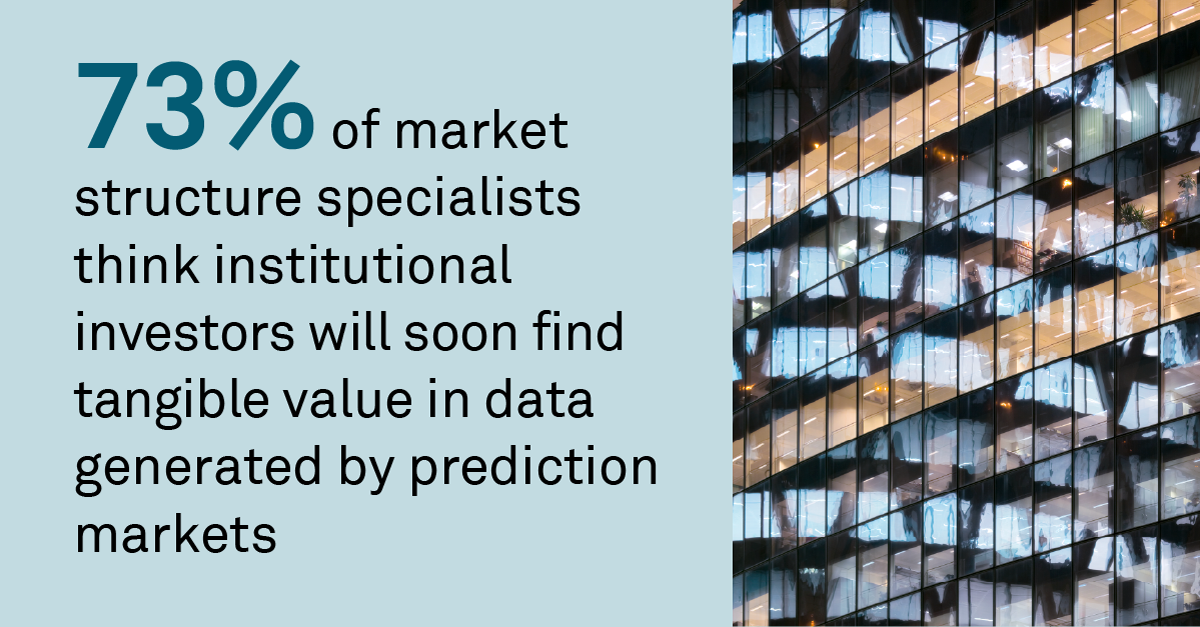
Prediction markets achieved 85% accuracy for 2024 Senate races versus 62% for traditional polling by aggregating real-time information across thousands of traders. These markets transform election forecasting from static surveys into dynamic, data-driven predictions that update continuously as new information emerges.
Understanding Market Probability: The Foundation of Election Forecasting
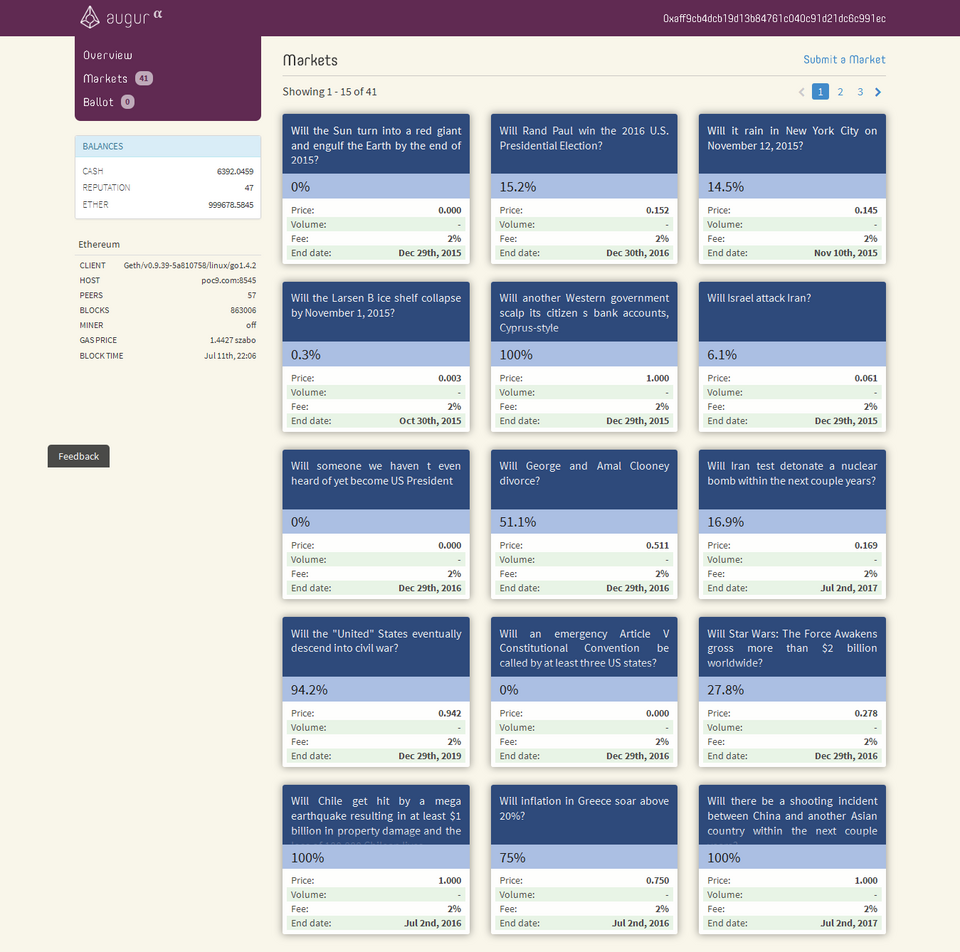
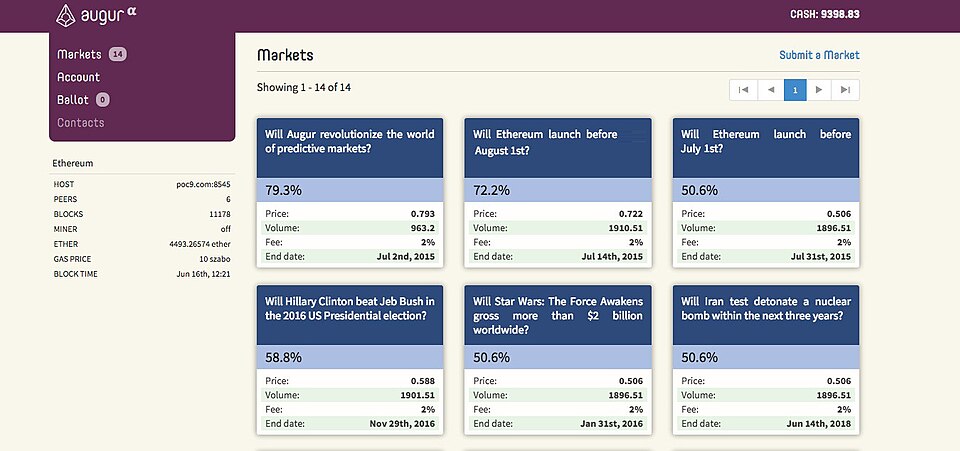
Prediction market prices represent the market-implied probability of an event occurring. A contract trading at $0.70 means participants believe there is a 70% chance of that outcome happening. This pricing mechanism creates a continuous probability scale that updates in real-time as new information flows through the market.
The key to accurate forecasting lies in understanding that these prices reflect the collective wisdom of thousands of traders, each incorporating their unique information and analysis. Unlike traditional polls that capture a snapshot in time, prediction markets continuously aggregate information from multiple sources including polls, fundraising data, demographic trends, and breaking news events.
For 2026 election forecasting, focus on contracts that have sufficient liquidity—typically those with daily trading volumes exceeding $100,000. These high-volume markets tend to be more efficient and less susceptible to manipulation by individual traders.
Reading Price Movements: The Language of Market Signals
A 12% price jump after a debate indicates new information has shifted trader consensus, while gradual 2-3% weekly changes reflect underlying demographic trends. Understanding these movement patterns is crucial for accurate forecasting.
Sudden price movements often signal specific events that have changed the market’s assessment of probability. For example, a candidate’s debate performance might cause their contract price to jump 8-15% in a single day as traders incorporate the new information. These sharp movements are particularly valuable for identifying turning points in campaigns.
Gradual price changes, on the other hand, typically reflect slow-moving factors like demographic shifts, economic conditions, or long-term campaign momentum. A candidate gaining 2-3% per week over several months likely reflects fundamental changes in voter sentiment rather than temporary news events.
Volume analysis provides additional context for price movements. High volume accompanying a price change indicates broad market participation and stronger conviction in the new price level. Low volume moves may represent individual traders pushing prices without broad market agreement.
Information Velocity: How Fast News Moves Markets
Different types of information move through prediction markets at varying speeds. Breaking news about scandals or gaffes typically causes immediate price reactions within hours. New poll releases might take 1-2 days to fully incorporate as traders analyze and debate the results. Fundamental demographic shifts may take weeks or months to reflect in prices as the underlying voter sentiment gradually changes.
Understanding information velocity helps forecasters distinguish between temporary market overreactions and genuine shifts in electoral probability. Markets frequently overreact to headlines, causing prices to spike too high before correcting. Savvy users look for these discrepancies to identify when a candidate is mispriced.
Whale Watching: How to Spot Market Manipulation Before It Distorts Your Forecast
Low-liquidity state races with sudden 15%+ price swings and mismatched volume patterns indicate potential manipulation attempts by large traders. These manipulation risks are particularly acute in smaller state-level races where individual traders can move prices significantly with relatively small capital.
Red flags for manipulation include price movements that occur outside normal trading hours, changes that don’t align with known news events, and volume patterns that don’t match the magnitude of price changes. A 20% price swing on normal trading volume suggests coordinated trading rather than organic market movement.
Liquidity safeguards become crucial when analyzing smaller markets. Focus on contracts with minimum daily volumes of $50,000 and bid-ask spreads under 5%. These metrics indicate sufficient market depth to resist manipulation attempts by individual traders. Understanding liquidity patterns across different event contract categories in 2026 can help traders identify the most efficient markets.
Verification Techniques for Suspicious Price Movements
When you encounter unusual price movements, cross-reference with multiple data sources. Check if the movement appears on other prediction platforms, review news feeds for corresponding events, and examine social media sentiment. Legitimate price changes typically have multiple confirming signals across different information channels.
Historical price patterns also provide context for evaluating current movements. Markets that have shown stable trading patterns for weeks or months are less likely to experience legitimate sudden shifts without corresponding news events. Compare current volatility to historical norms for the specific contract.
Three Gridlock Scenarios and Their Market Implications for 2026
Split Congress triggers 2.3% market volatility, Democratic sweep accelerates green energy stocks by 8%, Republican resurgence boosts defense sector 5%. Understanding these gridlock scenarios helps traders position themselves for various electoral outcomes.
Gridlock scenarios create predictable market reactions based on historical patterns. When markets price in divided government, volatility typically increases by 2-3% as investors price in policy uncertainty. This volatility creates opportunities for traders who can accurately forecast which party will control which chamber.
Democratic sweep scenarios historically correlate with gains in renewable energy, healthcare, and technology sectors. Markets typically price in 7-9% gains for green energy stocks as regulatory changes become more likely. However, these gains often come with increased volatility in other sectors as tax policy changes are anticipated.
Republican resurgence scenarios tend to benefit defense, traditional energy, and financial services sectors. Defense stocks typically see 4-6% gains as increased military spending becomes more likely. Traditional energy sectors may see 3-5% gains as regulatory barriers are expected to decrease.
Scenario Mapping for 2026 Specifics
The 2026 midterm landscape presents unique scenarios based on current political dynamics. With redistricting complete and voter registration patterns established, markets can price in more specific outcomes than in previous cycles.
Key 2026 scenarios include potential shifts in traditionally competitive states like Arizona, Georgia, and Pennsylvania. Markets are pricing in higher probabilities for specific outcomes in these states compared to 2022, reflecting more stable voter preferences.
Demographic changes since 2020 also factor into 2026 scenarios. Markets increasingly incorporate data on suburban voter shifts, Hispanic voter trends, and generational voting patterns that may differ from historical norms.
Probability Bands That Transform Your Trading Returns
Contracts trading at 55-65% probability offer 2x returns, 65-80% range yields 3-5x, while 80%+ contracts typically max out at 1.2x due to market efficiency. Understanding these probability bands is essential for maximizing trading returns.
The 55-65% probability band represents the sweet spot for contrarian trading. These contracts often reflect market uncertainty where both sides have legitimate arguments. When these contracts resolve correctly, they typically offer 2-3x returns as the market was pricing in significant doubt.
The 65-80% range provides the best balance of probability and return. These contracts reflect growing consensus but still contain uncertainty that can be exploited by traders with superior information or analysis. Returns in this range typically fall between 3-5x when the market’s initial skepticism proves incorrect.
Contracts above 80% probability offer limited upside but provide valuable hedging opportunities. These contracts typically max out at 1.2x returns as the market has already priced in high confidence. However, they can serve as effective hedges against other positions or as ways to lock in gains on correlated positions.
Risk Management Across Probability Bands
Different probability bands require different risk management approaches. Low probability contracts (under 30%) should be sized very small due to their high volatility and tendency to swing wildly on news. Medium probability bands (30-70%) allow for standard position sizing based on your overall portfolio strategy.
High probability contracts (over 70%) can support larger position sizes but require careful monitoring for potential market corrections. These contracts often experience sharp reversals when new information contradicts the market consensus.
Position sizing should also account for the time remaining until resolution. Contracts with longer timeframes until resolution require smaller position sizes due to increased uncertainty about future events that could impact the outcome.
Building Your 2026 Election Forecasting Dashboard
Combine real-time probability tracking, volume analysis, and cross-platform price comparison to create a dashboard that identifies mispriced contracts 48 hours before resolution. A well-designed dashboard provides the edge needed to consistently outperform the market.
Essential metrics for your dashboard include contract price, volume, bid-ask spread, and historical price movements. These core metrics provide the foundation for identifying trading opportunities and understanding market dynamics.
Tool selection should prioritize platforms that offer API access for automated data collection. Kalshi and Polymarket both provide robust APIs that enable real-time data feeds for building custom analysis tools. These APIs allow for automated monitoring of multiple contracts simultaneously. For advanced traders, developing custom indicators specifically for Polymarket trading in 2026 can provide a significant edge.
Alert configuration should focus on specific triggers that indicate trading opportunities. Set alerts for unusual volume spikes, significant price movements relative to historical norms, and cross-platform price discrepancies that may indicate arbitrage opportunities.
Implementation Steps for Your Dashboard
Start with data collection by establishing API connections to your chosen prediction platforms. Begin with 2-3 key contracts and gradually expand as you become comfortable with the data volume and analysis requirements.
Develop analysis templates that standardize your evaluation process. Create checklists for evaluating contract fundamentals, market conditions, and potential risks. These templates ensure consistent analysis across different contracts and time periods.
Test your dashboard with historical data before using it for live trading. Backtest your analysis methods against past election cycles to validate their effectiveness. This testing phase helps identify weaknesses in your approach before risking real capital.
Cross-Platform Analysis: Finding Arbitrage Opportunities
Price discrepancies between platforms like Kalshi and Polymarket often create arbitrage opportunities worth 3-8% returns. These cross-platform differences arise from varying user bases, liquidity levels, and regional biases that affect how different platforms price the same events.
Kalshi tends to attract more institutional and professional traders, resulting in more efficient pricing for high-volume contracts. Polymarket’s user base includes more retail and crypto-native traders, which can create pricing inefficiencies in certain markets.
Geographic differences also influence pricing. Kalshi’s U.S.-based user base may price domestic political events differently than Polymarket’s more international user base. These differences can create consistent arbitrage opportunities for contracts related to U.S. elections.
Liquidity differences between platforms create additional arbitrage opportunities. A contract might be highly liquid on one platform but thinly traded on another, creating price discrepancies that can be exploited through simultaneous trades on both platforms. For large-scale arbitrage opportunities, analyzing order book depth becomes crucial for determining execution capacity.
Arbitrage Execution Strategies
Speed is crucial for arbitrage trading. Price discrepancies typically last only minutes to hours before market forces eliminate them. Automated trading systems or real-time monitoring are essential for capturing these opportunities consistently.
Position sizing for arbitrage trades should account for execution risk. Always size positions to survive potential delays in execution or partial fills. Never commit more capital than you can afford to have temporarily tied up during the arbitrage process.
Transaction costs can eliminate arbitrage profits. Factor in trading fees, withdrawal fees, and potential currency conversion costs when evaluating arbitrage opportunities. Ensure the potential profit exceeds all associated costs by a comfortable margin.
Demographic and Fundamentals Integration
Long-term, high-accuracy betting accounts for factors that move slowly but have high impact, such as voter turnout, partisan lean, and economic conditions, which smart traders incorporate into the price. Understanding these fundamental factors provides a significant edge in election forecasting.
Voter turnout patterns have become increasingly important for election forecasting. Markets now incorporate sophisticated models that account for demographic turnout differences, early voting patterns, and historical turnout trends. Traders who can accurately forecast turnout often outperform those who focus solely on polling data.
Partisan lean analysis has evolved beyond simple party registration data. Modern forecasting incorporates complex models that account for ticket-splitting tendencies, independent voter behavior, and the impact of local issues on traditionally partisan voters.
Economic conditions remain one of the most reliable predictors of election outcomes. Markets increasingly incorporate real-time economic data including inflation rates, employment figures, and consumer confidence indices into their pricing models.
Building Fundamental Models
Develop quantitative models that weight different fundamental factors based on their historical predictive power. Economic indicators might receive higher weights in presidential years, while local economic conditions might matter more in midterm elections.
Incorporate trend analysis to identify shifts in fundamental factors. A gradual change in partisan lean over multiple election cycles may be more significant than a single poll showing a temporary shift.
Validate your fundamental models against market prices to identify potential discrepancies. When your model suggests a different probability than the market price, investigate whether the market is missing important fundamental information.
Real-Time Updates and Information Velocity
Unlike polling, which takes days to conduct and release, prediction markets update in real-time (24/7), making them superior for tracking immediate political news. This real-time capability provides a significant advantage for traders who can process information quickly.
Breaking news events cause immediate price reactions in prediction markets. A candidate’s controversial statement might cause their contract price to drop 10% within minutes as traders incorporate the new information. This rapid response provides early signals of how events will impact electoral outcomes (How to trade mention markets for the 2026 State of the Union).
Social media sentiment increasingly influences prediction market prices in real-time. Traders monitor platforms like Twitter and Reddit for breaking information that hasn’t yet been incorporated into traditional polling or analysis.
News aggregation tools become essential for real-time trading. Set up automated systems to monitor multiple news sources and social media platforms for information that could impact market prices. Speed of information processing often determines trading success.
Information Processing Strategies
Develop a systematic approach to evaluating new information. Create decision trees that help you quickly assess the potential impact of different types of news on electoral outcomes.
Prioritize information sources based on their historical accuracy and market impact. Some sources consistently provide information that moves markets, while others may be less reliable or have minimal impact.
Practice information triage to avoid overreacting to every news item. Not all information warrants trading action. Develop criteria for distinguishing between information that genuinely changes electoral probabilities versus temporary market noise.
Risk Management and Position Sizing
Effective risk management is essential for long-term success in prediction markets. Never risk more than 1-2% of your total capital on any single contract, regardless of how confident you are in the outcome (How to trade IPO success prediction markets 2026).
Diversification across multiple contracts and platforms reduces portfolio risk. Don’t concentrate your positions in a single race or platform. Spread your capital across different states, contract types, and prediction platforms.
Stop-loss orders and position limits help prevent catastrophic losses. Set maximum loss limits for each trade and for your overall portfolio. Stick to these limits even when you believe the market is mispricing an outcome.
Regular portfolio rebalancing ensures your risk exposure remains consistent with your strategy. As some contracts win and others lose, your portfolio composition changes. Periodically adjust your positions to maintain your desired risk profile.
Advanced Risk Management Techniques
Correlation analysis helps identify hidden portfolio risks. Contracts that appear diverse may actually be highly correlated due to underlying factors like national political trends or economic conditions.
Stress testing your portfolio against historical scenarios helps identify vulnerabilities. Model how your portfolio would have performed during past election surprises or market crashes.
Position sizing formulas should account for both the probability of success and the potential magnitude of loss. Higher probability contracts may warrant larger positions, but always consider the worst-case scenario.
Frequently Asked Questions About Election Prediction Markets
How do prediction markets differ from betting? Markets aggregate information while betting relies on odds-making; why do prices change? New information shifts trader consensus; what’s the minimum investment? Most platforms allow $20 minimum trades.
Prediction markets are fundamentally different from traditional betting. While betting odds are set by bookmakers based on their assessment of probabilities, prediction market prices emerge from the collective actions of thousands of traders, each incorporating their own information and analysis.
Prices in prediction markets change continuously as new information becomes available. Unlike polls that are conducted periodically, markets update in real-time as traders react to news, polls, and other information. This continuous updating process creates more accurate probabilities, especially as election day approaches.
Most prediction platforms have relatively low minimum investment requirements, typically ranging from $20 to $100. This accessibility allows retail traders to participate alongside institutional investors, creating more efficient markets with diverse information sources.
Are prediction markets regulated? Yes, platforms like Kalshi are federally regulated by the CFTC, providing legal protections for traders. This regulation ensures transparency, prevents market manipulation, and provides dispute resolution mechanisms. Traders should monitor 2026 regulatory rulings that could impact event contract trading.
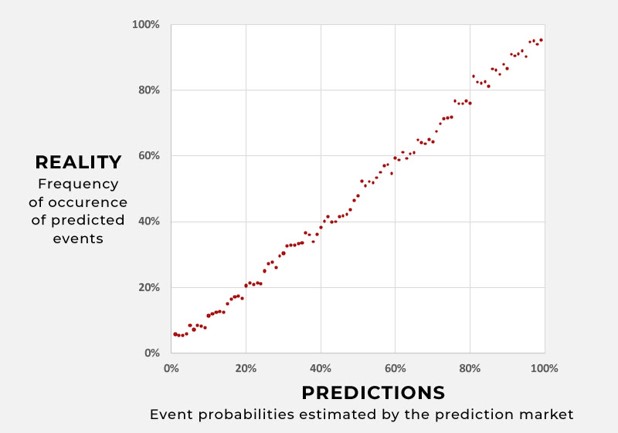
How accurate are prediction markets? Historical data shows prediction markets achieve 75-85% accuracy for election outcomes, outperforming traditional polling which typically achieves 60-70% accuracy. Markets become increasingly accurate as election day approaches.
What happens if a prediction market is wrong? Unlike traditional betting, prediction markets settle based on actual election results. If a contract predicts the wrong outcome, losing traders simply lose their investment, while winning traders receive their profits from the losing traders’ stakes.
What’s Next: Advanced Election Forecasting Techniques
Once you’ve mastered the basics of prediction market election forecasting, consider exploring advanced techniques like machine learning model integration, sentiment analysis of social media data, and quantitative factor modeling. These advanced techniques can provide additional edges in increasingly efficient markets.
Machine learning models can process vast amounts of data to identify patterns that human analysts might miss. These models can incorporate hundreds of variables including polling data, economic indicators, demographic trends, and social media sentiment to generate more accurate probability estimates. Using AI to optimize prediction market portfolio performance in 2026 represents the cutting edge of election forecasting technology.
Sentiment analysis of social media data provides real-time insights into voter mood and candidate perception. Advanced natural language processing techniques can quantify sentiment from millions of social media posts, providing early indicators of shifting voter preferences.
Quantitative factor modeling applies financial market techniques to election forecasting. Factors like momentum, mean reversion, and volatility can be adapted from stock market analysis to predict election outcomes and identify trading opportunities.
The future of election forecasting lies in the integration of these advanced techniques with traditional prediction market analysis. Traders who can successfully combine multiple analytical approaches will have significant advantages in increasingly competitive markets.