
The cryptocurrency market in 2026 feels different than it did just a year ago. Traders are no longer simply chasing hype or following the crowd blindly. Instead, there is a noticeable shift toward projects that offer structural integrity and long-term viability. This change in sentiment is evident in how the market is reacting to established giants versus newer entrants. While major assets like XRP and Ethereum are facing periods of consolidation and hesitation, a new contender is stepping into the spotlight.
This shift isn’t just about price action; it is about the underlying mechanics of how value is distributed and sustained. I have watched many presale models come and go, and the difference between a sustainable launch and a quick pump-and-dump often comes down to supply management. The current market conditions are forcing a re-evaluation of what constitutes a safe bet. Many investors are looking for projects that mitigate downside risk while offering genuine upside potential.
XRP Price Analysis: Holding the Line
XRP is currently trading around the $1.42 mark, which has become a critical demand zone. In my experience analyzing support levels, this area is acting as a floor where buyers are stepping in to absorb selling pressure. However, the struggle is real. The price remains capped below significant moving averages, specifically the 50-day Simple Moving Average (SMA) at $1.95 and the 200-day SMA at $2.45. These technical barriers are not just numbers on a chart; they represent psychological hurdles where previous buyers are likely looking to exit positions.
Looking at the short-term charts, XRP is oscillating within a range between $1.15 and $1.50. Volume has been relatively light, which is a common characteristic of consolidation phases. A breakout above $1.50 would require a surge in buying interest that hasn’t materialized yet. Traders are watching the $1.87 level closely as a key resistance point. Until XRP can reclaim these higher levels with conviction, the narrative remains one of stability rather than strength. It is a waiting game to see if demand can overpower the overhead supply.

Ethereum’s Struggle for Momentum
Ethereum has experienced a modest rebound after testing lower support levels around $2,300. Large buyers, often referred to as ‘whales,’ stepped in during the dip. I recall seeing on-chain data indicating that one OTC wallet accumulated 33,000 ETH in a single day, while others added roughly 25,000 ETH near the $2,463 mark. These moves are significant because they show institutional interest at specific price points. Currently, ETH is trading around $2,030, reflecting a cautious recovery.
Despite this buying activity, the daily chart reveals a descending channel pattern. This indicates that while buyers are defending support, sellers are still in control at higher levels. The Relative Strength Index (RSI) dipped into oversold territory before ticking higher, but momentum remains below neutral. A common mistake traders make is mistaking a bounce for a trend reversal. In this case, the lack of volume accompanying the recent bounce suggests that confidence is still shaky. The major resistance level to watch is $2,797; breaking this would be the first sign of a genuine trend change.

The ZKP Presale Mechanism: A Closer Look
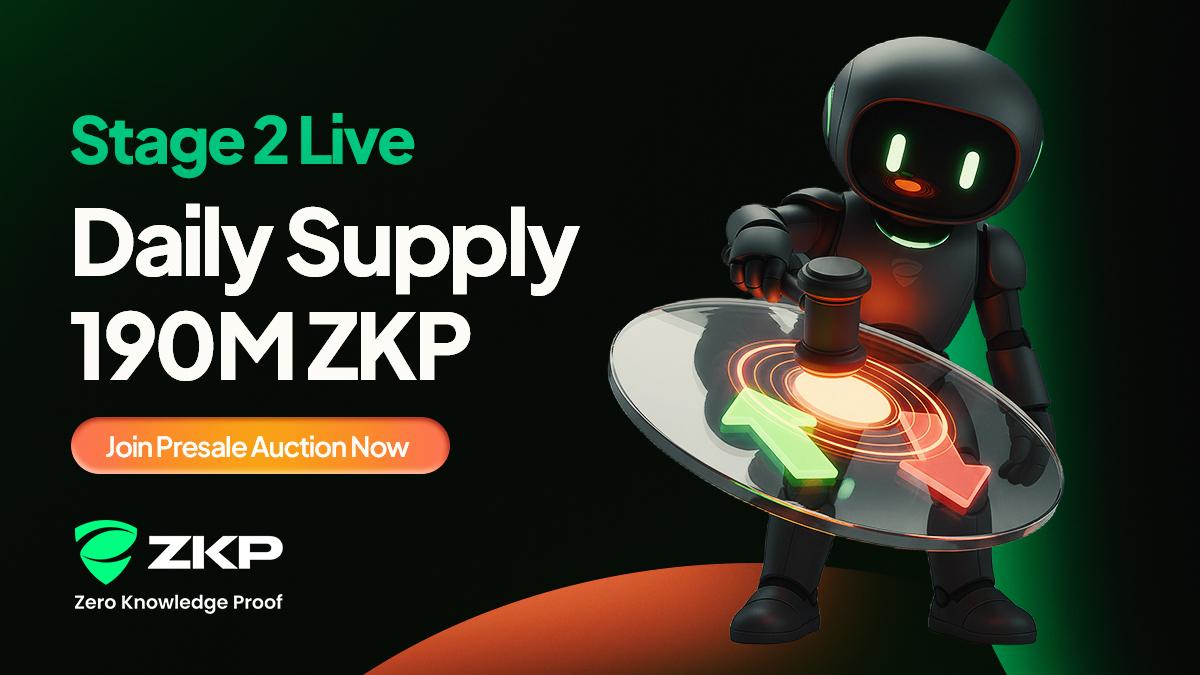
While the majors trade sideways, ZKP is generating buzz through its Stage 2 presale auction. Having observed numerous token launches, I find the mechanics here particularly interesting. Unlike standard fixed-price sales where early buyers get the best price regardless of demand, ZKP utilizes a daily auction model. This means the price is not static; it adjusts based on demand relative to the daily supply cap of 190 million tokens.
This approach fundamentally changes the psychology of buying. It discourages front-running by bots and rewards genuine, sustained interest. In previous cycles, I have seen fixed-price launches sell out in seconds, leaving retail investors holding the bag. The ZKP model smooths out entry points. As the daily allocation decreases in subsequent phases, the scarcity effect is engineered to increase naturally. This is a nuanced detail that many investors overlook; it is a built-in mechanism to support price stability post-launch.
The project has raised $1.78 million so far. Analysts are projecting a potential total raise of $1.7 billion, a figure that seems ambitious but is grounded in the math of decreasing supply and increasing demand. The 100x potential often discussed is not just marketing fluff; it is derived from the low entry valuation compared to the projected market cap if the project achieves mainstream adoption.

Why Market Signals Are Pointing to New Opportunities
The broader market signals in 2026 are telling a story of rotation. Capital is not leaving the crypto space, but it is moving. When XRP news focuses on price holding demand levels rather than breaking out, it signals a defensive posture. Similarly, when Ethereum’s price action is described as a ‘cautious recovery,’ it indicates that the explosive growth phase for that cycle has likely passed, at least for the short term.
From a practitioner’s standpoint, this is the time to look for asymmetric risk-reward setups. Established assets offer safety but limited upside in the near term. Newer projects with solid tokenomics offer higher risk but the potential for outsized returns. ZKP fits this profile because its presale structure is designed to filter out short-term speculators. Those entering the auction now are likely positioning for a longer hold, which reduces volatility once the token hits public exchanges.
The shift in focus is also driven by the search for utility. The market has matured; hype alone no longer sustains value. Projects need to solve real problems or offer superior technical frameworks. ZKP’s focus on zero-knowledge proofs addresses privacy and scalability, which are perennial issues in the blockchain space. This technical relevance adds a layer of fundamental value that supports the speculative interest.

Conclusion: Navigating the Current Cycle
In summary, the crypto market in 2026 presents a clear divergence. XRP and Ethereum are in phases of accumulation and stabilization, respectively. While they remain important assets, their immediate growth potential appears capped by technical resistance and market hesitation. Traders are right to exercise caution here, as the risk of further downside cannot be ignored.
Conversely, ZKP is capturing the market’s imagination through a well-structured presale that prioritizes fair distribution and long-term value. The $1.78 million raised in Stage 2 is a testament to the growing interest. For those willing to navigate the risks of early-stage projects, the current presale phase offers a unique entry point. The market is always evolving, and recognizing these shifts early is key to staying ahead.
Explore ZKP:
Website:
Buy:
Telegram:
X: