
Sports betting bankroll management is the difference between going broke and building sustainable profits in the $9.34 billion market. Professional bettors use mathematical strategies to protect their capital while maximizing long-term returns.
- Professional bettors use 1-3% allocation for high-volatility positions to protect capital
- The Kelly Criterion provides mathematical optimal bet sizing for different confidence levels
- Different bet types (moneyline, spread, props) require specific allocation strategies
- Psychological discipline is as important as mathematical strategies for long-term success
What is Sports Betting Bankroll Management and Why It Matters
Sports betting bankroll management is the cornerstone of sustainable sports betting success. Without proper bankroll management, even the best bettors can go broke during inevitable losing streaks.
The $9.34 Billion Sports Betting Market and Mobile Betting Revolution
The sports betting industry is projected to reach $9.34 billion by 2028, with 70% of all wagers now placed via mobile devices. This explosive growth has created more opportunities than ever, but also more risk for bettors who don’t manage their money properly. With 38 states plus D.C. having legalized sports betting in 2026, the market is more accessible than ever before.
Why 90% of Recreational Bettors Fail Without Bankroll Management
Common mistakes that lead to failure include emotional betting after losses, chasing losses with bigger bets, and lack of position sizing. Recreational bettors often treat sports betting as entertainment rather than a business investment. Without bankroll management, even a 55% win rate can lead to bankruptcy during inevitable losing streaks. The key difference between professional and recreational bettors is treating betting as a business with strict risk management rules.
Professional Bankroll Management Strategies and Allocation Rules
Professional bettors use sophisticated allocation strategies that protect their capital while allowing for meaningful growth. These strategies are based on mathematical principles and decades of betting experience.
Unit Size Management: The 1-3% Rule for High-Volatility Positions
Professional bettors use 1-3% allocation for high-volatility positions to protect their bankroll. This means never risking more than 1-3% of your total bankroll on any single bet, regardless of how confident you feel. The maximum leverage ratio is 2:1 on any single position, and a 30% margin call buffer helps prevent catastrophic losses. Unit size typically ranges from 0.5% to 2% of total bankroll, depending on confidence level and volatility.
Core Position Strategy: 40-50% Allocation for High-Confidence Markets
High-confidence vs. high-volatility position differences require different allocation strategies. Core positions should represent 40-50% of your bankroll in markets where you have the highest confidence and edge. These are bets where you have superior information or analysis compared to the market. Risk-reward ratios for core positions typically target 2:1 or better, meaning you risk $1 to potentially win $2.
Bet Type Specific Allocation Strategies
Different bet types require specific allocation strategies based on their volatility and edge potential. Moneyline bets on heavy favorites might warrant 2-3% allocation due to lower volatility. Point spread bets typically use 1-2% allocation due to their 50/50 nature. Prop bets, being highly volatile, should use 0.5-1% allocation. Parlays, despite their high payouts, should be limited to 0.5% or less due to their negative expected value.
Mathematical Approaches to Optimal Bet Sizing
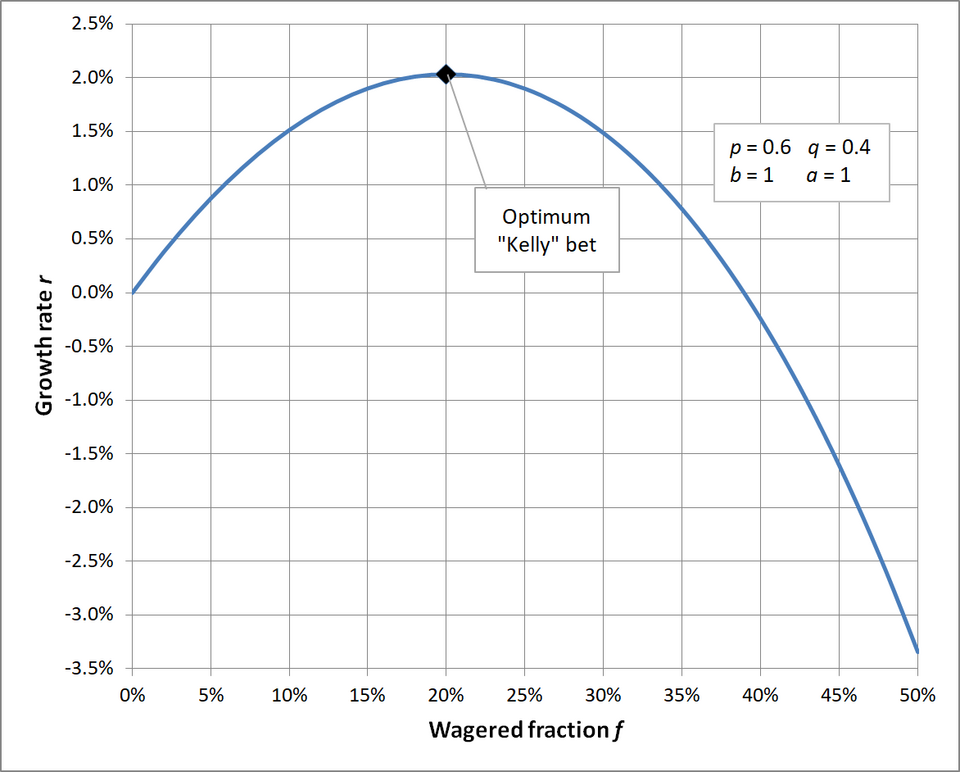
Mathematical approaches like Kelly Criterion provide optimal bet sizing that maximizes long-term growth while minimizing risk of ruin.
The Kelly Criterion: Mathematical Formula for Optimal Bet Sizing
The Kelly Criterion provides a mathematical formula for optimal bet sizing based on your edge and the odds offered. The formula recommends betting a percentage of your bankroll equal to your edge divided by the odds. For example, if you have a 60% chance of winning a bet that pays even money, the Kelly Criterion recommends betting 20% of your bankroll. The practical use of the Kelly Criterion has been demonstrated for gambling and investment management, with successful investors like Warren Buffett reportedly using similar methods.
Portfolio Theory Application to Sports Betting
Professional bettors think about their betting portfolio using modern portfolio theory principles. This involves correlation management to avoid overexposure to correlated outcomes, diversification across bet types and sports, and risk-adjusted return optimization. The goal is to maximize expected return for a given level of risk, just like institutional investors manage stock portfolios. Sharp money activity and public betting percentages help inform portfolio allocation decisions.
Technology Tools for Bankroll Tracking and Management
Mobile apps and spreadsheet templates make bankroll tracking and management much easier. Automated tracking solutions can monitor your betting performance, calculate Kelly Criterion bet sizes, and alert you when you’re deviating from your strategy. Many professional bettors use specialized software that integrates with betting platforms to track every wager, calculate ROI, and provide detailed performance analytics.
Professional bettors often bet less than recreational bettors on individual games because they understand that protecting capital is more important than maximizing short-term profits. Start with a 1% unit size and track your results for 30 days. This simple discipline will teach you more about sustainable betting than any betting system or tip service.